Qatar expects its massive LNG expansion to begin producing in the first half of 2027, but has decided against building pipelines to bypass the Strait of Hormuz.
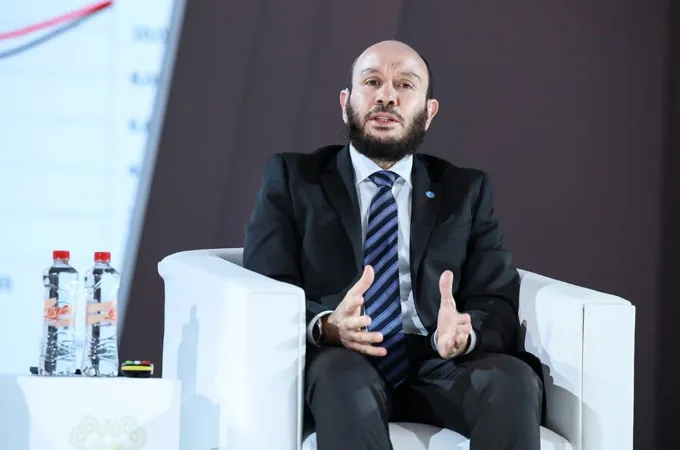
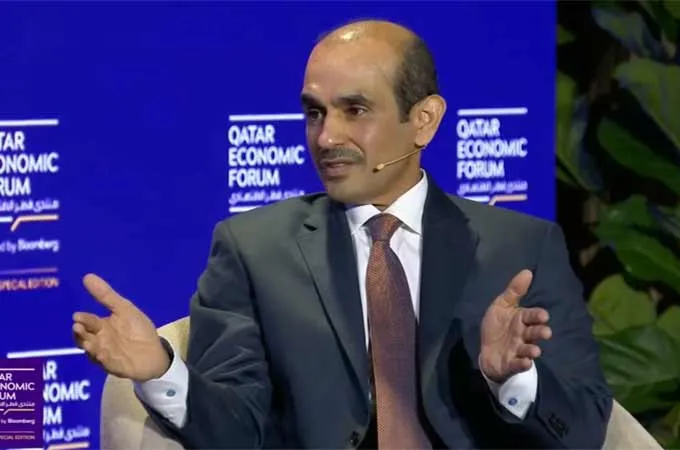
The first production train at North Field East (NFE), the initial phase of Qatar’s LNG expansion, is expected to come online in the first half of 2027, Energy Minister and QatarEnergy CEO Saad Sherida Al-Kaabi said at the Qatar Economic Forum in New York on Sunday, according to a Bloomberg report.
But Al-Kaabi warned that prolonged disruption in the Strait could delay additional trains because critical equipment needed for the projects is unable to reach Qatar. The North Field South (NFS) expansion, the second phase, is scheduled to begin production in 2028.
Qatar had previously expected the first NFE production to start in 2026, but the timetable was pushed into 2027.
“It will depend a lot on the Hormuz Strait for the additional trains that are going to come, because that could push it back if we can’t get facilities coming in,” Al-Kaabi said.
The comments highlight the vulnerability of Qatar’s LNG expansion to the continuing disruption in Hormuz, through which the country currently has no alternative export route.
Al-Kaabi also said Qatar had decided not to build new pipelines for LNG export to bypass the strategic waterway of Strait of Hormuz.
“We have decided not to do pipelines,” he said, adding that the decision was based on commercial and technical considerations and that Qatar would continue using the strait.
However, he thanked Qatar’s neighbours who welcomed the use of their territories for a pipeline that bypasses the Strait of Hormuz.
The minister said: “We are grateful to our neighbours who have welcomed us to use their territories. However, not everything can be transported via pipelines. The problem is that LNG, our main export commodity, cannot be transported by pipelines. We will have to transport it by pipelines as gas and then liquify it at receiving terminals wherever that may be. This means we are building redundant facilities to the ones we are already building in Qatar as part of the North Field expansion project. This makes no economic sense.”
“We have decided not to use pipelines as an alternative based on commercial and technical criteria,” Minister Al-Kaabi added.
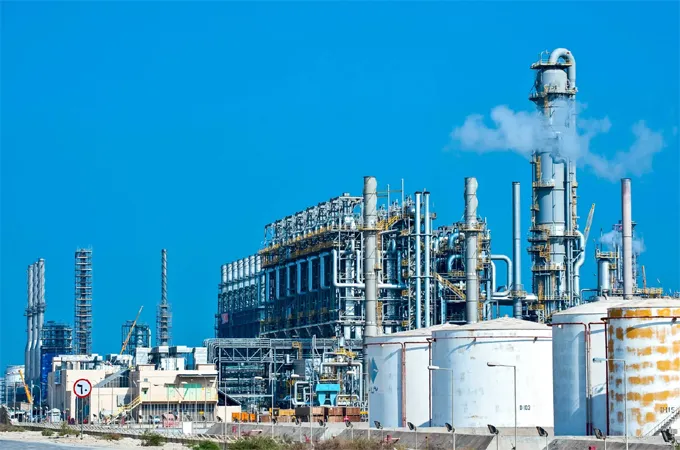
On damage to Qatar’s gas production facilities and a possible return to production, Al-Kaabi said the attacks on Ras Laffan have resulted in damage to two LNG trains and a GTL plant. He added: “Repairs on the GTL train will be concluded in the first quarter of 2027. However, it will take three years for repairs on the two LNG trains.”
“As for resuming operations,” the Minister added, “Qatar is ready to resume normal operations within a few weeks of the reopening of the Strait of Hormuz.”
On force majeure, Minister Al-Kaabi said “Throughout our history, we have been a reliable producer and supplier with zero defaults on any shipment. But this is absolutely beyond our control.”
He rejected the notion that the Strait of Hormuz was obsolete, saying: “It is wrong to call the Strait of Hormuz obsolete as this waterway carries trade in all products, not only oil and gas, to and from all its adjacent countries."
Minister Al-Kaabi stressed the need for normal movement across the Strait saying: “The countries around the Gulf are neighbours and will remain neighbours for generations to come. Thus, we need to have good relations with our neighbours.”
Answering a question on reports that Qatar was buying LNG volumes from the market, he said: “I have announced in 2024 that we're building one of the largest LNG trading organizations, and I did mention that it is going to be very large. I would like to mention today that, in the very near future, we will be the largest LNG trader in the world by far. And we're building our position to become the largest trader.”
On QatarEnergy’s projects in the United States, the minister said shipments have started from the first train at Golden Pass LNG. “We expect next year to have both the second and third trains in full operation. We are also building the largest ethane cracker in the world at the Golden Triangle Polymers project. The project has started its commissioning process as we speak. It should be starting up in the next few weeks.”
The country is pivoting to become a larger trader of LNG in the meantime, and is handling more LNG outside of the Gulf with the start of its Golden Pass export facility in the US.
“We will be, in the very near future, the largest LNG trader in the world by far,” said Al-Kaabi. “And we’re building our position to become the largest trader.”
Shell's Pearl GTL facility in Qatar, which was also damaged in the March attacks, will resume production in the first quarter of next year, he said.
7% economic contraction
In another Bloomberg report Qatar Central Bank Governor and Qatar Investment Authority Chairman Sheikh Bandar bin Mohammed bin Saoud Al-Thani said the damage to the country’s LNG facilities could take two to three years to repair, with the conflict contributing to a 7% economic contraction even as the non-hydrocarbon economy grows.
He says Qatar’s strong fiscal position has allowed QIA to continue investing globally, with technology and AI among its major areas of focus, while the central bank is deploying AI across its own operations.
The government of the State of Qatar is the underwriter of the Qatar Economic Forum, Powered by Bloomberg.