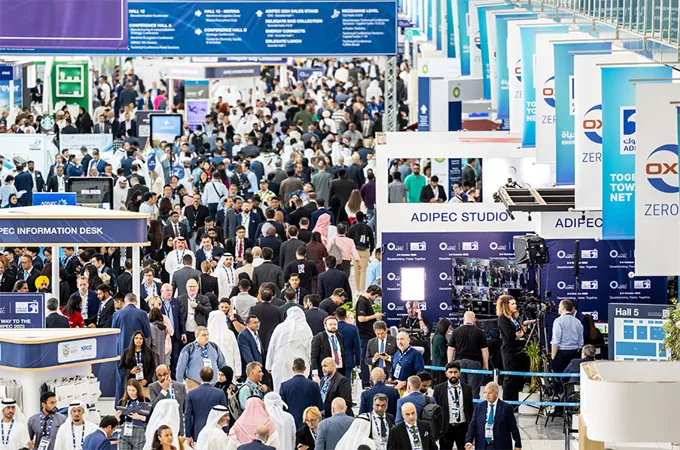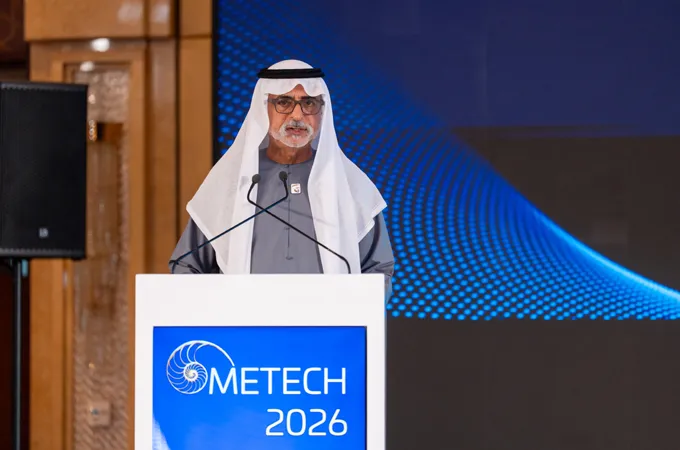
The 16th Middle East Refining and Petrochemicals Tech Forum (ME-TECH 2026) concluded in Dubai on September 16 after three days of discussions focused on the future of the downstream sector, bringing together energy officials, executives, engineers, scientists, specialists and innovators from the GCC, the wider Middle East, Asia, Europe, North America and beyond.
Sheikh Nahyan bin Mubarak Al Nahyan, Minister of Tolerance
and Coexistence, inaugurated the forum, which was held from September 14 to 16,
under the theme “Empowering the Future of the Downstream Sector”.
The event continued its nearly two-decade role as a
specialised platform for industry leaders to examine the opportunities and
challenges facing the refining and petrochemicals sectors.
The forum focused on improving the efficiency and value of
existing assets while examining longer-term strategies to transform them into
integrated, low-carbon energy and chemicals hubs supported by digital solutions
and advanced technologies.
In his opening address, Sheikh Nahyan said he looked forward
to the outcomes of discussions on improving the performance of existing assets,
achieving closer integration between refining and petrochemicals, and using
artificial intelligence to deliver measurable improvements.
He said these efforts could enable companies in the sector
to enhance efficiency, resilience and profitability.
He thanked Euro Petroleum Consultants, Colin Chapman and his
team for bringing the forum to Dubai, noting that the international
participation reflected the UAE’s importance within the refining and
petrochemicals sector and the country’s vision rooted in progress, prosperity
and shared opportunity.
Sheikh Nahyan said the UAE has long recognised that progress
accelerates when people, knowledge, capital and ideas come together.
He said the country has developed into a place where
industries from around the world meet and partnerships are formed, adding that
the UAE continues to advance under the leadership of President His Highness
Sheikh Mohamed bin Zayed Al Nahyan and with the support of His Highness Sheikh
Mohammed bin Rashid Al Maktoum, Vice President, Prime Minister and Ruler of
Dubai.
He described the UAE as a strong and resilient nation that
welcomes ambitious, industrious and law-abiding people from across the globe,
while recognising the economic and social benefits of openness to trade,
investment and culture.
Drawing parallels between resilient nations and industries,
Sheikh Nahyan said both depend on leadership, adaptability, innovation,
investment in people and confidence in the future.
He noted that the UAE regards refining and petrochemicals as
strategic national assets and has invested in capacity, technology and the
workforce required to operate increasingly sophisticated industries.
Sheikh Nahyan continued: “My dear friends, I am not an
engineer, and I will not instruct you on catalysts or crackers. But I do
understand the importance of what your hard work produces. Refining and
petrochemicals provide much of the material basis of modern life, including
fuels, fertilisers, packaging, medicines, construction materials, and countless
everyday products. Modern life could scarcely function without your industry.”
He said the industry is facing several challenges at the
same time, including pressure on margins, the adoption of new technologies,
reducing energy consumption and emissions, strengthening reliability and
transforming operations without interrupting critical systems.
While technology has the potential to transform the sector,
Sheikh Nahyan stressed that successful transformation would ultimately depend
on people.
He said workforce skills, judgement and creativity would
remain as important as equipment, software and processes, highlighting the
forum’s focus on workforce readiness and future skills.
The minister also highlighted the international
participation at ME-TECH 2026, saying the gathering allowed professionals to
exchange knowledge, compare experiences, seek common ground and develop shared
solutions.
He described this cooperation as an example of tolerance and
coexistence in practice.
He said societies and economies are most successful when
people cooperate across nationalities, cultures, professions and institutions.
He also highlighted trust as an essential form of
infrastructure alongside the physical systems that support modern industry.
Pipelines, plants, ports, power systems and digital
platforms are critical to industrial operations, he said, but these ultimately
depend on trust.
Capital moves to places where people can work together,
skilled professionals move to places where they are welcomed, and partnerships
are formed where people trust one another and their operating environment.
Sheikh Nahyan said the UAE regards tolerance and coexistence
as essential infrastructure for prosperity, stability and sustainable
development, with international gatherings such as ME-TECH providing visible
evidence of this approach.
Concluding his address, he said: “I hope you will use this
forum not only to exchange technical knowledge, but also to build
relationships, create partnerships and strengthen the trust upon which lasting
progress depends. My best wishes for a successful and productive forum. Thank
you.”
During the three-day programme, participants examined how
the region can leverage its industrial scale, feedstock availability and
integration to extract greater value from existing refining and petrochemical
assets.
Discussions covered asset optimisation, operational
flexibility and the challenges associated with feedstock variability and
changing market dynamics.
Artificial intelligence and digitalisation were also
prominent themes, with experts examining advanced analytics and digital-twin
technologies and their potential to improve real-time decision-making and
support predictive maintenance.
The forum also explored closer integration between refining
and petrochemicals to enable the production of higher-value materials and
products.
Innovations in process technologies and catalysts were
discussed as tools for improving performance, increasing yields and reducing
emissions.
Other areas addressed included energy and operational
efficiency at existing facilities, competitiveness, residue-upgrading
technologies, asset performance and decarbonisation strategies.
A new “Collective Intelligence Networking Roundtables”
session was introduced at this year’s forum to encourage focused dialogue and
peer-to-peer learning.
Participants selected topics aligned with their interests
and joined targeted discussions to exchange operational experience, best
practices and insights based on real-world challenges.
The format enabled participants to contribute their
perspectives and explore shared issues in greater depth than would typically be
possible during conventional conference sessions.
The wider agenda also covered digital transformation and enterprise integration, artificial intelligence and advanced analytics, carbon management and carbon capture, utilisation and storage (CCUS), hydrogen, ammonia and future fuels, as well as the circular economy and sustainable materials. -OGN/TradeArabia News Service