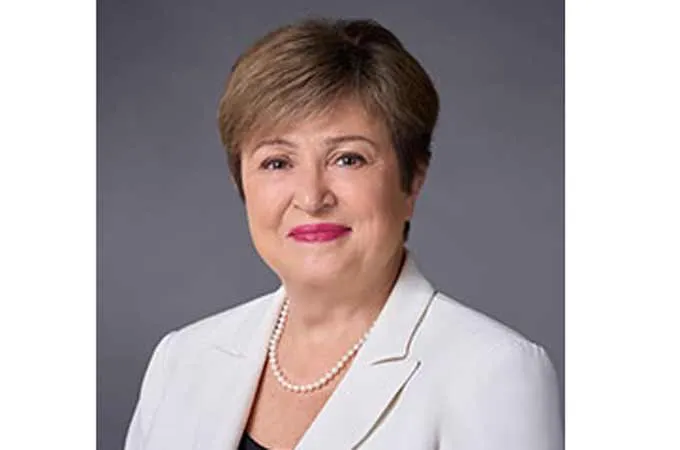
The global economy has proved more resilient than expected in the face of the energy supply shock triggered by the conflict in the Gulf, with global growth for 2026 holding at around 3%, International Monetary Fund Managing Director Kristalina Georgieva said.
Speaking at the conclusion of the G20 Finance Ministers and Central Bank Governors Meeting in Asheville, Georgieva said the global economy had absorbed the energy shock better than anticipated, helped by the use of oil and gas reserves, new energy sources and measures to manage demand.
But she cautioned that the resilience should not mask significant divergences between economies or the risks still facing the global outlook.
“The energy shock is not over,” Georgieva said, pointing to the continued closure of the Strait of Hormuz, the need to replenish strategic oil and gas reserves and rising energy demand linked to artificial intelligence investment.
She also warned that the approach of winter in the northern hemisphere could add further pressure to energy markets.
The IMF's assessment comes as the Gulf conflict continues to disrupt energy flows through one of the world's most important oil and gas transit routes. Despite the shock, Georgieva said economic activity had remained supported by strong investment in artificial intelligence, including investment in power infrastructure needed to meet rising electricity demand.
The United States has been a major beneficiary of the AI investment boom, while economies integrated into the global AI supply chain, including South Korea, have also benefited, she said.
Major risks to economy
However, Georgieva identified several major risks to the global economy.
Public debt has risen to almost 100% of global GDP and is expected to increase further, exceeding levels seen in the period following World War II. She said the pattern of debt accumulation increasingly resembled a staircase, with major increases during crises followed by little reduction once the shocks had passed.
At the same time, the global disinflation process has stalled in many countries. Rising fiscal pressures are pushing core bond yields higher, while the interaction between fiscal and monetary policies is increasingly worrying financial markets.
The IMF chief also highlighted uncertainty surrounding the longer-term impact of AI on productivity and financial stability.
Georgieva called for central banks to remain focused on price stability, while governments should establish credible medium-term plans to bring public finances under control. Structural reforms aimed at cutting red tape and removing barriers to investment and growth were also needed.
“Stronger potential growth would help address the fiscal problem, and addressing the fiscal problem would help lift growth prospects,” she said.
Developing economies under pressure
Georgieva also warned that developing and low-income economies face mounting pressure from higher borrowing costs and declining external financing.
Although the sovereign debt situation in emerging and low-income economies has gradually improved in recent years, progress has been uneven. Rising government bond yields in advanced economies are lifting borrowing costs across global markets and offsetting some of the gains made by emerging markets through narrower risk spreads.
High refinancing requirements and rising debt-service costs are restricting the ability of many developing countries, particularly low-income economies, to fund infrastructure, health and education spending.
The problem is being compounded by a sharp decline in external financing, including reductions in official development assistance and weaker inflows from non-Paris Club creditors, Georgieva said.
She called for stronger international cooperation to help countries facing unsustainable debt, accelerate debt restructuring and create fiscal space for investment and growth.
Global imbalances widen
Georgieva also highlighted a widening of global economic imbalances, saying IMF research showed that excess imbalances — those not explained by economic fundamentals — increased by 0.7% of global GDP in 2025, the largest annual increase in a decade.
The increase was broad-based, with major contributions from the world's two largest economies.
The IMF warned that persistent imbalances can contribute to trade tensions, cross-border spillovers and economic fragmentation.
Georgieva said the solution required action by both surplus and deficit economies. Surplus countries should pursue reforms that encourage domestic consumption and investment, while deficit countries should strengthen fiscal positions and rebuild savings.
The IMF chief said coordinated action among major economies would produce the strongest results for both global rebalancing and economic growth.
For now, the IMF's assessment is that the global economy has weathered the latest energy shock better than expected. But with the Strait of Hormuz still disrupted, debt levels elevated, inflation pressures lingering and financial markets facing higher yields, Georgieva warned that the resilience of the world economy should not be mistaken for an absence of risk. -TradeArabia News Service