The World Travel & Tourism Council (WTTC) has projected a challenging year ahead for the Middle East's travel and tourism sector, while expressing confidence that the region will emerge as the world's fastest-growing tourism market over the next decade.
According to WTTC's latest Economic Impact Research (EIR):
Global Trends Report, sponsored by Chase Travel, the Middle East is expected to
be the only global region to record a decline in Travel & Tourism GDP in
2026.
The sector is forecast to contract by 14.5%, falling from $386
billion in 2025 to $330 billion.
The decline is attributed primarily to ongoing geopolitical
conflicts that have disrupted airspace and travel flows across the region.
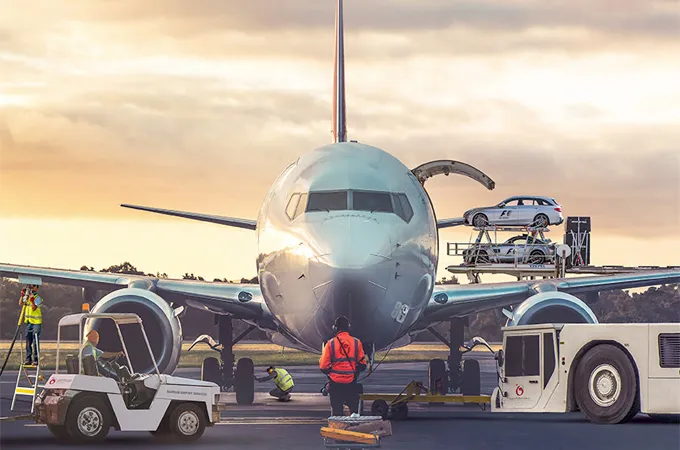
As a major global aviation hub handling approximately 14% of
international air passengers, equivalent to one in every seven international
travellers, the Middle East remains highly vulnerable to aviation disruptions.
Despite the short-term setback, WTTC forecasts a strong
long-term recovery. Between 2026 and 2036, the region is expected to post the
world's fastest tourism growth, with Travel & Tourism GDP expanding at an
average annual rate of 6.3% to reach $605 billion by 2036.
The recovery is expected to be driven largely by Saudi
Arabia, the United Arab Emirates, Oman and Qatar, which WTTC describes as key
tourism growth stories.
Together, the four countries generated $272 billion in
Travel & Tourism GDP in 2025 and are projected to reach $435 billion by
2036, adding more than $163 billion to their combined tourism economies.
Saudi Arabia continues to spearhead the region's tourism
transformation. Travel and tourism currently account for 14.1% of the Kingdom's
GDP, with international visitor spending forecast to more than double over the
next decade.
The UAE remains one of the region's most established tourism
markets, contributing 11.9% of GDP while supporting 13.6% of total employment,
backed by strong global connectivity and nearly $57 billion in international
visitor spending.
Oman is projected to grow its tourism economy from $7.9
billion to $12 billion by 2036 through continued investment in destination
development.
Qatar also remains a significant tourism player, with
visitor spending accounting for 94.1% of its total services exports, among the
highest tourism export concentrations in the region.
WTTC noted that governments across the region continue to
invest heavily in tourism infrastructure, connectivity and visitor experiences
as part of broader economic diversification strategies.
Saudi Arabia recorded 19.4% growth in Travel & Tourism
investment in 2025, supported by Vision 2030 reforms and a pipeline of major
tourism projects.
The council added that previous crises demonstrate the
sector's ability to recover quickly when supported by coordinated government
policies, strong public-private collaboration, effective communication and
sustained investment.
Gloria Guevara, President & CEO, WTTC,
said: " The Middle East is facing a challenging period, and
Travel & Tourism is often among the first sectors to feel the impact of
geopolitical disruption. But history repeatedly shows that our sector is
remarkably resilient, and few regions have demonstrated that resilience more
clearly than the Middle East."
Guevara added: “The governments across this region have made long-term commitments to Travel & Tourism through investment, connectivity, infrastructure, and economic diversification. Those foundations remain firmly in place. While the short-term outlook reflects current realities, the long-term picture is clear: the Middle East is set to be the world's fastest-growing Travel & Tourism region. Recovery will require continued leadership, coordination, and public-private collaboration, but the region has consistently shown its ability to adapt, recover, and emerge stronger." -TradeArabia News Service