Islamic finance is evolving beyond its traditional role as a source of funding to become a strategic connector between liquidity-rich markets and fast-growing economies, says a new Standard Chartered report.
With approximately $6 trillion in assets across nearly 100 jurisdictions, the industry is increasingly facilitating capital flows between the GCC, ASEAN, South Asia, Africa and other emerging markets, says the report, ‘Islamic Banking for Financial Institutions: The Islamic Finance Connector Era’.
The report finds that shifting trade patterns, geopolitical uncertainty and growing demand for regional resilience are reshaping economic connections. As businesses and governments diversify trade and investment relationships, Islamic finance is playing an increasingly important role in linking liquidity-rich markets with economies seeking long-term investment.
Rather than being driven solely by asset growth, the next phase of Islamic finance will increasingly be defined by its ability to mobilise liquidity, connect regions and facilitate investment across emerging economic corridors, it says.
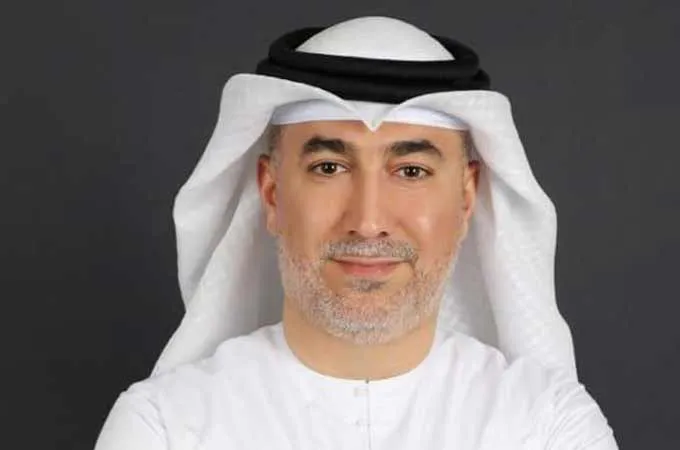
“Islamic finance is becoming a critical enabler of cross-border connectivity. As its role in facilitating trade, investment and capital flows, continues to grow, financial institutions must place Islamic finance firmly on their strategic agenda," said Khurram Hilal, CEO of Group Islamic Banking at Standard Chartered.
“As trade routes become increasingly interconnected, institutions need recognised financing structures and operational capabilities that enable Shariah-compliant capital to move seamlessly across borders.”
Connecting liquidity with opportunity
While Islamic finance liquidity continues to deepen, capital deployment remains uneven. Despite substantial infrastructure and development funding requirements across South Asia and Africa, only 6 per cent of global sukuk capital currently reaches these markets, presenting a significant opportunity for institutions to strengthen financing links between liquidity-rich and capital-constrained markets.
Reshaping trade corridors and private credit
Rapidly evolving trade routes are generating new opportunities for Islamic finance. GCC-centred, China-centred and Middle East-Türkiye corridors are emerging as priority channels for trade, investment and working capital, helping financial institutions strengthen the resilience of trade, treasury, payment and settlement flows.
Beyond public capital markets, the report also highlights the growing role of private credit as an additional channel for capital deployment. Islamic finance structures can support investment across infrastructure, receivables, trade-linked assets and mid-market businesses while maintaining strong governance and asset-backed principles.
Digital assets and institutional governance
Alongside physical trade corridors, digital infrastructure is expected to become an increasingly important enabler of Islamic finance. Tokenisation and digital assets have the potential to improve efficiency and expand cross-market investment, provided legal certainty, interoperability, robust custody arrangements and trusted governance frameworks continue to develop.
“The challenge for many markets today is not a shortage of liquidity, but how to connect that liquidity with opportunity more effectively across borders,” Khurram Hilal added. “Financial institutions that build trusted connections between capital, markets, and digital infrastructure will be best positioned to support sustainable growth across emerging economies.”
As the only international bank with a global Islamic banking franchise, Standard Chartered supports clients across these evolving trade and investment corridors through Shariah-compliant solutions, deep market connectivity and cross-border capabilities, the bank said. -TradeArabia News Service