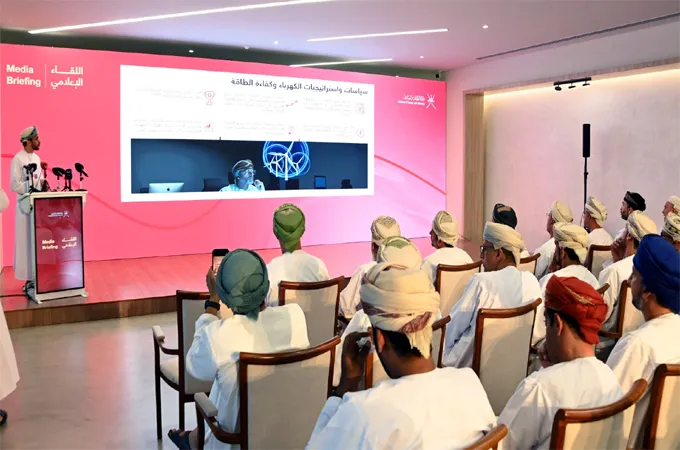
Oman’s Ministry of Energy and Minerals unveiled an updated strategic plan for net‑zero emissions and a regulatory framework for carbon markets, as part of Oman’s push to achieve carbon neutrality by 2050 and strengthen its position as a regional hub for green hydrogen and renewable energy.
The updated plan, developed by the
ministry through Oman Centre for Net‑Zero, is based on a realistic assessment
of emission trends using the latest data, reported Oman News Agency.
It identifies reduction priorities
aligned with the national economy, determines necessary enablers and financing,
and explores opportunities for a low‑carbon transition.
Salim Al Aufi, Minister of Energy
and Minerals said the adoption of the updated national net‑zero plan is a
strategic step towards a robust, sustainable, low‑carbon economy, enhancing
Oman’s global standing in line with Oman Vision 2040.
The net‑zero pathway offers
significant economic and climate benefits by promoting green industries,
strengthening Oman’s competitiveness, introducing modern emission reduction
technologies to the local market and contributing to GDP growth, the minister
added.
The regulatory framework for
carbon markets is a critical enabler for the plan, setting clear rules and
streamlined procedures to encourage private sector and SMEs participation,
creating broader employment opportunities and diversifying national income sources,
he said.
The framework aims to convert the
targeted 33 per cent emission reduction by 2035 into verifiable, tradable and
investable carbon credits, attract international and private investment to
mitigation and adaptation projects across seven key sectors, and cement Oman’s
position as a reliable supplier of high‑integrity carbon credits in global
markets, Al Aufi said.
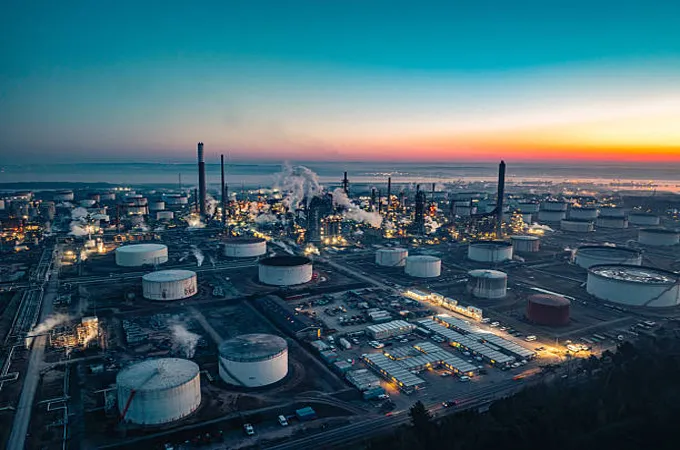
The oil and gas sector delivered a
balanced performance in 2025, combining production sustainability, exploration
expansion and improved operational efficiency, the Minister of Energy and
Minerals said.
A bidding round for five
concession areas was announced in 2026, while efforts continue to maintain
production levels and reserve stability.
Average daily production of crude
oil and condensates reached about one million barrels per day, with total
annual output of 365.8 million barrels, the minister said.
A total of 64 exploration and
appraisal wells were drilled — 47 for oil and 17 for gas — reflecting ongoing
investment in reserves, which stood at about 4.7 billion barrels of oil and
condensates, plus 22.3 trillion cubic feet of natural gas.
The minister added that the gas
sector continued to post positive indicators, with average daily production
exceeding 151 million cubic metres and LNG exports surpassing 11 million metric
tonnes, strengthening Oman’s position as a reliable energy supplier.
Omanisation in the sector reached
about 92 per cent, alongside efforts to boost local content and support small
and medium enterprises.
He said that in mining, four
concession areas were tendered in 2025, with bids under evaluation.
There are 28 active concession
areas operated by 13 companies.
Three more concession areas and
three general sites will be tendered this year, reflecting growing
international investor confidence in the Omani market.
The minister explained that the
mining sector underwent a qualitative transformation in 2025 as a promising
driver of economic diversification, with agreements signed for copper, chrome
and salt concessions, boosting future revenues and the sector’s GDP contribution.
Accelerated growth is expected in coming years as new concession areas enter
operation.
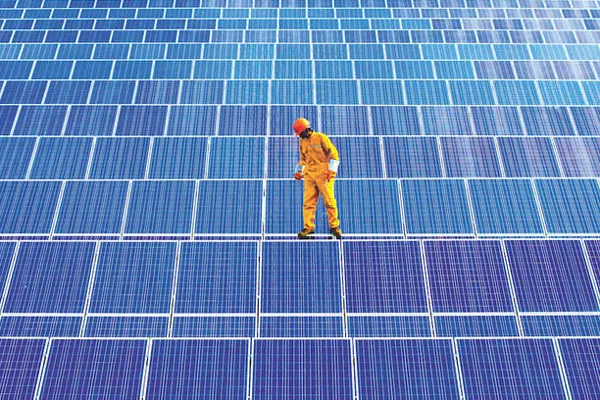
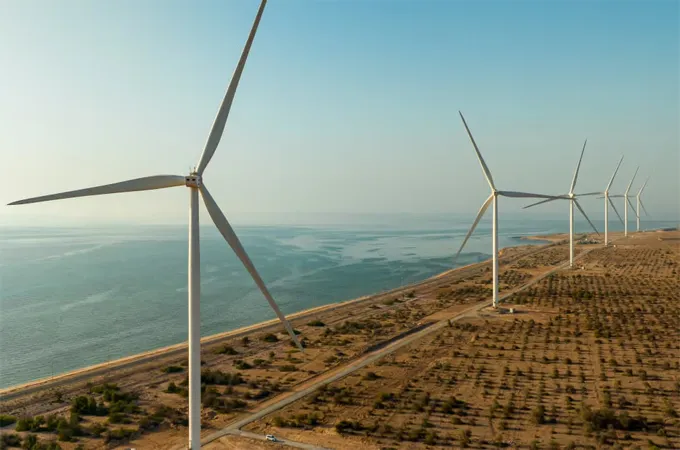
In renewables and green hydrogen,
the minister said that strategic projects in 2025 included solar and wind
energy schemes and expansion of electricity infrastructure.
Initiatives and agreements in
hydrogen and renewables were launched, along with export corridors to global
markets.
Policies target at least 10 per cent
of energy production from renewables by the end of this year (2026), rising to
60‑70 per cent by 2040 and 90‑100 per cent by 2050.
The oil and gas sector is focusing
on maintaining production levels and reserve stability during the 2026 plan,
while enhancing operational safety and marketing available concession areas
through a new bidding round, said Dr Saleh Al Anbouri, Director General of
Exploration and Production at the Ministry of Energy and Minerals. The move
aims to attract investment and support sector growth in coming years.
Omanisation in operating companies
in the oil and gas sector reached about 91.6 per cent, providing nearly 20,000
direct jobs and thousands of indirect jobs, he said.
He added that local content
spending exceeded RO 11 billion over the past decade, alongside the launch of
the “Majd” programme to support small and medium enterprises and localise
energy‑related industries.
He explained that social
responsibility projects over the past ten years totalled about 1,275 projects
with RO 74 million in spending, covering education, health, youth empowerment
and community infrastructure.
There are 17 operating companies
in 34 concession areas, of which 12 have achieved commercial production in 18
areas.
The mining sector continues to
post positive growth indicators, driven by policies to enhance investment
attractiveness, maximise added value and embed environmental sustainability,
said Saud Al Mahrouqi, Director General of Minerals.
He added that six new concession
agreements were signed in 2025, bringing the total number of mining concession
areas to 28.
Copper concentrate exports rose
notably to about 95,000 tonnes, with investments exceeding RO 105 million.
Total mining production reached
about 65 million tonnes, with sales of 60 million tonnes valued at nearly RO
159 million, he said.
Through ambitious future plans,
the strategy is moving towards expanding exploration of strategic minerals,
enhancing local manufacturing to limit raw ore exports, supporting the Minerals
Trading Company as a national marketing arm, and tendering additional
concession areas and public investment sites, he said.
Hamoud Al Sawafi, Director General
of Renewable Energy and Hydrogen at the Ministry of Energy and Minerals,
outlined strategic plans and projects in the energy and hydrogen sector.
These include reviewing the
electricity market structure, activating a national energy model to support
more efficient technical and financial decisions, implementing Oman’s energy
transition strategy, launching awareness campaigns, and announcing the “Rashd”
Energy Efficiency Award during Sustainability Week 2026.
Oman aims to raise renewable
energy’s share of total power production to at least 10 per cent by the end of
2026, Al Sawafi added.
Plans also include completing the
national renewable energy database, preparing new sites for renewable projects,
developing a renewable energy certificate system, and tendering a clean energy
and battery storage system for Al Halaniyat Islands to reduce reliance on
conventional fuel.
Investments in Oman’s first two
green hydrogen auction rounds exceeded $44 billion, he said.
Renewable energy capacity is
expected to reach 26.6 gigawatts by 2030, with annual green hydrogen production
of one million tonnes by 2030.
Current work focuses on a unified
permitting system to streamline procedures and implementing an agreement with
the the Kingdom of the Netherlands to develop a commercial liquefied hydrogen
corridor.
A green hydrogen investor guide
will also be launched, and a second phase of a study on hydrogen storage in
natural underground reservoirs will be completed.
Mohsen Al Jabri, Director General
of Oman Centre for Net‑Zero, said the ministry launched an updated national net‑zero
plan as a comprehensive roadmap for reducing emissions.
The plan was developed through an
extensive participatory process involving more than 300 experts across 14
workshops with government and private entities.
The update was based on three
integrated phases, starting with assessing the business‑as‑usual trajectory,
determining sectoral emissions growth through 2050, and building a scientific
foundation for calculating source emissions using a bottom‑up methodology, he
said.
He pointed out that total
greenhouse gas emissions in Oman reached about 94 million tonnes of carbon
dioxide equivalent in 2024 and are projected to rise to 127 million tonnes by
2050 without intervention.
The oil and gas, transport and
electricity sectors are the primary contributors, together accounting for about
70 per cent of national emissions.
The second phase of the national
net‑zero plan focused on drawing a roadmap for emission reduction using a
mitigation cost curve methodology, classifying available technical solutions
across three levels, he said.
Low‑cost technologies include
renewable energy, energy efficiency and public transport. Medium‑cost solutions
include carbon capture and hydrogen use.
Ambitious technologies include
full grid electrification and hydrogen‑powered vehicles. The third phase of the
plan identified legislative, regulatory and financial enablers.
He concluded that the plan targets a 33 per cent reduction in emissions from the 2024 baseline, comprising a mandatory 7 per cent cut and a voluntary 26 per cent cut linked to securing necessary financing, technologies and national capacity building, with net‑zero to be achieved by 2050.