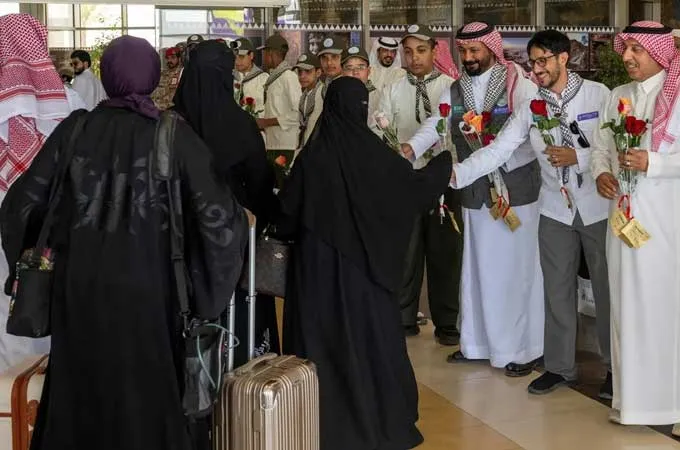
Jazeera Airways, Kuwait’s leading low-cost carrier, announced the relaunch of its service to Beirut from Kuwait via Dammam.
The twice weekly service will help open a
vital travel corridor for the large Lebanese community based in Kuwait.
Alongside Beirut, the airline also increased
the frequency on its Amman route from one to two weekly flights.
This aims to provide greater flexibility and
improved connectivity for travellers to Jordan.
These additions come as part of the airline’s
continued efforts to expand its operational footprint and maintain strong
regional connectivity through its dual-base operations in Saudi Arabia while
the Kuwait International Airport remains temporarily closed.
Ghady El-Khoury, Ambassador of Lebanon to
Kuwait, said: “The resumption of direct connectivity between Kuwait and Beirut,
during these exceptional circumstances, is a very positive development for the
Lebanese community in Kuwait, for all the Kuwaiti friends of Lebanon, and with
all those with close ties between our two countries. This service allows
families to reconnect and preserve our longstanding ties. I greatly appreciate
the efforts of Jazeera Airways in resuming this vital route for our Lebanese
community. I wish to take this opportunity to express my utmost admiration for
how Jazeera Airways navigated the recent crisis, particularly the seamless
management, and rerouting of flights under the strategic vision of its
leadership driven by the efforts of the entire Jazeera team."
Barathan Pasupathi, Chief Executive Officer,
said: "The relaunch of our Beirut service and the increased frequency to
Amman underscore our commitment to maintaining strong regional connectivity
from Kuwait during this period of disruption. These routes are vital in
bringing people back home, reuniting families and loved ones, and supporting
essential travel across the region. At the same time, they provide our
customers with greater flexibility and convenience, while enabling the
continued movement of critical supply chains." -TradeArabia News Service