Markets are facing a 'double whammy' of energy volatility and trade tensions flaring up again, says the CEO of one of the world’s largest independent financial advisory organisations.
The warning from deVere Group’s Nigel Green comes as oil markets surge amid escalating conflict involving Iran, while the Trump administration simultaneously launches sweeping new trade investigations targeting many of the world’s largest economies.
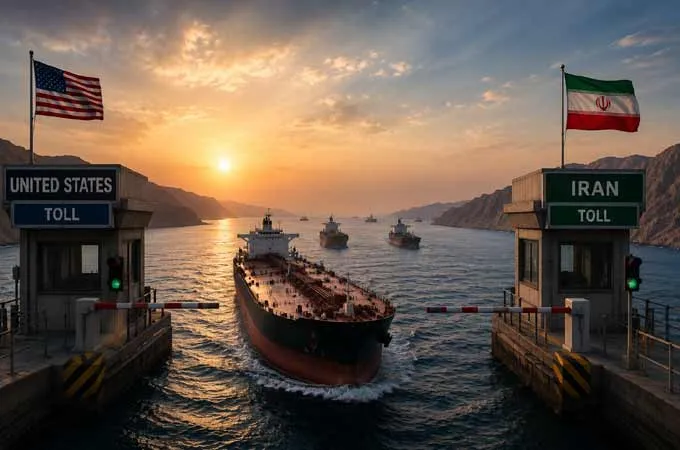
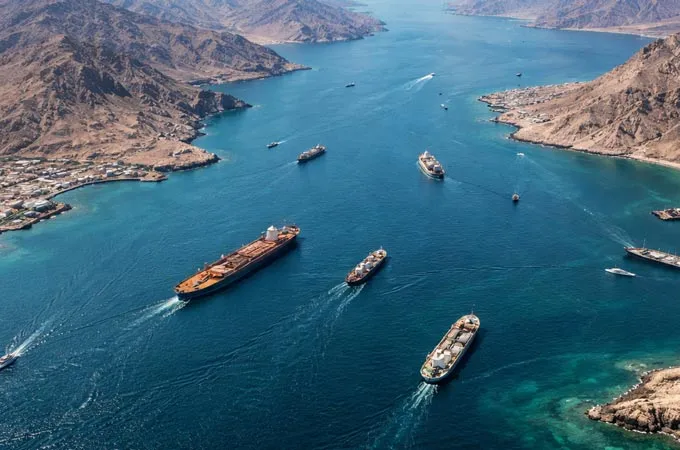
Brent crude spiked sharply on Thursday, briefly pushing above $100 per barrel after Iranian attacks on energy infrastructure and shipping routes across the Gulf intensified fears of supply disruption.
The surge came despite the International Energy Agency announcing the largest emergency release of oil reserves in history — around 400 million barrels — including roughly 172 million barrels from the US Strategic Petroleum Reserve.
Green says: "Oil surging back to $100 a barrel shows that energy markets are reacting to a genuine geopolitical shock. Iranian attacks on tankers, ports and infrastructure across the Gulf have suddenly raised the risk of major disruption to one of the most critical oil arteries on the planet."
Roughly one fifth of global oil flows normally move through the Strait of Hormuz, making any instability in the corridor immediately significant for global supply and pricing.
"Even partial disruption to shipping through Hormuz has enormous consequences for markets. Energy traders price risk immediately. Every strike on infrastructure, every tanker attack, every threat to shipping feeds directly into oil prices," he stated.
Recent market moves highlight the scale of the anxiety. Brent crude has surged more than 30% since the conflict began, reflecting the rapidly rising risk premium attached to Middle East supply.
On Wednesday evening, the International Energy Agency, which works with countries around the world to shape energy policies for a secure and sustainable future, agreed to release 400 million barrels from its emergency oil reserves in the biggest-ever discharge, after the Middle East war caused prices to spike
The deVere CEO says: "Markets have watched the largest emergency oil release ever announced and still pushed prices sharply higher. That tells you the geopolitical risk currently outweighs the stabilizing effect of those reserves."
The energy shock alone would be enough to unsettle investors. But, at the same time, a second pressure point has emerged through trade policy.
Rebuilding tariff framework
The Trump administration has launched new investigations into sixteen major trading partners as it attempts to rebuild its tariff framework after the US Supreme Court ruled earlier reciprocal tariffs unlawful.
Countries under investigation include China, the European Union, Mexico, Japan, India, South Korea, Switzerland and Norway, among others.
Nigel Green says the scope of the move signals a renewed escalation in global trade tensions.
"Washington has opened another broad front across global trade. Investigations covering major economies send a strong signal that tariff disputes are, once again, coming back to the centre of economic policy," he states.
The administration has imposed temporary tariffs while the investigations proceed, with officials aiming to construct a new long-term tariff structure to replace measures struck down by the court.
According to Nigel Green, the simultaneous escalation in energy risk and trade disputes creates a particularly difficult environment for markets.
"Energy volatility drives inflation pressure and increases production costs across the entire global economy," he explains.
"Trade conflicts disrupt supply chains, investment flows and international commerce. Experiencing both forces at the same time creates a far more complex risk environment," he adds.
Global equities have already reacted cautiously as investors weigh the implications for growth, inflation and corporate profitability.
"Oil prices rising quickly place immediate pressure on transportation, manufacturing and logistics costs. Add expanding tariff disputes into the mix and companies face a sharp increase in uncertainty about supply chains, pricing and demand," states Green.
Businesses with cross-border supply networks face particularly difficult calculations if tariffs spread while energy costs rise.
"Corporate decision-making becomes significantly more complicated. Energy shocks influence operating costs while trade tensions reshape supply chains. Many multinational firms could face both pressures simultaneously," says the deVere Group CEO.
Energy volatility rocking economies
Financial markets historically struggle during periods where commodity shocks intersect with protectionist trade policy.
"Energy instability alone can unsettle markets," notes Green.
"Trade disputes alone can weaken growth expectations. Together they create exactly the kind of double whammy investors are confronting right now," he states.
Green concludes: "Markets are dealing with two powerful global forces moving at the same time.
"Energy volatility driven by geopolitical conflict and a renewed surge in trade tensions represent a serious challenge for investors and policymakers alike," he adds.