In the early months of 2026, two milestones taking shape simultaneously in the Kingdom of Saudi Arabia encapsulate with unusual clarity the strategic logic that has come to define the country’s energy posture.
At Jafurah in the Eastern Province, the world’s largest shale gas project outside the US has begun delivering its first condensate cargoes to Asian buyers, with Phase 1 of the gas plant now producing 450 million cu ft per day (mmscfd) and on a trajectory to reach two billion cu ft per day (bcfd) of sales gas by 2030.
The programme represents a total lifecycle investment exceeding $100 billion.
Hundreds of kilometres to the north-west, at Oxagon in the NEOM development zone, the $8.4-billion NEOM Green Hydrogen Company (NGHC) complex has crossed 90 per cent construction completion across all project sites, with its 4 GW of combined solar and wind generation infrastructure scheduled for completion by mid-2026 and first green ammonia exports targeted for 2027.
Together, these two projects do not represent a contradiction. They represent a thesis that Saudi Arabia is not abandoning its energy strengths, but deliberately expanding them.
The conventional framing of an energy transition: Renewables displacing hydrocarbons, has never accurately described the Saudi strategy, and the Kingdom’s senior energy officials have been at pains to say so.
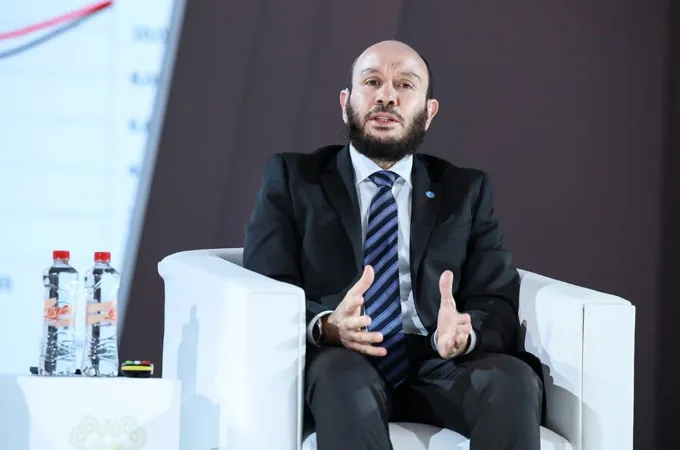
At the 46th Energy Intelligence Forum in London in October 2025, Amin Nasser, President and CEO, Saudi Aramco, articulated the position with characteristic directness: "In reality, this is not a true energy transition; it’s an energy addition which requires all hands on deck."
The statement is not a retrenchment; it is the operating framework for a Kingdom that intends to remain the world’s most reliable supplier of affordable hydrocarbons while simultaneously constructing a diversified, export-competitive economic base that can sustain prosperity well into the post-oil era.
TRADITIONAL ENERGY REMAINS THE BEDROCK OF SAUDI STRATEGY
Saudi Aramco’s role as the world’s pre-eminent low-cost crude producer is not under revision.
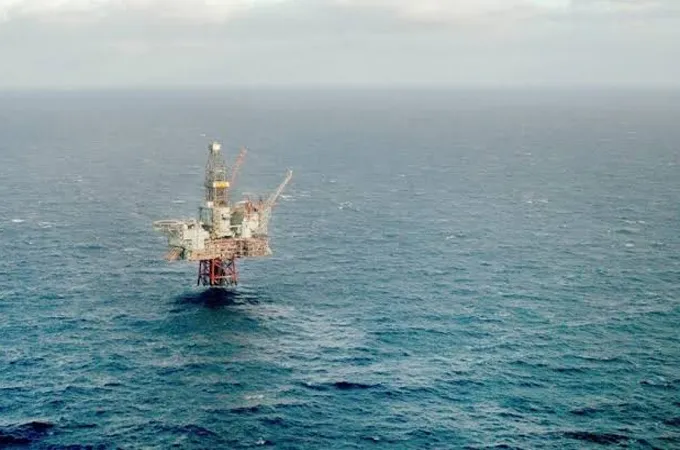
Across official reporting, the company has confirmed that work is ongoing to maintain its maximum sustainable crude oil capacity at 12 million bpd (bpd), supported by increment projects at Marjan, Berri, Zuluf and Dammam, all on track for completion between 2025 and 2027.
The Zuluf offshore increment alone, one of Aramco’s largest offshore undertakings in recent years, is designed to process up to 600,000 bpd of Arabian Heavy crude through a new central processing facility, with associated gas routed to the Tanajib Gas Plant as part of the integrated Marjan development programme.
Total hydrocarbon production reached 13.3 million barrels of oil equivalent per day (boepd) in the Q3 2025, underscoring the depth of the company’s upstream position.
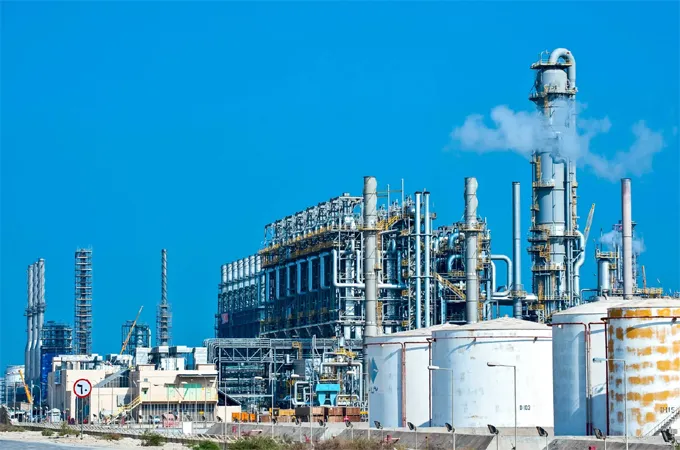
Downstream, Aramco’s integration into chemicals and petrochemicals continues to advance, with the world-scale Amiral petrochemical complex at Jubail incorporating a mixed-feed steam cracker with ethylene production capacity of 1.65 million tonnes per year (mtpa) alongside two polyethylene lines each producing 500,000 tonnes annually.
This downstream expansion represents precisely the value-capture logic at the core of Saudi energy strategy, and gas is increasingly central to that logic.
The Jafurah unconventional field, which is estimated to contain 229 trillion standard cu ft (tcf) of raw gas and 75 billion stock tank barrels of condensate, is the centrepiece of Aramco’s ambition to grow overall gas production capacity by more than 60 per cent by 2030 relative to 2021 levels.
Phase 1 of the Jafurah Gas Plant, which commenced construction in November 2021, reached initial start-up in 2025, as confirmed in the Saudi Ministry of Finance’s 2026 budget statement.
Phase 2, valued at approximately $12.4 billion, covers gas compression facilities, additional processing trains and the new Riyas NGL fractionation plant in Jubail; Phase 3, worth approximately $8.8 billion, focuses on expanding the Master Gas System pipeline network by an additional 3.15 billion cubic feet per day of capacity.
Aramco calculating that its unconventional gas programme at peak production will generate electricity equivalent to displacing 500,000 bpd of oil, which can then be redirected to export markets.
Nasser has described Jafurah as "a crown jewel" in the company’s portfolio, and the contracted $11 billion lease-and-leaseback arrangement with a consortium led by BlackRock’s Global Infrastructure Partners attests to international capital’s confidence in the project’s long-term economics.
DIVERSIFICATION INSIDE ENERGY SECTOR GATHERS MOMENTUM
The Kingdom’s National Renewable Energy Programme (NREP), a strategic initiative under Vision 2030, targets 50 per cent of electricity from renewables by 2030, requiring a total installed capacity of approximately 130 GW.
As of July 2025, Saudi Arabia had developed a project pipeline totalling 58.7 GW, with 10.2 GW already installed and grid-connected across 14 utility-scale plants, a further 28.5 GW under active development, and 13.5 GW under tender.
In October 2025, the Saudi Power Procurement Company (SPPC) awarded five new wind and solar projects totalling 4,500 MW, with the Dawadmi Wind IPP in Riyadh Province setting a new world record for the lowest cost of electricity generation from wind at 1.338 US cents per kilowatt-hour (kWh).
Solar tariffs have similarly broken global benchmarks in recent REPDO rounds, with bids reaching as low as 1.67 cents per kWh, prices that the Saudi Ministry of Energy describes as among the most competitive in the world.
By 2026, renewable capacity is forecast to reach over 13 GW, rising toward 20 GW by end of the year as new project awards from 2024 and 2025 come online.
Green hydrogen represents the most ambitious element of the renewables push, with the NGHC complex at Oxagon designed to produce up to 600 tonnes of carbon-free hydrogen per day, converted into approximately 1.2 million tonnes of green ammonia annually for export via a purpose-built jetty.
Complementary technologies complete the picture. Aramco and its partners Linde and SLB signed a shareholders’ agreement in December 2024 to develop the Jubail Carbon Capture and Storage hub, with Phase 1 targeting the capture of nine million metric tonnes of CO2 per year by 2028.
This includes approximately 6 million tonnes from Aramco gas plants and 3 million tonnes from neighbouring industrial emitters, before scaling to 11 million tonnes per year by 2035.
In energy storage, the 2.6-GWh Bisha battery energy storage system was completed in early 2025, marking what industry observers described as the world’s largest single-phase battery storage deployment at the time, as part of Saudi Arabia’s national pipeline of 48 GWh of storage capacity targeted by 2030.
By 2030, the Ministry of Energy’s Optimum Energy Mix Programme targets renewables and high-efficiency gas each supplying approximately 50 per cent of electricity generation, effectively eliminating the liquid fuel burning that today consumes oil better deployed in export markets.
ENERGY DIVERSIFICATION DRIVES NON-OIL SECTOR GROWTH
The connection between energy diversification and non-oil economic growth is not incidental; it is structural.
Cheaper, cleaner and more stable electricity, derived from the gas-plus-renewables mix being assembled under NREP and Jafurah, lowers the operating costs of energy-intensive industries including petrochemical derivatives, pharmaceuticals, advanced manufacturing and mining.
The mining sector, led by national mining company Ma’aden, now designated the third pillar of the Saudi economy alongside oil and tourism, has benefited from hundreds of exploration licences issued since 2020, with the government targeting $64 billion in additional GDP contribution and 200,000 jobs by 2030.
Tourism and entertainment present an equally direct linkage, having generated $75.7 billion in revenue and contributing 4.7 per cent of GDP in 2024 from 116 million visitors, including 30 million international tourists.
For the data centre and logistics sectors, the convergence of abundant and affordable gas and renewable power with Saudi Arabia’s geographic position at the intersection of Asia, Africa and Europe creates competitive advantages that are attracting the regional headquarters of over 700 global companies, surpassing the Vision 2030 target of 500 well ahead of schedule, according to Khalid Al-Falih, Saudi Arabia’s Minister of Investment.
The macroeconomic indicators are beginning to reflect these structural shifts. Non-oil GDP growth reached 4.3 per cent in 2024, with non-oil activities accounting for approximately 51 per cent of nominal GDP.
The private sector’s contribution to GDP has reached 47 per cent, advancing toward the Vision 2030 target of 65 per cent, while active investment licences have grown tenfold from 6,000 in 2019 to 62,000 by the end of 2025.
Foreign direct investments (FDI) reached SR1.05 trillion ($280 billion) by the end of Q3 2025, a 10 per cent annual increase.
Aramco’s In-Kingdom Total Value Add (iktva) localisation programme, which reached 63 per cent procurement from local suppliers in 2023 with a target of 70 per cent by 2025, has become a template for the broader economy.
Oil still accounts for approximately 43 per cent of Saudi GDP and the dominant share of government revenues, meaning fiscal planning remains sensitive to price movements in a market the Kingdom continues to influence through its OPEC+ membership.
FDI inflows, while rising, remain below the target of 5.7 per cent of GDP. Non-oil exports at 25.2 per cent of non-oil GDP trail the 35 per cent interim target set for 2024.
In a global energy system, Saudi Arabia has positioned itself to supply every layer of the stack, from low-cost crude and gas through record-cheap solar and wind to green ammonia for a decarbonising industrial world. -OGN/TradeArabia News Service
By Abdulaziz Khattak