The US and Israel yesterday (February 28) carried out a joint operation targeting sites in Iran resulting in retaliatory military action and now with the escalation in conflict, majority of the ships will now avoid the area, said a leading logistics industry expert.
“The repercussions of the joint military operation by the US and Israel against Iran and subsequent retaliatory action will see the further weaponization of trade and shatter hopes of a largescale return of container shipping to the Red Sea in 2026," remarked Peter Sand, the chief analyst at Xeneta, a Norway-based freight procurement and logistics company.
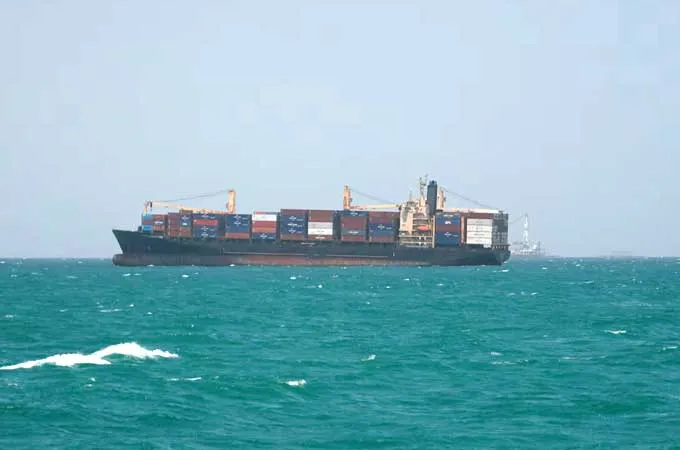
“Carriers had been returning selected east-west ocean container services to transits via Suez Canal in recent months after sailing around Cape of Good Hope since late 2023 due to attacks by Iran-backed Houthi militia in the Red Sea region.
“If Houthi militia resume attacks, as now seems likely, carriers will reverse the decision to return services to the Red Sea and prioritize the safety of crew, ship and cargo. Any plans for a phased return of container shipping to the Red Sea in 2026 will be shelved until the security situation becomes clearer.
“Carriers are on red alert and we have seen signs of them pre-empting this security deterioration in the Middle East, notably with CMA CGM last month reversing a decision to return its FAL1, FAL3 and MEX to the Red Sea citing ‘the complex and uncertain international context’.
“Earlier this week, Maersk announced its ME11 and MECL services would be rerouted via Cape of Good Hope due to security concerns in the Red Sea region.
Impact on container shipping capacity, freight rates
"Longer sailing distances around Cape of Good Hope absorb around 2.5 million TEU (20ft equivalent container units) of global container shipping capacity and increase the transport demands on the fleet," said Sand.
"A largescale return of container shipping to the Red Sea region would free up this capacity, slash transit times and potentially see freight rates collapse at a global level," he noted.
"Average spot rates from China to US East Coast and US West Coast are down 32% and 35% respectively since the start of 2026. From China to North Europe and Mediterranean, average spot rates are down 23% and 33%," he stated.
"With a largescale return of container ships to Red Sea in 2026 now unlikely, freight rates on major global trades will continue to soften, but will not fall as hard as previously expected in the second half of the year as more services returned to Suez Canal transits," he added.
Compared to pre-Red Sea crisis (December 1, 2023), average spot rates from China to North Europe and Mediterranean – the two trades most operationally impacted by the diversions around Cape of Good Hope - are still up 48% and 79% respectively.”
Impact on Middle East region
"Ocean container services in Persian Gulf have continued unaffected by the recent build-up of military forces in the region, but the escalation in conflict through military strikes mean ships will now avoid the area, but for as short a time as possible," stated Sand.
According to him, the average spot rates from China to UAE have ticked up 5% since February 15 to stand at $1572 per FEU (40ft equivalent container), no doubt pushed up by concerns over the security situation and shippers being worried about their goods getting in and out of ports in the Persian Gulf.
"There is no viable alternative to getting containers in or out of ports such as Jebel Ali by ocean if Persian Gulf is off limits. Carriers will instead omit these calls on east-west services and drop boxes at a least-worst alternative port for onward transportation by road," stated Sand.
"This will cause severe disruption and port congestion at a regional level, but will not have a major impact on a global scale when compared to the seismic influence of conflict in the Red Sea," he added.-TradeArabia News Service