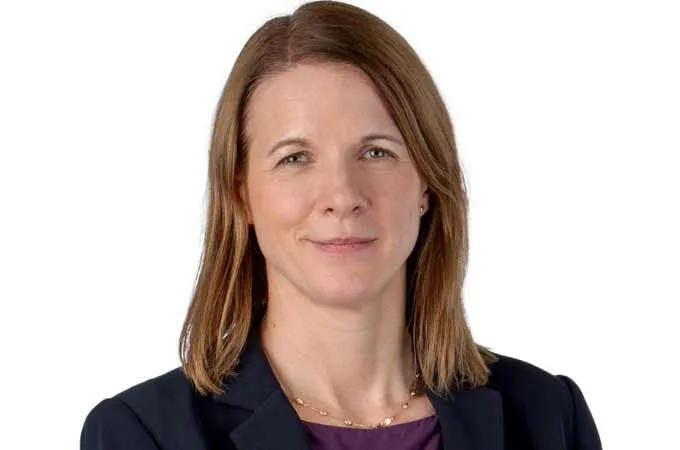
Arab economies are expected to record a growth of 3.7 percent in the coming period, driven by increased oil production and the continued recovery of non-oil sectors, said Kristalina Georgieva, Managing Director of the International Monetary Fund (IMF).
This reflects improved regional economic performance despite global challenges, she said.
In her opening address at the Annual Arab Fiscal Forum in DUbai, Georgieva noted that the global economy is projected to grow by around 3.2 percent this year, exceeding previous expectations, supported by stronger global demand and easing financial pressures in several major economies, a WAM news agency report said.
Georgieva added that global inflation continues its downward trend, reaching about 3.8 percent in 2026 before falling further to 3.4 percent by 2027, aided by lower energy prices and improved efficiency in global supply chains.
Regarding Arab economies, Georgieva highlighted positive indicators, including the return of two Arab countries to international debt markets after an absence of more than three years, signalling stronger public finances and renewed investor confidence.
IMF Managing Director also said remittance flows to Arab countries grew by more than 5 percent, supported by the recovery of tourism and improving labour markets worldwide, helping enhance financial and social stability in several states.
In a related context, Georgieva pointed to the UAE’s continued progress in strengthening its diversification-based economic model, with non-oil activities accounting for around 80 percent of GDP, reflecting the success of the country’s long-term economic policies.
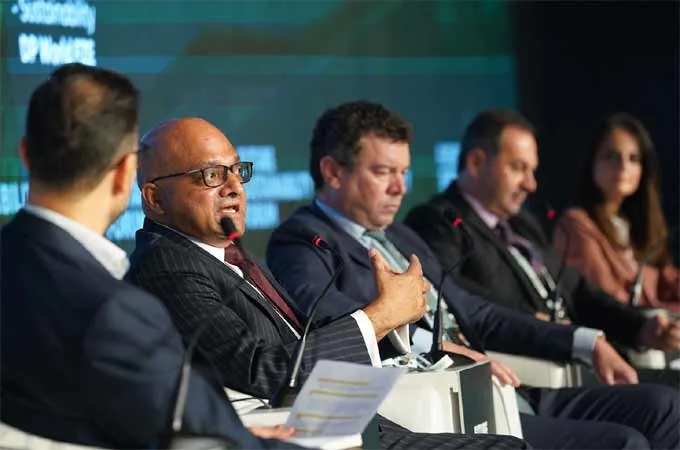
The Arab Fiscal Forum is discussing the future of fiscal policies in the region, the role of government technology and artificial intelligence in improving public spending efficiency, financing sustainable development, and advancing partnerships between the public and private sectors.
Meanwhile, His Highness Sheikh Mohammed bin Rashid Al Maktoum, Vice President and Prime Minister of the UAE and Ruler of Dubai, met with Kristalina Georgieva during the preliminary day of the World Governments Summit (WGS) 2026. Under the theme ‘Shaping Future Governments’, the Summit is being held from February 3 to 5.
The meeting was held in the presence of HH Sheikh Hamdan bin Mohammed bin Rashid Al Maktoum, Crown Prince of Dubai, Deputy Prime Minister and Minister of Defence of the UAE, and Chairman of The Executive Council of Dubai, and H.H. Sheikh Ahmed bin Mohammed bin Rashid Al Maktoum, Second Deputy Ruler of Dubai.
The meeting discussed developments in the global economy and key challenges related to financial and monetary transformations. It also explored ways to strengthen cooperation between the UAE and the IMF in support of global economic stability, as well as sustainable and inclusive growth.
HH Seikh Mohammed emphasised that international cooperation is a key pillar for ensuring global economic stability and navigating rapid transformations. His Highness added that the World Governments Summit has established itself as a leading global platform for fostering constructive dialogue and exchanging insights on the future of the economy.
Georgieva commended the UAE’s role in supporting global economic stability, emphasising the value of the partnership between the IMF and the UAE in navigating economic shifts and reinforcing confidence in the international financial system. She also praised the World Governments Summit as a leading international forum for dialogue on future economic challenges.