MENA region's renewable sector has achieved a definitive breakthrough and has officially entered an exponential phase of deployment, says a new report.
While it took five years for the region’s installed renewable capacity to grow from roughly 14 GW in 2020 to 30 GW in 2024, the market has surged in 2025, adding nearly 15 GW of new capacity in just 12 months, said the ‘MENA Energy Outlook 2026 - Renewables, Hydrogen and Energy Storage Insights 2030’ report, published by Dii Desert Energy, a leading energy transition think tank in the MENA region since 2009.
Key findings of the report were revealed at the World Future Energy Summit, said a WAM news agency report.
The report also highlights a sharp surge in the projects pipeline, which has reached a total of 202 GW, surpassing the 'Balanced Transition' scenario (165 GW) forecasted in the previous edition. This represents a significant acceleration, with the identified pipeline growing by 54 percent from the 131 GW recorded just one year earlier.
In addition, the UAE has further consolidated its position as a renewable energy leader, ranking second in the region with 7.5 GW of operational capacity.
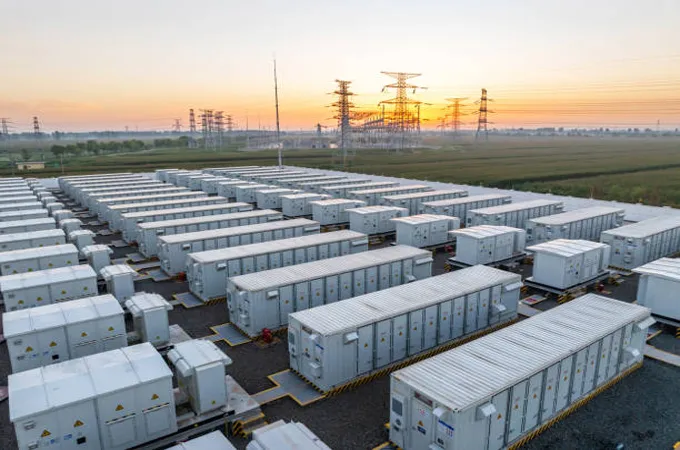
This leadership is underpinned by bold new ambitions to reach 22 GW by 2031 and world-record execution: Masdar, in partnership with EWEC, is developing a 5.2 GW solar park integrated with 19 GWh of battery storage, the largest and most technologically advanced system of its kind and a world-first breakthrough for delivering clean around-the- clock power at giga-scale.
Building on the success of the inaugural MENA Energy Outlook 2025 released last year, this 2026 edition serves as a critical update, showing faster growth than even optimistic models.
The peer-reviewed report provides a comprehensive status across all relevant energy transformation technologies and countries in MENA.
At the same time, a forward-looking picture with different scenarios of the energy transformation in MENA by 2030 has been modelled, leveraging insights from the decade-and-a-half-long Dii Renewable Projects Database, the MENA H2 tracker and the Energy Storage Projects database.
Eng Sharif Al Olama, Undersecretary for Energy and Petroleum Affairs, UAE Ministry of Energy and Infrastructure, said: “In light of the dual challenges of climate change and energy security, a rapid and sustained scale-up of renewable energy is no longer optional — it is essential. The UAE recognised this early, and we have committed to tripling our renewable energy capacity by 2030, strengthening our ambition by increasing the renewable energy target from 14.2 gigawatts to a clear target of more than 22 gigawatts of installed renewable energy capacity, including solar, concentrated solar power (CSP), wind, and waste-to-energy within the next five years.”
He added: “As we accelerate this transformation, access to reliable, high-quality data and forward-looking analysis becomes critical to sound policymaking, investment decisions, and regional coordination. In this context, the MENA Energy Outlook 2026 provides valuable and timely insights into the trends, risks, and opportunities shaping the energy future of our region, supporting evidence-based decisions as we build a more secure, resilient, and sustainable energy system.”
Cornelius Matthes, CEO of Dii Desert Energy, said: “2025 can be described as a breakthrough year for the energy transformation in the MENA region, with an unprecedented surge in new capacity for both solar PV, wind and BESS, all purely driven by market factors with the lowest prices globally.”
Mohammed Jameel Al Ramahi, CEO of global clean energy leader, Masdar, said: “The MENA Energy Outlook 2026 clearly shows that the region has reached a decisive inflection point. The acceleration of renewable energy deployment now underway demonstrates the potential of renewables to outperform conventional energy on cost, speed of deployment, resilience, and returns. This reinforces MENA’s position as global leader in delivering affordable, scalable clean energy, while supporting energy security and long-term economic growth.”
Dii Desert Energy's unique insights and close connection to the latest developments in projects and markets make this report an invaluable resource for understanding the current landscape and future trajectory of renewable energy, hydrogen and energy storage in the MENA region. -TradeArabia News Service