Light + Intelligent Building Middle East 2026, which will be held at the Dubai World Trade Centre from January 12-14, will examine the essential role of advanced lighting solutions in supporting the Middle East’s fast-growing transport system.
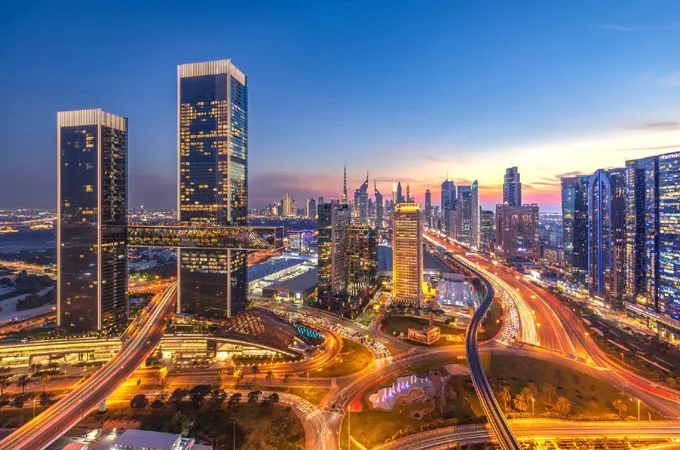
Major regional projects, including the $30 billion King Salman International Airport in Riyadh and the large-scale expansion of Dubai World Central, which is set to become five times the size of Dubai International Airport, highlight the scale of upcoming infrastructure demands.
In Dubai, the expanding urban mobility network further illustrates this need, facilitating more than 850,000 passenger journeys daily on the Dubai Metro, where lighting plays a critical role in maintaining safety, visibility and user comfort, said the organisers.
As part of its flagship conference, THINKLIGHT, Light + Intelligent Building Middle East will feature a dedicated project perspective session titled: “Lighting Design for Transport: Enhancing Navigation, Safety and Passenger Experience” which will bring together regional and international lighting experts to discuss lighting design in transport settings such as airports, metro stations, and bus terminals.
Moderated by Martin Lupton, Co-Founder of Light Collective UK, the session will also feature Kristina Allison, President of the Society of Light & Lighting (SLL) and Environment Lighting Lead at WSP UK, and Kaori Hiroki, Senior Associate at Loop Lighting
Speaking ahead of the event, Kush Suneja, Design Manager and Founder of Spatial Vibes Lighting emphasised lighting’s influence on human behaviour in complex transport hubs.
"Lighting is clinically proven to be linked significantly to our stress levels, sleep and overall well-being, influencing the way we navigate high complexity, dynamic environments. Simply put, lighting is that invisible presence affecting our every decision in movement," he stated.
Suneja noted that strategies such as daylight integration, zoning and using smart lighting controls help to achieve balance between around-the-clock operational requirements and user comfort and energy efficiency.
Echoing this perspective, fellow panellist Giovanni Zambri, Managing Director of SMITH TAIT, highlighted the shift from static, ‘always on’ lighting to adaptive and cognitive systems across global transport hubs.
"This transition is driven not just by the need to cut energy costs – which accounts for 40% of costs – but by the ability of light to actively manage passenger flow, improve safety and regulate human biological rhythms during travel," he added.
Zambri added that emerging technologies such as Li-Fi (Light Fidelity), which enables LED lights to transmit high-speed data to passengers’ mobile devices, could ease pressure on congested Wi-Fi networks and integrate lighting as part of a wider digital communication system.
"As the Middle East continues to invest in next-generation transport infrastructure, lighting has become a strategic enabler, not just for visibility but for safety, energy efficiency, passenger wellbeing and operational resilience," said Abdul Muhsin, the Show Director for Light + Intelligent Building Middle East.
"The key event continues to provide an important platform that supports innovation in lighting across the region’s most important projects," he added.-TradeArabia News Service