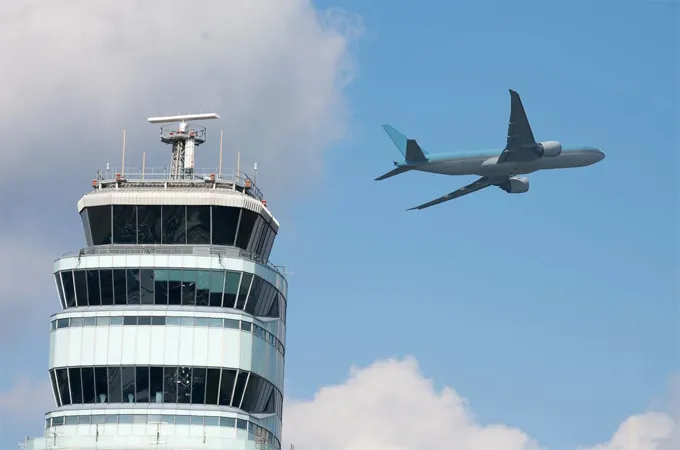
The International Air Transport Association (IATA) urged the International Telecommunication Union (ITU) and national telecommunications regulators to ensure that 5G and future 6G networks operating near aviation frequencies do not impair radio altimeters and other avionic systems.
Ahead of the World
Radiocommunication Conference 2027 (WRC-27), the ITU is conducting detailed
studies to determine the technical conditions for global 5G/6G deployment.
This guidance,
developed with national telecom regulators and aviation safety authorities,
will set the long-term framework for protecting essential aviation systems
while enabling future telecom connectivity.
To support this
process, IATA submitted a working paper—being presented at the ITU WP5B
Meeting (Geneva, 18-27 November 2025) outlining the operational scenarios
and safety requirements that must guide future spectrum policy.
IATA’s Call to
Action
IATA’s paper calls for
future spectrum policy to take into consideration all key safety scenarios,
including take-off, landing, taxi, and go-arounds; adverse weather conditions
(turbulence and windshear); and emergency or off-nominal situations.
Radio altimeters,
which rely on spectrum availability, provide essential height information in
all these conditions and support both flight crews and automated safety
systems.
IATA also reaffirmed
the importance of maintaining a minimum separation of 35 ft (11 m) between
aircraft and terrestrial 5G transmitters.
“The benefits of 5G
and 6G can never come at the cost of aviation safety. Spectrum decisions must
be based on real-world aircraft operations, not idealised telecommunications
industry modeling. That means ensuring ITU studies fully reflect the most
demanding conditions pilots face. With input from aviation users, WRC-27 must
deliver clear global rules to ensure the safe coexistence of radio altimeters
and other safety-critical avionic systems with next-generation telecom networks
across all phases of flight,” said Nick Careen, IATA Senior Vice President
Operations, Safety and Security.
Persistent 5G
Challenges
5G networks use a
variety of frequency bands and power levels. Of particular importance to
aviation is the 5G band located adjacent to the Radio Altimeter (RAD ALT)
allocation (4.2–4.4 GHz).
In several countries,
telecommunications providers have voluntarily implemented 5G mitigation
strategies to mitigate potential interference with RAD ALT systems, including
reducing transmission power, applying runway exclusion zones, and tilting
antenna downwards.
Some of these
temporary measures are now approaching expiry.
In Canada (1 January
2026) and Australia (1 April 2026), key mitigations will lapse within months.
In the US, plans to
auction the Upper C-Band (3.98-4.2 GHz)—immediately adjacent to the 4.2 GHz
altimeter band—are advancing this month, and existing 5G mitigations are
scheduled to be removed in 2028.
However,
next-generation radio altimeters that are more resistant to 5G are not expected
to be available to airlines before the early 2030s.
This creates a mitigation gap which adds to
the complexity of maintaining safe airline operations.
“Current 5G mitigations were never designed as a long-term solution and several will expire within months. At the same time, more resilient radio altimeters will not reach airlines until the next decade. That leaves a significant mitigation gap. With new spectrum auctions underway and protections being lifted in key markets, regulators must not assume safety will take care of itself. The industry needs clear, consistent safeguards to bridge the period before new altimeters are available,” said Careen. -TradeArabia News Service