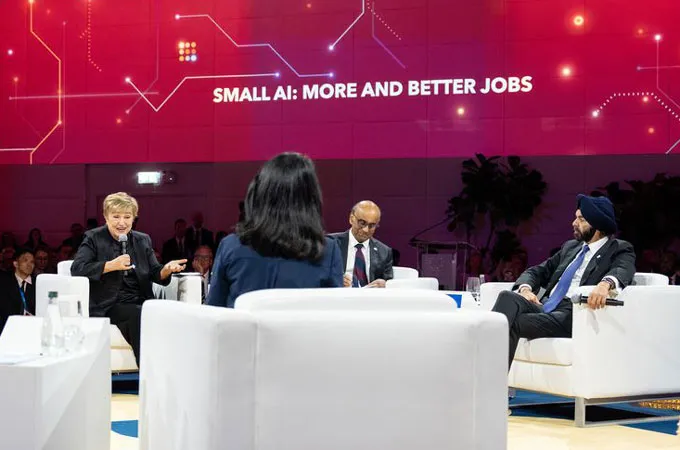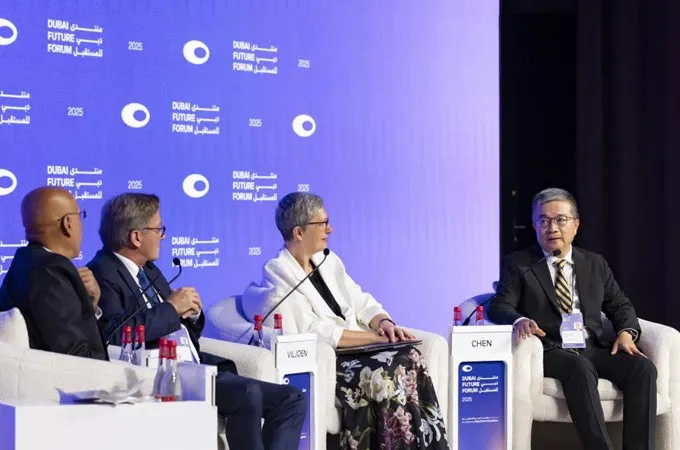
The Dubai Future Forum 2025, organised by Dubai Future Foundation (DFF) at the Museum of the Future, was distinguished by a series of exceptional predictions.
Forum speakers predicted that gene therapy will treat blood and liver diseases within five years, and that all 4,000 known genetic diseases could be eliminated within a decade.
They anticipated that future development policies will place human well-being and ethical governance at their core; that human bodies equipped with advanced wearables will become the natural environment for daily AI integration; and that 30% of Fortune 500 CEOs will have a digital twin by 2028.
Other experts explored provocative scenarios, including the possibility that a fully omniscient AI, capable of accessing all human knowledge, could pose an existential threat to humanity.
Forecasts also included demographic and institutional challenges, such as the expectation that by 2060, for every 100 people working, 52 may be without employment, and that academic institutions may shift from leading innovation to coordinating it across all sectors as AI reshapes research and development.
In his opening speech, Khalfan Belhoul outlined three major shifts that will shape humanity’s future: the importance of focus as a “new currency” amid decreasing attention spans; a new era of information overload where “everyone and no one is an expert”; and the evolution of AI companions redefining the concept of a “best friend.”
The Forum’s sessions highlighted several global records that will influence future generations, including the halving of global child mortality over the past 25 years; Other insights included: the United Nations System of National Accounts 2025 was adopted meaning for the first time environmental sustainability and well-being are used as key indicators of national growth; global installed solar capacity surpassed 2,200 GW by end-2024, more than doubling since 2022; by 2060, for every 100 people working, there will be 52 people who are not; nearly 2 billion people still lack access to clean drinking water; the Emirates Genomic Research Program has 120 petabytes of genomic data stored; and the UAE is planning a base for researchers in Antarctica that can accommodate more than 50 people.
DFF also announced during the Forum that 31 new international organisations and institutions have joined the Global Futures Society (GFS), which is headquartered at the Museum of the Future in Dubai. The additions raise the GFS’s total membership to 91 experts and institutions representing leading futures organisations across 33 countries.
Collective action sought
The Forum also raised urgent strategic questions requiring collective international action: the value of increased efficiency if human well-being does not improve; society’s readiness for a world where agentic AI systems act on our behalf; humanity’s ability to rebuild its relationship with nature while embracing transformative technologies; the future role of AI in education, governance, and daily life; and how societies will redefine growth in a world that is moving beyond GDP as the sole measure of progress.
Throughout its two days, the Forum hosted specialised workshops with leading consultancies, thematic symposia with global institutions, and a range of activities, including UNICEF’s launch of its latest report, The Future of Childhood in a Changing World.
Forum’s discussions took place across five central themes: Foresight Insights, Exploring the Unknown, Empowering Societies, Reimagining Health, and Optimising Systems. The second day also featured the awarding of the Future Stories Awards, recognising leading authors and storytellers shaping the future imagination.
This year’s edition of "Future Stories" Award celebrated three voices whose imagination stood out among 185 submissions from 47 countries. First place was awarded to Thomas Knuijver from the Netherlands for his story “Above a Simulated Nile”, a tale in which a widower staying at a futuristic space resort uncovers that the AI designed to emulate his late wife may be far more “alive” than anyone expected. Second place went to Pierluigi Fasano from Italy, writing from Switzerland, for “The Awakening”, a profound exploration of what it might feel like for the first self-aware artificial intelligence to awaken inside an alien, engineered human body. Third place was awarded to Maryam Al Shawab from the UAE for her story “The Safe Space”, set in a world shared by humans and androids. Her narrative follows Peter as he undergoes emotional therapy to overcome love, loss, and loneliness in a society where technology and humanity coexist intimately.
DFF launched a new report, The Future of Space Solar Power, exploring the potential of harvesting solar energy outside Earth’s atmosphere and transmitting it wirelessly back to Earth as a sustainable source of clean energy.
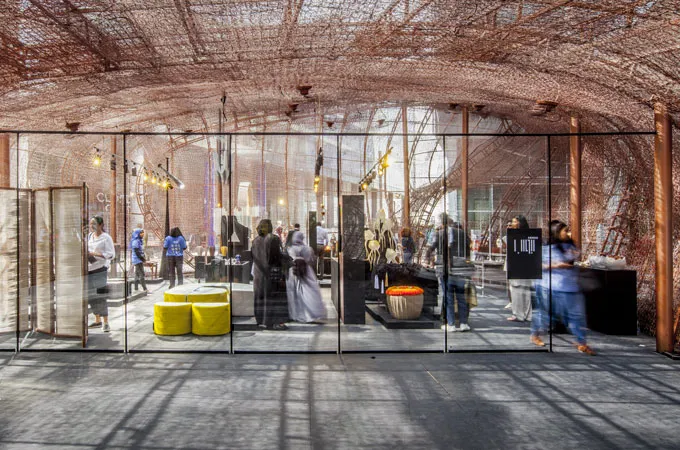
The 2025 edition also featured the Forum’s first dedicated Book Corner, offering book launches, signings, and direct interaction with global authors and publishers. -TradeArabia News Service