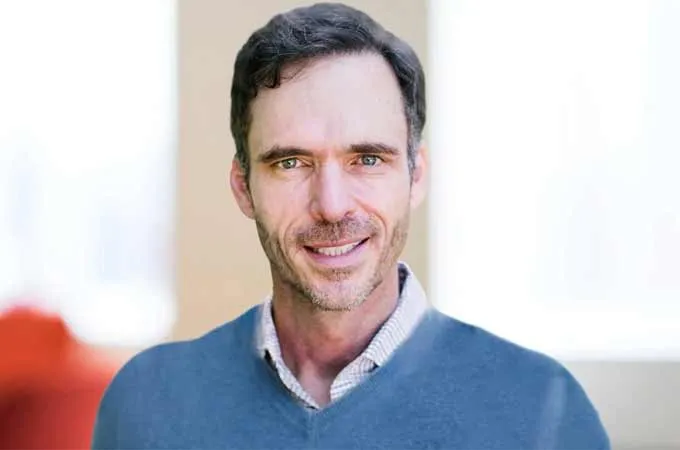
Building on last year’s theme of “cooperation in a fragmented world”, participants of the 2024 edition of the World Economic Forum (WEF) will be asked to concentrate on “rebuilding trust”, says Thomas Hohne-Sparborth, Head of Sustainability Research, Lombard Odier IM.
The 2024 theme of WWF, taking place in Davos from January 15-19, will focus on four areas: opportunities to promote security and cooperation in a win-win manner for all stakeholders, growth and jobs, artificial intelligence, and the complex nexus of climate, nature, and energy.
Hohne-Sparborth gives a heads-up on how the forum will shape up, and what the investors can expect:
At Lombard Odier, we see this transition as part of a broader set of system changes unfolding at speed and scale across our economy, said Hohne-Sparborth.
Turmoil in the global economy reinforces a common pattern: value chains are being reconfigured, driven not only by new perceptions of risk, but also by technological disruptions and newly emerging business models.
Energy transition, a resurgence in the appreciation of nature, and building momentum on climate action are accelerating the change and shifting profit pools.
Whilst some of the stakeholders present at COP28 resemble those at Davos, the character of the two conferences is markedly different. The COP meetings are closely supported by the work of the International Panel on Climate Change (IPCC) – a scientific body backed by an organisation comprised of government representatives.
The World Economic Forum, in contrast, has traditionally had a more business-focused membership, and remains a prime opportunity for investors to see the way the winds of large-scale capital flows are blowing.
From the agenda, that direction is increasingly clear. Environmental and economic agendas have converged, as has been clear for many years from the WEF’s annual Global Risk Report, where intensifying climate conditions, risks to biodiversity, and other nature-related risks have steadily climbed the rankings of top risks perceived by 1,200 multi-stakeholder respondents.
Accordingly, the focus on climate, nature and energy ranks highly on the list of topics for attendees to discuss. Here, we believe the strong participation of investors and the business community should be seen as a highly welcome, Hohne-Sparborth said.
Based on the estimates of the International Energy Agency (IEA) and other bodies, at least $3-5 trillion per year is needed in investment in energy and nature-related transitions during this decade, necessarily involving not only public but substantial private sources of capital.
Hohne-Sparborth said: “Davos, for us and other likeminded investors, will be an opportunity to take stock of the many ways in which environmental transitions are triggering much wider disruptions of our economy and investment landscapes”.
Nature themes appear throughout the agenda and list of events, as a topic much broader than climate issues alone.
Participants are likely to consider newly emerging risks, but also new opportunities for public-private partnerships in nature-based solutions and the need to rethink value chains.
Set in a Swiss mountain resort, the World Economic Forum is perhaps not the most accessible of settings. Participation at Davos is inevitably limited to a smaller audience. For this reason, it is unlikely to ever be a sufficient means of tackling all the challenges its participants are asked to consider – but neither does it pretend to be.
As system changes around energy, nature and climate gain unstoppable momentum, the number of platforms where these economic transitions are discussed is also proliferating. Each offers its own perspective and tone, but all might be said to add to the overall momentum.
Davos, seen in this light, has a distinctive business- and investor-oriented view. Rather than seeing that as a weakness, it is also an opportunity to recognise that the transitions unfolding around us do not just make environmental sense, but a good deal of economic and financial sense too. That, at least, is at the heart of our investment conviction. – TradeArabia News Service