International leaders have called for increased investment, stronger partnerships and accelerated implementation of clean cooking initiatives across Africa, as nearly one billion people on the continent continue to lack access to clean and safe cooking solutions.
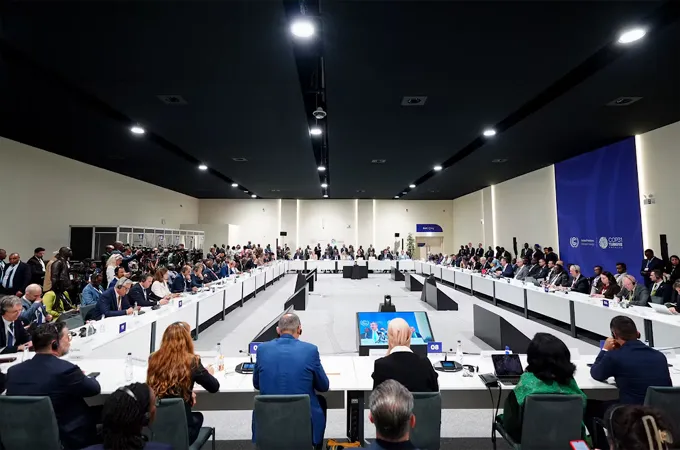
The call came during a high-level roundtable held at COP31 in Antalya, co-hosted by the International Energy Agency (IEA), Türkiye's COP31 Presidency and the United Republic of Tanzania. The meeting aimed to build on recent progress and secure further commitments ahead of the second Summit on Clean Cooking in Africa, scheduled to take place in Nairobi, Kenya, on January 27-28, 2027.
The Leaders' Roundtable on Clean Cooking in Africa brought
together heads of state, government ministers, international organisations,
development finance institutions and industry representatives to discuss ways
to accelerate access to modern cooking technologies and translate growing
international support into tangible results.
Moderated by IEA Executive Director Fatih Birol, the meeting
featured opening remarks from Türkiye's Vice-President Cevdet Yılmaz and
Tanzania's President Samia Suluhu Hassan.
Other senior participants included Somalia's Deputy Prime
Minister Salah Ahmed Jama, Lesotho's Deputy Prime Minister Nthomeng Majara,
Uganda's Minister of Environment Kahinda Otafiire and Sierra Leone's Minister
of Environment Jiwoh Abdulai. UNDP Administrator Alexander De Croo, OPEC Fund
President Abdulhamid Alkhalifa and COP30 President André Corrêa do Lago also
attended.
Participants highlighted clean cooking as a critical energy,
public health and climate challenge, particularly in Africa, where reliance on
polluting fuels and traditional cooking technologies contributes to
approximately 850,000 premature deaths annually.
Women and children bear a disproportionate share of the
burden, often spending several hours collecting firewood and preparing meals
using inefficient and polluting fuels. Beyond household access, discussions
emphasised the importance of extending clean cooking solutions to schools,
hospitals and other public institutions.
The meeting also highlighted the need to support local
businesses, particularly women-led enterprises, while mobilising public and
private financing to expand the availability and affordability of modern
cooking technologies.
Fatih Birol, IEA Executive Director, said: “Access to clean
cooking remains one of the most urgent and overlooked energy challenges facing
Africa today. We are encouraged by the progress we have seen since we hosted
our first Summit in Paris two years ago, with more funding reaching projects on
the ground and more households gaining access to modern cooking solutions. But
there is still far more to be done. Nearly 1 billion people across the
continent still lack access to clean and safe ways to cook their meals, with
serious consequences for health and livelihoods – particularly for women and
children, who bear the greatest burden. I would like to thank our co-chairs for
their leadership in keeping this issue high on the international agenda. Our
priority now is to ensure the Nairobi Summit brings further commitments and,
above all, faster progress in getting clean cooking solutions to the people who
need them.”
Cevdet Yılmaz, Türkiye's Vice-President, stressed the
importance of coordinated international action and financing, describing clean
cooking as a challenge extending beyond the energy sector.
“Clean cooking is not only an energy issue. Every year,
hundreds of thousands of people die prematurely, most of them women and
children. Solving clean cooking means healthier families, stronger women and
more sustainable societies. It is important that we move forward together and
mobilise finance, through the concerted effort of governments, international
organisations, developments banks and the private sector. As Türkiye, we
believe this is a pressing issue that requires urgent and collective action and
implementation.”
Samia Suluhu Hassan, Tanzania's President, emphasised that
progress should be measured by the number of households gaining access to
affordable and sustainable cooking solutions rather than financial commitments
alone.
“Our success must be measured not only by the resources we
mobilise, but by the number of families gaining access to affordable, reliable
and sustainable clean cooking solutions. Clean cooking is an investment in
human development, women’s empowerment, economic opportunity and climate
resilience.”
Progress since the 2024 Paris summit
The COP31 discussions build on commitments secured at the
first Summit on Clean Cooking in Africa, hosted by the IEA in Paris in 2024,
which generated more than $2.2 billion in new financial commitments.
More than one-third of the funding has since been deployed
in projects across 28 African countries, while governments have introduced over
120 new clean cooking policies.
According to the IEA, the rate at which people are gaining
access to clean cooking across Africa is now 30 per cent higher than the average
recorded over the previous five years. This progress has continued despite
challenges, including disruptions to energy flows through the Strait of Hormuz.
The developments indicate growing international engagement
in addressing the clean cooking deficit, although significant investment and
implementation challenges remain.
Nairobi summit to drive further commitments
Attention is now turning to the second Summit on Clean Cooking in Africa, which will be held in Nairobi on January 27-28, 2027.
The summit will be co-chaired by Kenya's President William
Ruto, Norway's Prime Minister Jonas Gahr Støre, United States Secretary of
Energy Chris Wright and IEA Executive Director.
An additional $900 million in new financial commitments
has already been secured for the initiative, with further contributions
expected ahead of the meeting.
The event is being co-organised by the Clean Cooking
Alliance, with support from the African Union and the African Development Bank
Group. Governments, financial institutions and private-sector companies have
been invited to participate and translate their commitments into concrete
financing and projects.
Speakers also highlighted the growing prominence of clean
cooking on the international energy and climate agenda, with successive COP
presidencies helping maintain momentum towards the Nairobi meeting.
The central priority, participants agreed, is to accelerate the delivery of affordable, reliable and sustainable cooking solutions to households and communities across Africa, ensuring that international commitments translate into measurable improvements in health, livelihoods and energy access. -OGN/TradeArabia News Service