The global energy system has proved more resilient than expected despite geopolitical disruption and supply-chain pressures, while artificial intelligence (AI), rising electricity demand and shifting investment patterns are set to influence the sector over the next decade, according to Adipec’s Global Energy Report 2026.
The report, Power Shift: How AI and Geopolitics Are
Redrawing Global Energy, draws on surveys of 1,832 senior energy insiders
and 17 executive interviews conducted by research and strategic communications
firm Kekst CNC.
Its findings indicate that 64 per cent of energy insiders
believe the global energy system has proved more resilient than expected
following recent disruption.
Meanwhile, 77 per cent remain optimistic about the
industry’s prospects over the next decade, despite growing concerns about
geopolitical instability, investment risks and the ability to meet future
demand.
Conflict and war were identified as the leading risks to the
sector by 42 per cent of energy insiders and 55 per cent of oil and gas
insiders.
Nevertheless, 85 per cent of respondents said energy was a
more attractive sector for investment than five years ago.
The Middle East emerged as a leading growth market, with 30
per cent of energy insiders identifying it as the region offering the greatest
opportunity over the next decade.
The region ranked second in every other surveyed region’s
outlook, while 72 per cent of respondents expected its importance to global
energy to increase over the next decade.
A further 69 per cent anticipated a similar rise in the
UAE’s importance.
The report highlights the growing significance of the
Gulf–Asia corridor, as producers and consumers increasingly look to the two
regions for future energy trade.
Around half of oil and gas producers identified Asia Pacific
(49 per cent) and the Middle East (48 per cent) as their most important
customer regions over the next five years.
The findings also point to a broader understanding of energy
security. Rather than prioritising domestic self-sufficiency, industry leaders
favour diversified energy sources, additional supply routes and stronger
infrastructure.
Investment in renewables was identified as the leading
energy-security priority by 37 per cent of respondents, followed by
diversifying energy sources at 34 per cent and protecting critical
infrastructure at 31 per cent.
Renewables, natural gas and liquefied natural gas (LNG),
nuclear power and oil are all expected to become more important over the next
decade, reflecting the industry's emphasis on a diversified energy mix rather
than reliance on a single source.
AI is another major driver of change. Some 81 per cent of
energy insiders expect AI-driven electricity demand to exceed current
forecasts, including 32 per cent who anticipate it will be much higher.
Only 3 per cent expect demand to be lower. In addition, 71
per cent see AI as more of an opportunity than a risk for the energy sector.
Technology companies are expected to gain influence, with 43
per cent of energy insiders identifying them as the organisations likely to
have the greatest impact on the global energy industry.
Among oil and gas
insiders, AI-driven efficiency is expected to become the leading commercial
opportunity over the next decade, followed by powering AI systems and data
centres.
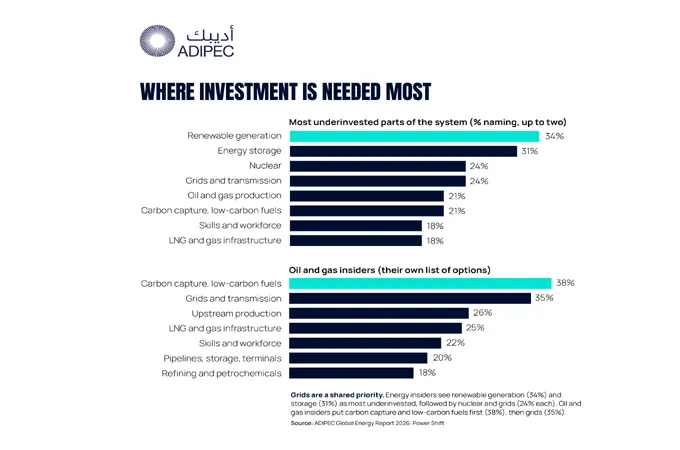
However, investment and execution remain significant
challenges. Although 73 per cent of respondents said investment risks across
oil, gas and renewables had increased over the past five years, the report
identifies opportunities in rising demand, grid modernisation, energy storage
and cross-sector partnerships.
Overall, the findings suggest that the next phase of energy development will depend on mobilising capital, adopting technology and integrating lower-carbon solutions into existing systems while maintaining reliable and affordable supplies. -OGN/TradeArabia News Service