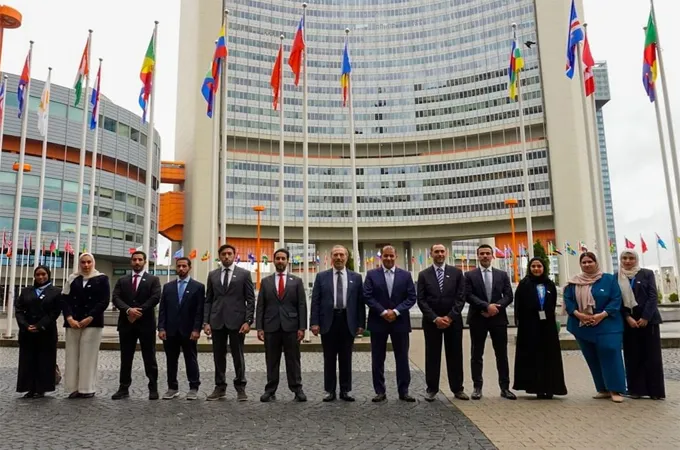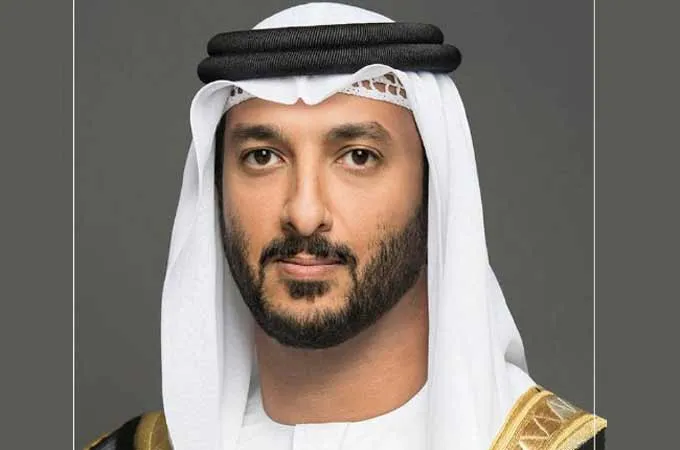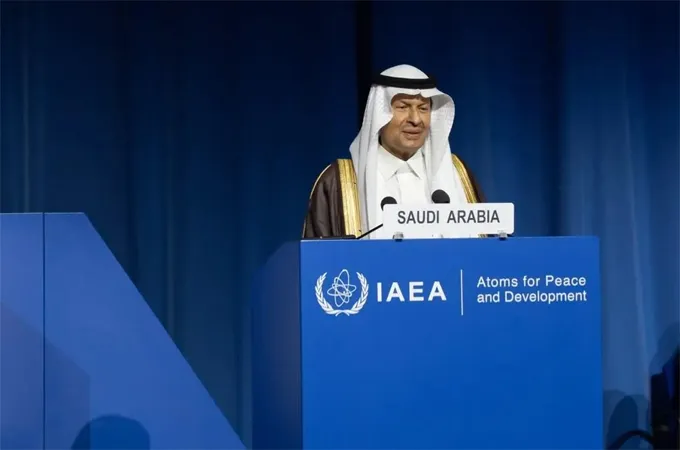
Saudi Arabia has identified an estimated 114 million tonnes of ore containing high concentrations of rare earth elements and promising uranium deposits at the Jabal Sayid project in the Madinah region, Energy Minister Prince Abdulaziz bin Salman announced at the 70th General Conference of the International Atomic Energy Agency (IAEA) in Vienna.
The discovery places Jabal Sayid among the world's most
significant rare earth resource sites currently under development, according to
the minister, and could strengthen Saudi Arabia's position in global
critical-minerals supply chains.
"The exploration and geological studies at the Jabal
Sayid project in Madinah Region have identified estimated resources of
approximately 114 million tons of ore containing high concentrations of rare
earth elements, particularly heavy rare earth elements, alongside promising
concentrations of uranium. This places the project among the most significant
rare earth resource sites currently under development globally."
The announcement comes as Saudi Arabia accelerates efforts
to develop its mineral resources and establish domestic value chains for
critical and strategic minerals.
Prince Abdulaziz said the Kingdom is seeking to move beyond
the extraction and export of raw materials by developing capabilities spanning
mining, processing, separation and refining.
The Jabal Sayid development has also gained momentum through
international partnerships.
During Crown Prince
Mohammed bin Salman's visit to the United States in November 2025, Saudi Arabia
and the US signed a framework for cooperation on critical minerals and
supply-chain security.
The agreement was followed by a partnership between Saudi
mining company Ma'aden and US-based MP Materials to develop capabilities for
processing and separating rare earth elements and producing associated uranium.
Saudi Arabia is simultaneously advancing uranium exploration
through its National Atomic Energy Project.
One of the programme's main tracks focuses on recovering
uranium associated with phosphoric acid produced during phosphate fertiliser
operations in the north of the Kingdom.
Pilot work conducted with French company Orano has produced
promising economic indicators for uranium recovery, Prince Abdulaziz said.
The cooperation led to a memorandum of understanding signed
during the Crown Prince's visit to France last August.
The Kingdom is also using its Sedimentary Cover Survey
Initiative to identify additional uranium resources from conventional sources.
Prince Abdulaziz said Saudi Arabia's broader resource
base—including phosphate, gold, copper, zinc, silver, bauxite, magnesium, iron
ore, lead, nickel, rare earth minerals, transition metals, uranium, silica and
gypsum—provides the foundation for developing integrated industrial value
chains.
He said the Kingdom's ambition extends from exploration and
mining to processing, refining, production of rare earth oxides and recovery
and purification of uranium, including potential production of yellowcake,
subject to economic feasibility and international obligations.
The minister also emphasised that Saudi Arabia's nuclear
ambitions are focused on peaceful uses and will be pursued under international
safeguards and regulatory oversight.
"In this context, the Kingdom's partnership with the
friendly United States of America exemplifies this approach. Cooperation
between the two countries spans critical minerals and supply chain security, as
well as the peaceful uses of nuclear energy. Last July, this cooperation marked
an important milestone with the signing of an agreement on cooperation in the
peaceful uses of nuclear energy, known as the '123 Agreement'."
He said Saudi Arabia remains committed to transparency,
nuclear safety and security, and cooperation with the IAEA as it develops its
nuclear and mineral-resource capabilities.
The discovery at Jabal Sayid adds a potentially significant new dimension to Saudi Arabia's drive to turn its mineral wealth into domestic industrial capacity while strengthening its role in global critical-mineral supply chains. -OGN/TradeArabia News Service