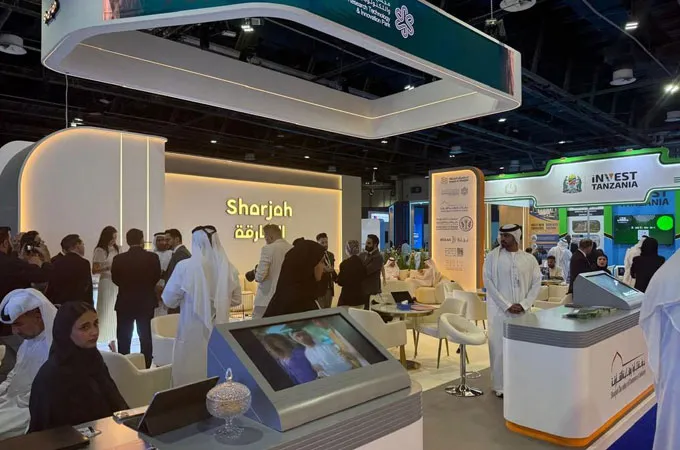
Sharjah's FDI Office has announced that it had last year attracted 142 foreign investment projects worth AED7.74 billion ($2.1 billion) and is now planning to target further investment in technology, manufacturing, logistics and clean energy.
It will focus in the coming period on markets with strong growth and investment potential that align with the emirate’s priority sectors.
Mohamed Juma Al Musharrkh, the CEO of the Sharjah FDI Office (Invest in Sharjah), said the office seeks to explore new opportunities in Asian and regional markets while strengthening its presence in India, US, the United Kingdom and Europe.
Speaking to WAM on the sidelines of AIM Congress 2026, Al Musharrkh said the office places particular importance on markets with expertise and capabilities in technology, manufacturing, logistics and innovation.
Sharjah’s participation in the congress aims to strengthen its position on the global investment map, engage with investors and decision-makers, and explore new opportunities and partnerships, he noted.
It also seeks to showcase the emirate’s competitive advantages and investment opportunities and attract quality investments that support sustainable economic growth, he added.
Al Musharrkh identified India, Italy, UK and the US among Sharjah’s leading sources of investment, alongside regional markets, adding that the emirate’s appeal rests on its diversified economy, strategic location, infrastructure and competitive business environment.
On the key sectors attracting the largest share of foreign direct investment, he highlighted technology and artificial intelligence, advanced manufacturing, clean energy and sustainability, alongside logistics, infrastructure, food and manufacturing, which continue to offer strong growth opportunities.
He said his participation in a session on the congress’s opening day focused on the concept of quality investment.
This is measured not only by the capital committed but also by its long-term development impact, including job creation, capacity building, stronger supply chains and support for local economic growth.