Dubai’s Roads and Transport Authority (RTA) has awarded two
contracts for Al Meydan Street Development Project, one of its key strategic
projects to enhance Dubai’s main road network, at a total cost of AED1.161
billion ($316 million).
Given the scale of the project, the works have been divided
into two contracts to accelerate delivery, realise traffic and development
benefits, strengthen the road network’s readiness to accommodate future growth,
and support urban development and development projects across the emirate, the
RTA said.
The project includes the development of several key
intersections along Al Meydan Street through the construction of 3,700 m of
bridges and 17 km of roads, in addition to cycling tracks that will enhance
connectivity with the existing cycling network.
The project will serve a number of residential and
development areas with a combined population of more than 500,000 and is
scheduled for completion by the end of 2028.
RTA’s Director General Mattar Al Tayer, who is also Chairman
of the Board of Executive Directors, said: “RTA continues to deliver strategic
projects to develop Dubai’s road network, guided by the leadership’s vision,
which regards investment in infrastructure as a fundamental pillar of
comprehensive development, enhancing Dubai’s competitiveness and reinforcing
its position as a leading global city in which to live, work and invest.
“RTA follows a proactive approach to planning and delivery,
focused on developing an integrated and highly efficient road network that
keeps pace with urban, population and economic growth and delivers high levels
of traffic flow and mobility flexibility. This contributes positively to
quality of life and supports the objectives of the Dubai 2040 Urban Master Plan
and Dubai Economic Agenda D33.”
He added: “Al Meydan Street is one of Dubai’s key strategic
corridors, running parallel to and supporting Sheikh Mohammed bin Zayed Road
and Al Khail Road. The project will strengthen connectivity across the main
road network, provide alternative routes that improve traffic distribution,
enhance traffic flow, and increase mobility efficiency between key areas.
“It will also raise the capacity of north–south traffic
corridors by 18 per cent and reduce travel time from Al Manama Street and
Dubai–Al Ain Road to Umm Suqeim Street from 30 minutes to 10 minutes, an
improvement of 66 per cent. The project will also support the emirate’s rapid
urban growth.”
Sustainable Traffic Solutions
Al Tayer explained that Al Meydan Street Development Project
is one of RTA’s key strategic projects to enhance the efficiency of Dubai’s
main road network. As a parallel and supporting corridor to Sheikh Mohammed bin
Zayed Road and Al Khail Road, it will strengthen connectivity between several
key residential and development areas.
He added that the project forms part of a comprehensive
vision to develop Dubai’s strategic road corridors, improve traffic flow,
increase network capacity, and deliver sustainable traffic solutions that keep
pace with the emirate’s comprehensive development, while supporting urban
expansion and current and future development projects.
Al Tayer noted that, given the scale of Al Meydan Street
Development Project and the diversity of its engineering components, the works
have been divided into two contracts to accelerate implementation and delivery
while preserving the project’s overall integration. This approach will help
maximise the traffic and development benefits of Al Meydan Street, which is of
particular strategic importance as a parallel and supporting corridor to Sheikh
Mohammed bin Zayed Road and Al Khail Road, while also linking several key
areas.
The project will strengthen connectivity between the main
road corridors, improve traffic distribution across the network, and enhance
mobility between the north and south of the emirate, he added.
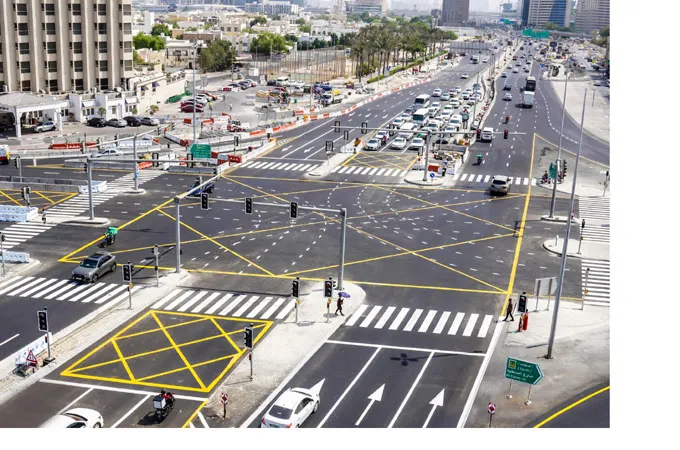
Al Meydan Street Development Project extends from its intersection with First Al Khail Street to Umm Suqeim Street, passing through several key roads, including Al Khail Road, Latifa bint Hamdan Street and Al Marabea’ Street. The project also includes the development of Al Marabea’ Street up to Sheikh Mohammed bin Zayed Road.
The first contract covers the development of Al Meydan
Street from its intersection with Latifa bint Hamdan Street to Umm Suqeim
Street, together with the development of Al Marabea’ Street from Dubai Hills to
Sheikh Mohammed bin Zayed Road, over a total length of approximately 14 km.
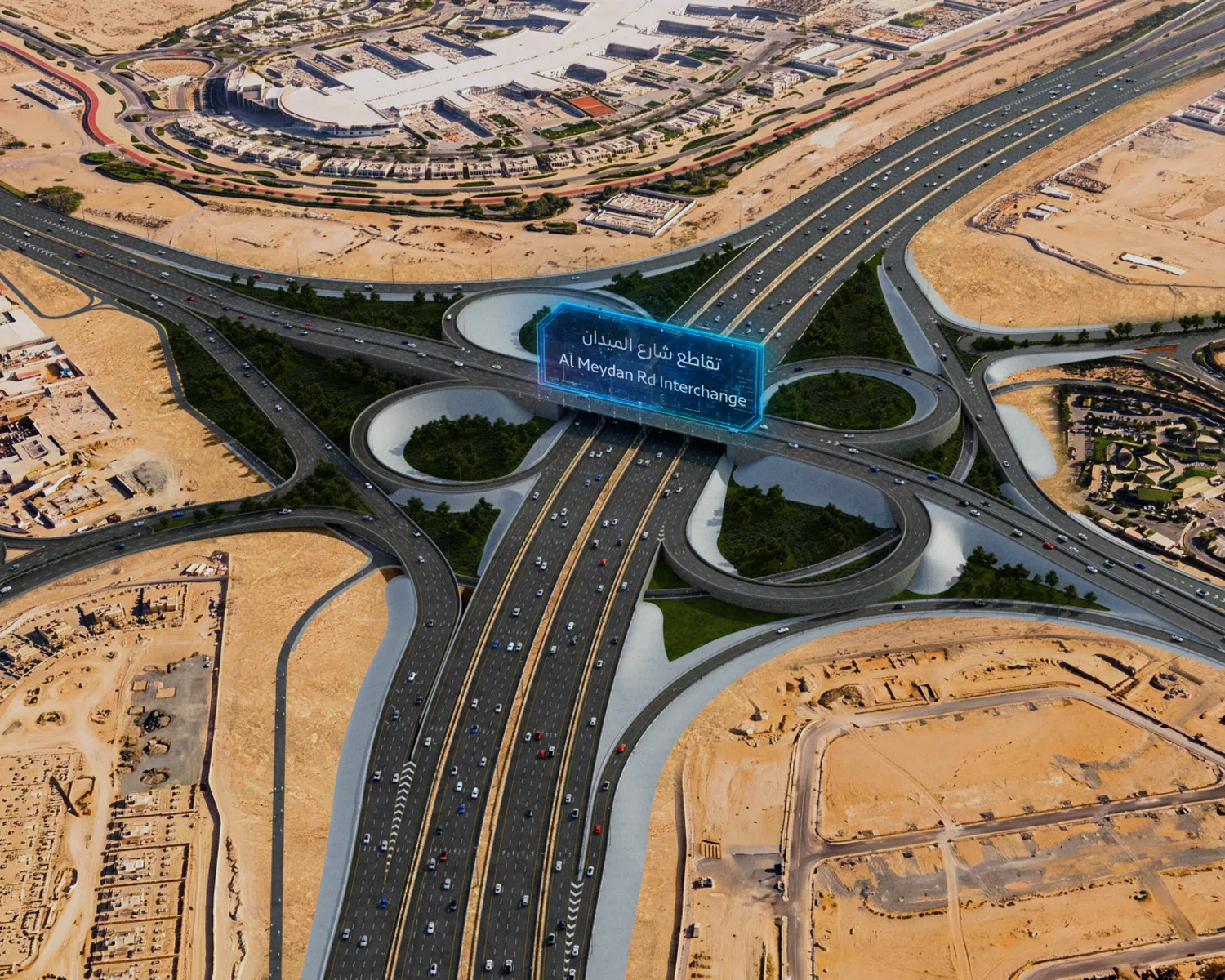
The scope includes upgrading the intersection of Al Marabea’
Street and Al Meydan Street into a grade-separated interchange with four lanes
in each direction. The interchange will comprise bridges extending 1,600 m in
total, with a combined capacity of 14,400 vehicles per hour in both directions.
It will provide free-flow movement in all directions and establish a direct
connection between Umm Suqeim Street and Latifa bint Hamdan Street.
The project also includes a direct connection between Al
Marabea’ Street and Sheikh Mohammed bin Zayed Road, with three lanes in each
direction and a combined capacity of 7,800 vehicles per hour. In addition, a
700-m elevated link will be constructed on Dubai–Al Ain Road towards Nad Al
Hamar Street to serve the residential areas of Nad Al Sheba, improve
accessibility, and strengthen connectivity with Dubai’s main road network.
Contract Two
The second contract covers the development of Al Meydan
Street from its intersection with First Al Khail Street, through Al Khail Road,
to its intersection with Muscat Street. It also includes approximately 2 km of
new surface roads linking Al Meydan Street with Latifa bint Hamdan Street,
enhancing integration across the road network, strengthening connectivity
between key corridors, and improving traffic flow between residential and
development areas.
The contract includes surface improvements at the
intersection of Al Khail Road and the collector road towards Ras Al Khor
Street, as well as converting the signalised intersection of Al Meydan Street
and Muscat Street into a multi-level grade-separated interchange that will
provide free-flow movement in all directions.
The interchange will comprise bridges extending 1,400 m in
total, with four lanes in each direction and a combined capacity of up to
14,400 vehicles per hour in both directions.
The contract also includes an integrated cycling network and
underpasses beneath Al Meydan Street to ensure continuity of cycling routes and
connect them with the existing network, supporting sustainable mobility and
providing safe, integrated mobility options.
Strategic Integration
Al Meydan Street Development Project forms part of RTA’s
integrated strategy to develop Dubai’s strategic road corridors. It directly
complements the recently awarded Latifa bint Hamdan Street Development Project,
with the two projects together forming an interconnected traffic network
linking some of the emirate’s key arterial roads, including Sheikh Zayed Road,
Al Khail Road, Sheikh Mohammed bin Zayed Road, Emirates Road, and Sheikh Zayed
bin Hamdan Al Nahyan Street. This integration will improve traffic flow,
strengthen connectivity between residential and development areas, and provide
highly efficient alternative routes that support the sustainability of the road
network.
Together, the two projects will further enhance connectivity
between key corridors, improve traffic distribution across the network, and
strengthen infrastructure readiness to accommodate Dubai’s continued urban and
population growth. They will also support current and future developments
across the areas they serve, including Dubai Hills, Nad Al Sheba, Mohammed Bin
Rashid Gardens, Dubai District One, Al Barari, and communities along Al Meydan
Street and Latifa bint Hamdan Street, with a combined population of more than
500,000. This will be achieved through an integrated, highly efficient road
network capable of accommodating anticipated traffic growth and providing
sustainable mobility solutions, according to RTA.
Latifa bint Hamdan Corridor
RTA recently commenced works on the 12-km Latifa bint Hamdan
Street Development Project, which will form a new strategic corridor linking
Sheikh Zayed Road to Emirates Road via Al Khail Road, Al Meydan Street, Sheikh
Mohammed bin Zayed Road, and Sheikh Zayed bin Hamdan Al Nahyan Street.
The project includes seven bridges extending 2,300 m in
total and eight tunnels extending 900 m, enhancing traffic flow and improving
the efficiency of the road network. The new corridor will have a capacity of
approximately 16,000 vehicles per hour in both directions, while daily trips
are expected to exceed 130,000.
The project will also reduce travel time between Umm Al
Sheif Street and Emirates Road by 54 per cent, from 33 minutes to 15 minutes,
and is scheduled for completion by the end of 2028.-TradeArabia News Service