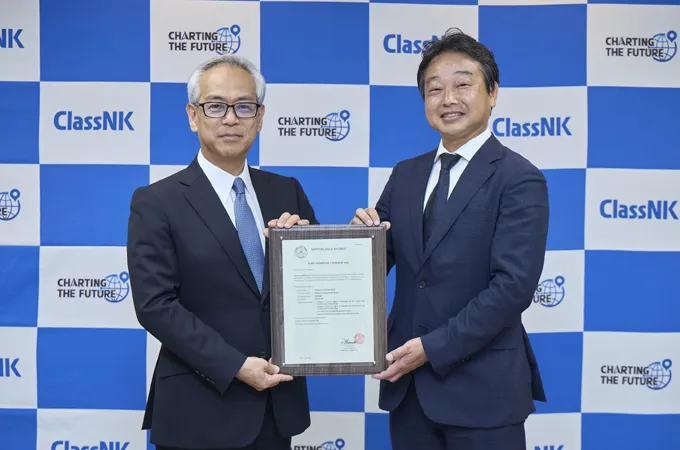
Ebara Elliott Energy (EEE) has become the first company in the world to receive Type Approval certification for liquid hydrogen (LH2) cargo pumps used in maritime liquefied hydrogen carriers, marking a significant advance in hydrogen shipping infrastructure.
The certification validates the pumps' design, structural
integrity and performance before deployment, replacing the traditional
Individual Approval process that requires inspection of each unit after
installation.
The new approach reduces technical risks, ensures consistent
manufacturing quality and enables faster deployment of certified equipment for
global shipping operators.
EEE secured the certification following extensive
performance and durability testing using liquid hydrogen at cryogenic
temperatures of -253 deg C.
The trials were conducted at Ebara Group's large-scale
liquid hydrogen testing facility at its Futtsu Plant in Japan, overcoming
longstanding limitations caused by the lack of dedicated hydrogen testing
infrastructure.
The achievement is expected to support the expansion of
liquefied hydrogen supply chains in key markets including Japan, South Korea,
Australia, the Middle East and the European Union.
EEE plans to expand its certified product portfolio to cover
a broader range of operational requirements as demand for hydrogen transport
infrastructure continues to grow.
"Acquiring the world's first Type Approval for an LH2
cargo pump completely eliminates a critical risk for the global hydrogen
transport economy," said Shane Reph, Deputy Chief Executive Officer and
Chief Operating Officer at Ebara Elliott Energy. "By validating our
technology on land under real-world operating conditions, we give maritime
developers complete confidence from the design stage onward. This upfront proof
guarantees equipment reliability while eliminating the costly rework and
operational risks that typically plague shipboard pre-commissioning.” -OGN/TradeArabia News Service