Saudi Arabia's King Salman International Airport Development Company (KSIADC) is preparing to tender two new infrastructure contracts for King Salman airport in Riyadh after completing the contractor prequalification stage, reported MEED.
These include the construction of a permanent East-West corridor and landside access roads serving the North and South terminals.
The scope of work includes construction of roads, bridges and tunnels.
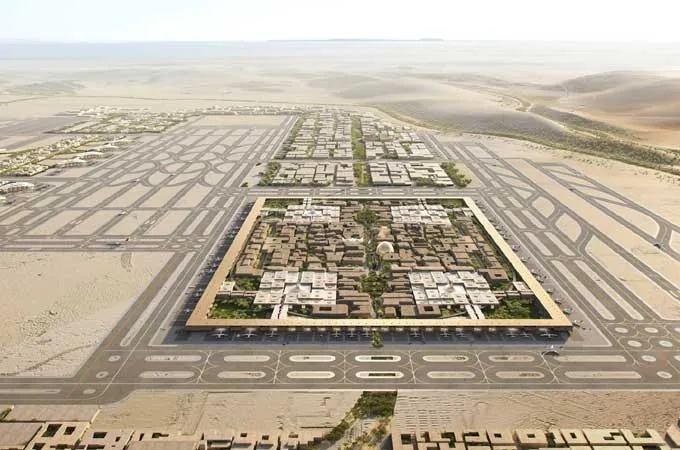
A six-runway mega-hub, King Salman International Airport is projected to become the world’s largest such facility integrated with an existing airport site that can accommodate 185 million passengers per annum by 2050, Gulf Construction has reported in its July 2026 issue.
The airport project spans nearly 57 sq km and will integrate the existing King Khalid International Airport facilities, encompassing six parallel runways, aviation support zones, logistics facilities, retail districts and residential developments.
Nine terminals are planned in total, including a royal terminal, a commercial airline terminal, a dedicated private aviation terminal and a cargo terminal for low-cost carriers.
The tender move comes following KSIADC's selection of three groups to deliver the Terminal 6 apron, taxiways and other airfield infrastructure at KSIA.
Gulf Construction had reported that KSIADC, a Public Investment Fund (PIF) entity, kicked off work on the project’s third runway with a joint venture of Spain’s FCC Construcción and Saudi contractor Al-Mabani General Contractors handling it.
The runway, 4,200 m in length with multiple access taxiways, has been designed to align with Riyadh’s prevailing wind conditions to improve safety and operational efficiency, and is expected to raise the airport’s hourly movement capacity from 65 to 85 aircraft once operational.
In parallel, construction on a new passenger terminal, which is designed to handle 40 million passengers annually, is set to begin in 2026, marking the first major phase of Riyadh’s strategy to build this mega aviation hub. KSIA’s acting CEO Marco Mejia confirmed the next phase will also include new aircraft hangars and key airside infrastructure, with operations targeted to begin in 2029.