Legacy planning 'key to protect $3.2trn GCC family wealth'
DUBAI
SHARE
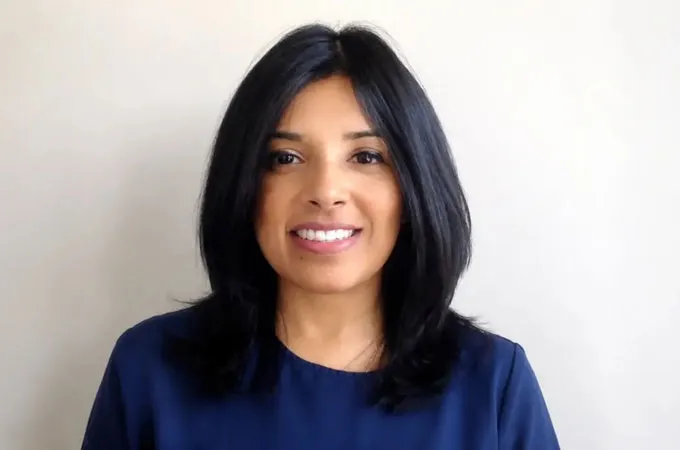
Leena Parwani
Family-owned businesses in the UAE and the GCC countries are in danger of losing billions of dollars of wealth and assets due to lack of legacy or succession planning, when the founders of the family businesses are in need to pass on the legacy to the next generation, says an expert.
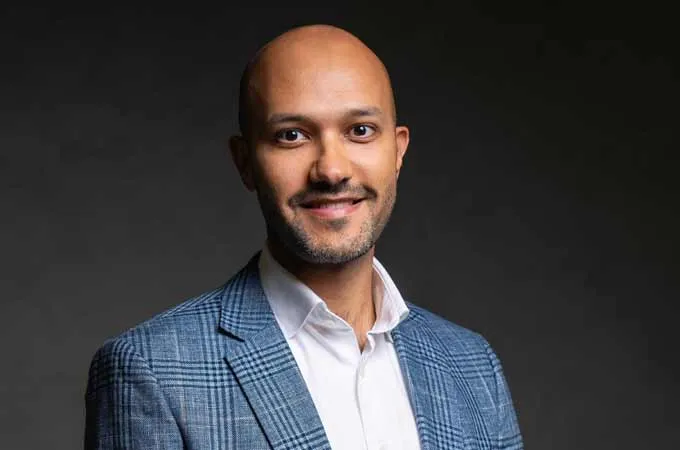
Success of family businesses sometimes depends on how the family members – whose relationship are often governed by tribal or traditional values – manage their expectations especially when it comes to sharing the wealth or taking over the management of the business in case of the death of the founder of the business, says Leena Parwani, founder and CEO of LPH Financial Services.
Although most UAE family businesses that started off in the 1960s-1980s have passed over to the next generation successfully, many of them might not succeed to the third-generation transition.
Legacy planning is a financial strategy that prepares people to bequeath their assets to a loved one or next of kin after death, according to Investopia. These affairs are usually planned and organised by a financial advisor, says Parwani.
According to Capgemini Research Institute’s World Wealth Report 2021, the population of high-net-worth individuals (HNWIs) – or the number of people owning more than $1 million – in the Middle East region grew by 6.8 percent to 800,000, while their wealth soared by 10.7 percent to $3.2 trillion in 2020. The wealth of these rich people – mostly belonging to businessmen – are in danger due to lack of legacy planning.
Global financial wealth rose by 10.6 per cent in 2021 to $530 trillion, according to Boston Consulting Group.
Due to lack of proper corporate structure and corporate governance, most family-owned businesses are failing to maintain the same level of growth under the next generation as before. Many family business founders have passed away without leaving a clear succession plan, a will or legacy planning, resulting in legal disputes among the successors on their perceived share in the family wealth, says Parwani.
The Covid-19 pandemic has created an urge among most family-owned businesses to undertake some kind of legacy planning or succession planning to protect the family wealth from being plundered.
“We’ve seen more clients take an interest not only in Wills, but also in mental capacity planning by way of an Enduring Power of Attorney (EPA) or Lasting Power of Attorney (LPA). A third type of planning, known as “lifetime planning”, has also gained popularity,” said a report by HSBC.
“Whereas a Will only takes effect after an individual’s death, and an EPA/LPA only while they are mentally incapacitated, other types of plans can be set in motion during their lifetime. Clients are increasingly considering trusts, partnerships, and family investment companies as a way of relinquishing value, control and/or influence to the next generation during their own lifetime, or as a way of introducing the next generation to the family’s wealth as a means of continuity.”
For some, the current economic climate has created an opportune time for wealth transfer, with lower asset valuations and lower effective transfer tax rates resulting directly from the pandemic.
Some clients are not yet ready to surrender control to trustees. As an alternative structure, a family limited partnership (FLP) or a family investment company (FIC) may be considered, HSBC report says.
“FLPs and FICs can still help to coordinate and protect assets, but allow senior family members to retain greater control of assets while transferring wealth in a more gradual manner to the younger generation. An FIC is a private company whose shareholders and directors are members of the family. Shares are usually divided into different classes with varying levels of control. For example: parents own shares with voting rights, while children and grandchildren hold shares with economic or dividend rights but no voting rights,” she says.
Saudi Arabia has the largest number of millionaires in the Middle East with more 224,000 millionaires living in the Kingdom. According to the World Wealth Report 2022 issued by the Capgemini Research Institute for Financial Services, Saudi Arabia is ranked 17th globally in the number of millionaires. There has been a 6.7 per cent increase in millionaires in Saudi Arabia in 2021 when compared to 2020 - from 210,000 to 224,000.
The Kingdom was followed Kuwait, which witnessed an increase of 6.1 per cent in the number of millionaires from 205,000 to 217,000. Kuwait is 18th globally after Saudi Arabia.
The UAE is home to 92,600 US-dollar millionaires; 4,000 multi-millionaires worth more than $10 million; 251 centi-millionaires (over $100 million), and 14 US-dollar billionaires, according to the latest Henley Global Citizens Report.
Parwani says: “A large chunk of the wealth might disappear into thin air, right after the death of the founder of the business as the second and the third-generation representatives of these family-owned businesses might not possess the same entrepreneurial zeal. Many of them spend the wealth lavishly in luxury, sometimes wild lifestyle.
“It is therefore very important for the founders, chairman and the leaders of the family-owned businesses to start doing legacy planning to protect their hard-earned wealth.”
If a business owner doesn't have a plan in place for his estate, its management might go against his wishes once it is passed on. Legacy planning is important for all family-owned businesses – small or big. For a small business or farm, or any other assets that require ongoing maintenance, legacy planning is often an important financial tool, she says. - TradeArabia News Service