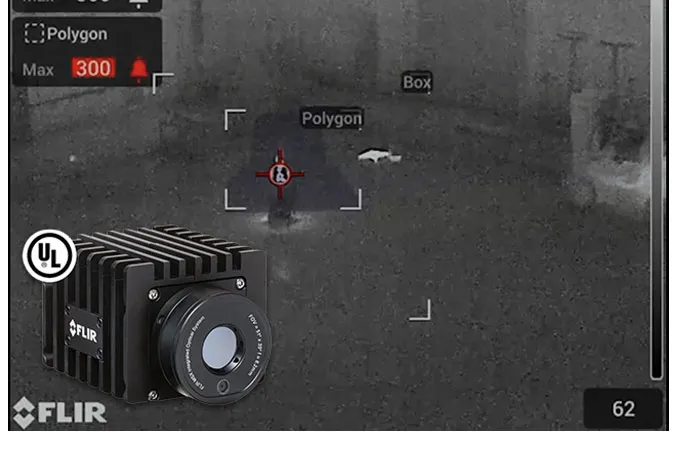
Teledyne FLIR's A40 and A70 (Axx-Series) thermal imaging cameras have become the first models to achieve UL 2684 listing.
They are listed as thermal image fire detectors under ANSI/CAN/UL 2684, the joint US-Canadian standard for video and thermal image detectors used in fire alarm systems.
The UL 2684 listing complements the 2025 edition of NFPA 72, the National Fire Alarm and Signaling Code, which introduced a dedicated category for thermal image fire detection under Sec. 17.12 and requires thermal image fire detection systems to be listed for the purpose of fire detection.
Safety at the heart
"Safety has always been at the heart of what we do, and in fire protection, safety runs on standards. A fire starts as heat, not smoke, and our cameras detect that heat before there is smoke or flame. The question we get in this region is not whether thermal detection works. It is what the device is listed to, and how that fits the code the authority is working from. Until now there was no listing to point to. That has changed," said Matthew Hasty, Global Vertical Director for Science, Automation, and Early Fire Detection at Teledyne FLIR.
For the GCC, where many fire protection frameworks draw upon NFPA codes and UL-listed equipment is already part of established project review, this creates a clearer pathway for evaluating and specifying thermal image fire detection solutions within critical infrastructure projects.
UL 2684 sets out defined requirements for fire testing, environmental and electrical performance, and durability.
The listing does not replace local Civil Defence approval or project-specific authority requirements. Rather, it provides stakeholders with equipment that has been independently tested against a published standard by an accredited laboratory, offering an objective benchmark beyond manufacturer-generated performance claims.
Thermal image fire detection
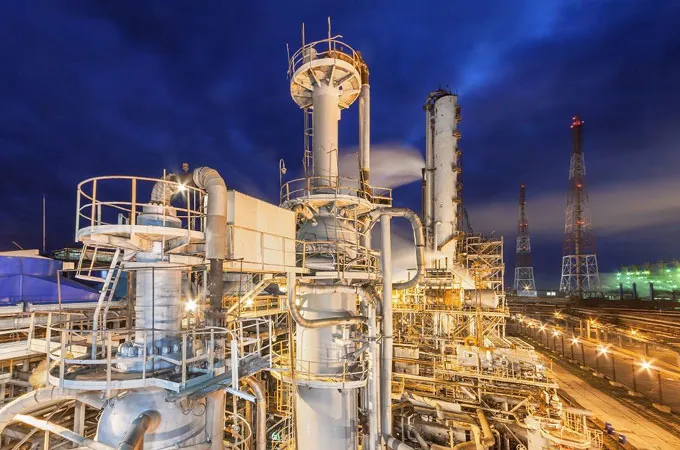
The relevance to Gulf markets is driven by the infrastructure being built and operated throughout the region. Thermal image fire detection is increasingly valuable in petrochemical and refining facilities, where friction heating or equipment degradation can develop long before ignition.
The same advantage applies to utilities and electrical infrastructure, battery energy storage systems, data centres, rooftop and utility-scale solar, manufacturing facilities, logistics hubs and other industrial assets where an abnormal temperature rise often represents the earliest indication of an emerging risk. In a data centre, that can be a busbar joint heating under load. On a rooftop solar array, it can be a DC connector, combiner box or inverter, often with no conventional detector nearby.
Traditional fire detection technologies respond to the products of combustion, such as smoke, flame, or heat reaching a detector. By that stage, the fire process has already begun.
A thermal image fire detector works earlier in that sequence, measuring the temperature of the asset itself before smoke is generated. Unlike conventional thermal cameras used primarily for visualisation, a calibrated thermal image fire detector continuously measures temperature across every pixel in the scene.
Identifying developing hazards
User-defined measurement regions can be monitored for absolute temperature thresholds, temperature differentials, and rates of temperature increase, allowing operators to identify developing hazards before they escalate into fire events.
This capability is particularly valuable in operating facilities where equipment temperatures naturally fluctuate. A transformer or electrical connection running warm during normal operation is not a fire condition. The same component climbing in temperature while load is falling is an early warning, and warrants immediate investigation.
By identifying these thermal anomalies at an earlier stage, organisations can address developing issues through planned maintenance rather than emergency response. A loose electrical connection can be tightened, a battery module isolated, or a failing component replaced before operations are disrupted.
Early intervention
In continuous-process industries where downtime can have significant operational and financial consequences, earlier intervention contributes directly to plant reliability and business continuity.
The benefits extend beyond operational teams. Insurers, risk consultants, and infrastructure owners increasingly seek solutions supported by independently validated standards.
The UL 2684 listing provides an objective framework against which thermal image fire detection technologies can be evaluated, while continuous thermal monitoring generates documented temperature histories that can support broader risk-management and asset-protection strategies.
Teledyne FLIR's Axx-Series cameras combine thermal detection with integrated visible imaging to help operators verify alarm conditions quickly. Analytics are processed directly on the camera, reducing dependence on external servers while enabling rapid response.
When alarm conditions are met, the cameras initiate fire alarm events through compatible fire alarm control systems. Designed for line-of-sight monitoring of high-value assets, thermal image fire detection is intended to complement conventional fire detection technologies as part of a comprehensive fire protection strategy.—TradeArabia News Service