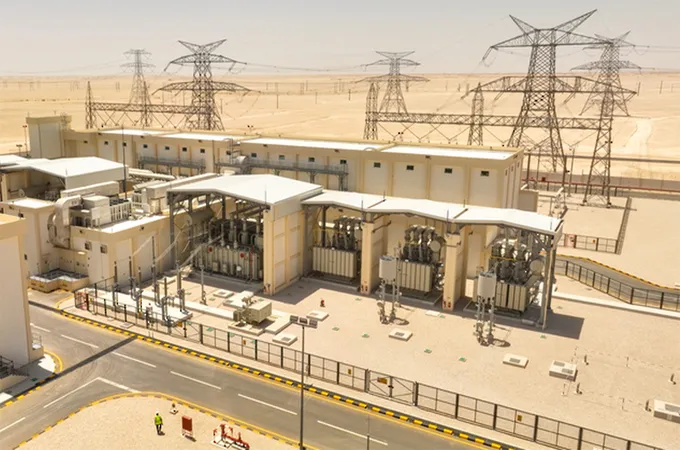
Nama Electricity Distribution plans to invest more than RO600 million ($1.6 billion) between 2026 and 2029 to expand and strengthen electricity networks, upgrade infrastructure and accelerate the transition towards a smart, data-driven power distribution system across Oman.
The investment programme will focus on improving network
reliability, enhancing operational efficiency and preparing infrastructure to
meet future electricity demand, while expanding the use of digital
technologies, artificial intelligence (AI) and advanced data analytics.
The company said its next phase of development would move
beyond network digitisation towards maximising the value of data to improve
services, strengthen network management and deliver a better experience for
subscribers.
Khalfan Al Bartamani, Chief Commercial Officer at Nama
Electricity Distribution, told Oman News Agency (ONA) that the company was
working to integrate smart meters, Geographic Information Systems (GIS),
Supervisory Control and Data Acquisition (SCADA), Advanced Distribution
Management Systems (ADMS), and network sensing and control technologies.
The integration is expected to enable real-time network
monitoring, faster fault detection, more rapid emergency response and shorter
electricity restoration times.
Nama is also expanding the use of big data, advanced
analytics and AI to develop applications that monitor the condition and
performance of network assets.
These technologies will support predictive maintenance,
allowing potential faults to be identified earlier and maintenance activities
to be directed more accurately.
Al Bartamani said the transformation would also improve
subscriber services through faster responses to reports, more effective outage
management and better coordination between operational teams.
The company has already implemented an outage management
system linking its call centre with emergency response teams.
The system uses real-time monitoring, operational data and
GIS technology to help locate faults and accelerate responses to service
interruptions.
Nama will continue developing substations and distribution
networks, improving asset management, supporting renewable energy integration
and promoting local value addition and national skills development as part of
its wider modernisation programme.
Network investment and infrastructure development
Nama operates, maintains and develops an electricity
distribution network extending more than 105,000 kilometres across the
governorates within its service area, excluding Dhofar Governorate.
The company serves approximately 1.4 million subscribers,
with electricity services reaching 100% of populated areas within its
operational scope.
Over recent years, its projects have included expanding and
strengthening networks across different voltage levels, constructing and
upgrading substations, connecting new subscribers and implementing digital
transformation and automation initiatives.
Capital expenditure reached approximately RO120 million by
the end of October 2025. Of this amount, around RO61 million was allocated to
11-kilovolt (kV) network projects and approximately RO19 million to 33kV
projects.
Key initiatives during the period included network expansion
and reinforcement, automation projects, remote monitoring and control systems,
and the development of outage management capabilities across several
governorates.
The planned investment for 2026-2029 is expected to build on
these efforts, increasing network capacity and readiness while supporting
economic growth and rising electricity demand.
Smart meters and grid automation
Smart meter infrastructure remains a central element of
Nama’s digital transformation strategy.
The deployment rate reached approximately 80% by the end of
2025, improving consumption data accuracy and supporting more effective load
management and operational planning.
Al Bartamani said the company viewed smart meters as more
than a means of recording electricity consumption, describing them as essential
digital infrastructure for developing services and improving network
performance.
Nama is integrating smart meters with GIS, SCADA, ADMS and
other operational systems to create a more connected and efficient electricity
distribution network.
During 2025, the company also completed its Automatic Load
Transfer System project between transformers, achieving 100% completion.
The system automatically restores electricity supply when a
transformer fails, helping improve network reliability and reduce outage
durations.
In addition, Nama is integrating fault-location systems and
remote-control units with SCADA to improve fault identification, accelerate
restoration and enhance subscriber satisfaction.
Reliability and Oman Vision 2040
Nama reported measurable improvements in network
reliability, with the average outage duration reaching approximately 177
minutes in 2025.
The average outage frequency stood at around two
interruptions per subscriber.
The company’s ongoing digitalisation and infrastructure
investments are intended to further improve these indicators by enabling faster
fault detection, more targeted maintenance and more effective network control.
The initiatives support Oman Vision 2040, particularly its
objectives for infrastructure development, digital transformation, operational
efficiency and economic diversification.
By combining infrastructure investment with smart-grid
technologies, renewable energy integration and national workforce development,
Nama aims to establish a more flexible, reliable and efficient electricity
distribution system capable of meeting Oman’s future energy needs while
improving services for subscribers.