The American Concrete Institute (ACI) announced the winners of the 12th annual ACI Excellence in Concrete Construction Awards during the Fall 2026 ACI Concrete Convention in Atlanta. The awards provide a platform to recognize concrete projects at the forefront of innovation and technology and showcases these projects to inspire excellence in concrete design and construction around the world. The Overall Excellence honor was awarded to Grand Paris Express L18 Viaduct, Saclay, Essonne, France.
This year, ACI honored the Grand Paris Express L18 Viaduct, Saclay, Essonne, France as the Overall Excellence award winner. A total of 18 winners were recognized in the following categories: Low-Rise Structures (up to three stories), Mid-Rise Structures (4-15 stories), High-Rise Structures (more than 15 stories), Repair and Restoration, Bridges, Decorative Concrete, Flatwork, and Infrastructure. More than 30 industry experts served as judges in the process, resulting in the selection of the final winners.
The 2026 ACI Excellence in Concrete Construction Award winners:
Bridges
Overall Excellence Award Winner and First Place: Grand Paris Express L18 Viaduct, Saclay, Essonne, France. The Grand Paris Express Line 18 viaduct in Saclay, France, showcases innovative, sustainable concrete engineering. Performance-based mixture designs maximized supplementary cementitious materials, including GGBS and limestone filler, to reduce CO₂ emissions while ensuring durability against ASR, DEF, sulfate attack, and corrosion. Self-consolidating concrete enabled safer, faster construction of footings and 12 m-high piers in single lifts. Precast match-cast segments, supported by a dedicated batching plant, improved quality, reduced site traffic, and enhanced safety. These integrated solutions delivered exceptional structural performance, durability, construction efficiency, and architectural finish while meeting demanding project schedules.
Second Place: Gordie Howe International Bridge, Windsor, ON, Canada. The Gordie Howe International Bridge connects Windsor, ON, Canada, and Detroit, MI, USA. This 5.7 billion (CAD) Public-Private Partnership (P3) is one of North America’s most complex infrastructure undertakings. Set to be the longest cable-stayed bridge on the continent, the 2.5 km crossing includes six lanes of traffic and a toll-free multiuse path for pedestrians and cyclists. Its two inverted‑Y towers rise roughly 220 m above the Detroit River, creating a bold and instantly recognizable silhouette.
Honorable Mention: Post Street Bridge Replacement, Spokane, WA, USA. The Post Street Bridge Replacement in Spokane, WA, USA, revitalized a historic 260 ft span concrete spandrel arch bridge spanning the Spokane River between the Upper and Lower Falls. The project involved rehabilitating the existing concrete arches to provide 75 years of additional service life, constructing a new concrete superstructure, and installing a new 60 in. sewer force main.
Low-Rise Structures (Up To 3 Stories)
First Place: Smart Innovation Ecosystem NOVARE, Koto-ku, Tokyo, Japan. The Smart Innovation Ecosystem NOVARE in Koto-ku, Tokyo, Japan is a co-creation platform that connects historical knowledge, construction expertise, and future innovation. The project showcases advanced concrete innovation through hybrid structural systems, visible craftsmanship, and sustainable construction methods, including low-carbon concrete, zero-shrink concrete, 3D-printed concrete structures, unreinforced shells, and precast concrete-steel hybrids.
Second Place: Aramco Corporate Academy Dhahran, Eastern Province, Saudi Arabia. The Aramco Corporate Academy in Dhahran, Eastern Province, Saudi Arabia is a state-of-the-art learning and training facility designed to support workforce development through collaborative, technology-enabled education. The reinforced concrete complex integrates sustainable design with high-performance construction, incorporating green concrete technology, post-tensioned structural systems, and energy-efficient building features to reduce material use and lower CO₂ emissions.
Honorable Mention: Gran Acuario Mazatlán “Mar de Cortés,” Mazatlán, Sinaloa, Mexico. The Gran Acuario Mazatlán “Mar de Cortés” in Mazatlán, Sinaloa, Mexico is the world’s only aquarium constructed entirely of structural concrete, demonstrating innovation in architectural and structural design. The 17,500 m² facility features pigmented cast-in-place concrete sandwich walls that provide exceptional thermal performance and durability, supported by 357 reinforced concrete piles founded up to 19 m deep.
Mid-Rise Structures (4-15 Stories)
First Place: Aramco Stadium, Al Khobar, Eastern Province, Saudi Arabia. Aramco Stadium in Al Khobar, Saudi Arabia, is a world-class, architecturally striking, 47,000-seat football venue developed for Saudi Aramco. Its structural system combines 167,000 m ³ of cast-in-place concrete with more than 10,900 precast elements, including Y-columns, raker beams, and bleachers, enabling rapid construction, long-span performance, and architectural precision.
Second Place: Shri Ram Janmabhoomi Temple, Ayodhya, Uttar Pradesh, India. The Shri Ram Janmabhoomi Temple in Ayodhya, Uttar Pradesh, India sets a new benchmark in concrete innovation, featuring a steel-free foundation engineered for a 1,000-year design life. More than 300,000 m³ of concrete, including a 1.5 m thick, unreinforced, temperature-controlled self-consolidating raft, was optimized with triple-blended binders, up to 70% supplementary cementitious materials, and manufactured sand to maximize durability while reducing embodied carbon.
High-Rise Structures (Over 15 Stories)
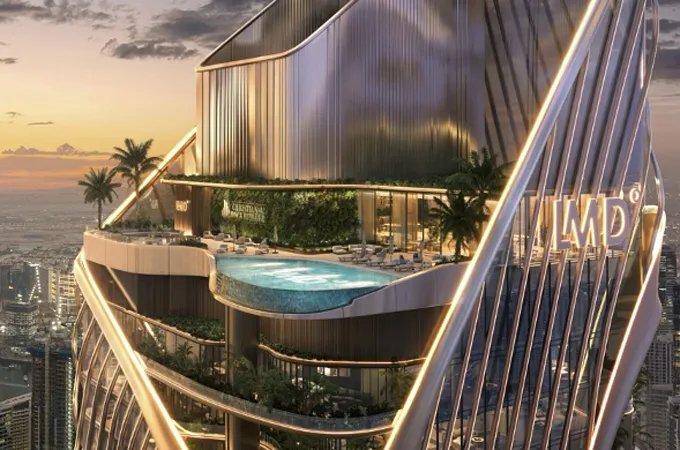
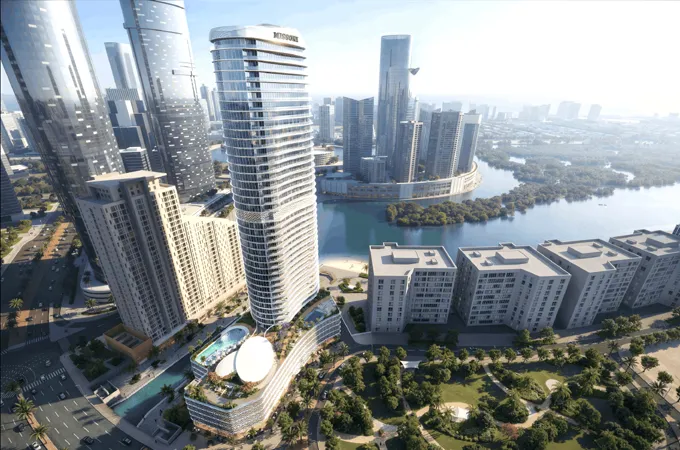
First Place: Wasl Tower, Dubai, United Arab Emirates. The Wasl Tower rises to an impressive height of 1000 ft (302 m), and its distinctive twisting form offers some of the most spectacular views of the dynamic city. Adjacent to the tower is an 11-level multi-story parking structure that also houses ballrooms and a rooftop infinity swimming pool and is connected to the main tower at two levels by three pedestrian bridges, each measuring 75 ft (22 m) in length. Wasl Tower’s signature feature is the world’s tallest ceramic façade, covering a surface area of approximately 376,600 ft2 (35,000 m2).
Second Place: Houston Methodist Hospital Brockman Centennial Tower, Houston, TX, USA. Houston Methodist Hospital’s Brockman Centennial Tower is a transformative addition to the Texas Medical Center, rising 26 stories as one of the tallest and most advanced inpatient facilities in the United States. From complex structural demands to the challenges of building within the busiest medical complex in the world, the project’s success was only made possible through exceptional collaboration among the owner, designers, engineers, contractors, and craftspeople.
Decorative Concrete
First Place: The Ocean Sentinels (MOUA) Australia, near Townsville, Queensland, Australia. The Ocean Sentinels, part of the Museum of Underwater Art (MOUA) at John Brewer Reef near Townsville, Queensland, Australia is an innovative marine infrastructure and public art project. The installation comprises eight large-scale reinforced concrete sculptures by artist Jason deCaires Taylor, each weighing between 1 and 3 tonnes, positioned approximately 5 m below sea level within the Great Barrier Reef, Australia.
Second Place: Place des Montréalaises, Montreal, QC, Canada. Place des Montréalaises in Montreal, QC, Canada, transforms a prominent downtown Montréal site, creating a seamless connection between the historic Old Montréal district and the city center. The project is defined by a dramatic sloped concrete plane that serves as its signature architectural element.
Flatwork
First Place: NovusCrete: Pioneering Seawater Concrete Construction, Tabuk, Tabuk region, Saudi Arabia. The NovusCrete: Pioneering Seawater Concrete Construction in the Tabuk Region of Saudi Arabia is a landmark constructed wetland project demonstrating innovation in sustainable concrete technology through the use of seawater-based concrete in a large-scale wastewater treatment system designed for an arid coastal environment. With a treatment capacity of 150 m³/day, the project integrates engineered infrastructure with ecological treatment processes to improve water management, reduce energy consumption, and enhance environmental resilience.
Second Place: LAX Metro Transit Connector, Los Angeles, CA, USA. The LAX/Metro Transit Connector in Los Angeles, CA, USA, showcases innovative architectural concrete that combines performance, durability, and sustainability at one of the world’s busiest transportation hubs. About 256,680 ft² of paving, including luminous white concrete seeded with recycled mirror, glass, and mother-of-pearl aggregates was installed. Large 4,000–5,000 ft² placements required precise logistics to maintain finish quality, ADA compliance, and superflat tolerances.
Repair & Restoration
First Place: Kunstsilo, Kristiansand, Norway. The Kunstsilo (Museum of Modern Art) is a major concrete and steel rehabilitation project involving the transformation of a former industrial building in Kristiansand, Norway. Two reinforced concrete silo clusters from the 1930s were converted into a striking museum with large, open exhibition spaces. The building consists of three volumes: a central eight-story structure incorporating the existing silos and two adjoining buildings of four and five stories that replace the original annex and house museum functions.
Second Place: Low Battery Seawall, Charleston, SC, USA. Spanning nearly a mile along Charleston’s historic waterfront, the Low Battery Seawall Reconstruction in Charleston, SC, USA, is a defining civic landmark and provides critical flood defense for the peninsula. It demonstrates how innovative concrete technologies can preserve historic infrastructure while delivering resilient coastal protection. Engineers combined cast-in-place concrete, shotcrete, and cementitious grout-encased micropiles to strengthen the existing seawall with minimal environmental disruption. Corrosion-resistant GFRP reinforcement eliminated the primary cause of marine concrete deterioration, extending service life to 75 years while reducing maintenance.
Infrastructure
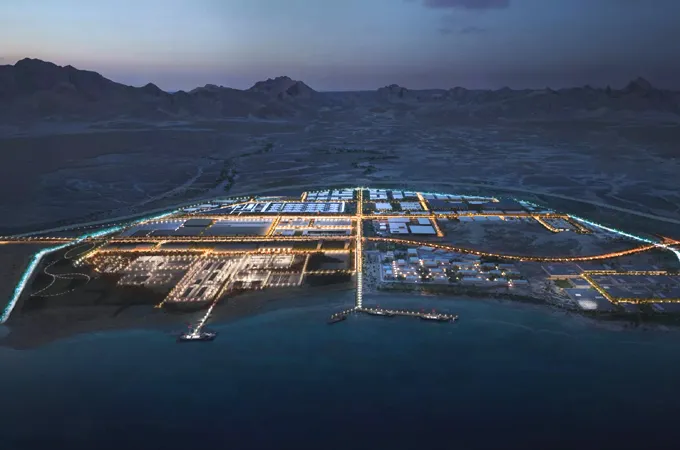
First Place: King Salman International Complex for Maritime Industries and Services, Ras Al-Khair, Saudi Arabia. The King Salman International Complex for Maritime Industries and Services in Ras Al-Khair, Saudi Arabia, is a flagship project supporting Saudi Arabia’s Vision 2030 through industrial diversification and sustainable development. Spanning 1,125 hectares, the facility provides integrated shipbuilding, repair, and offshore fabrication capabilities, including dry docks, a 250 m ship lift, outfitting piers, and sustainable quay structures.
Second Place: Sydney Metro Martin Place Integrated Station Development, Sydney, NSW, Australia. The Sydney Metro Martin Place in Sydney, NSW, is Australia’s first fully integrated station development, combining an underground metro station, two commercial towers, heritage integration, and a new underground retail environment. The project demonstrates innovative concrete design through complex structural systems, including slender cores, concrete bracing, post-tensioned beams, transfer walls, and optimized station structures.
To view more information on the award-winning projects, or to submit a nomination for the 2027 ACI Excellence in Concrete Construction Awards visit: www.ACIExcellence.org. The deadline for entries is April 1, 2027