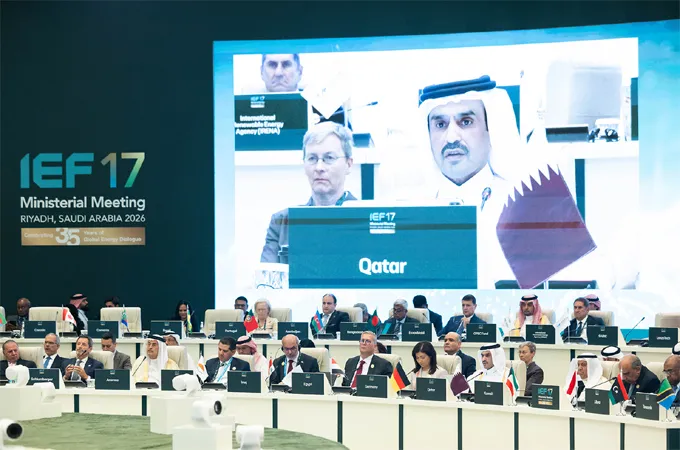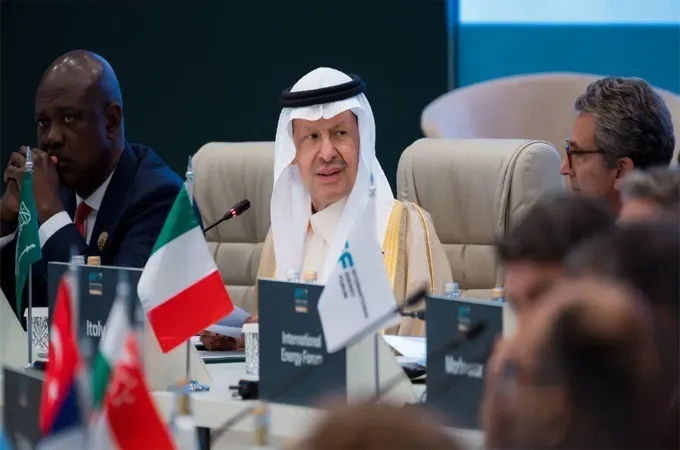
Energy ministers and industry leaders have concluded the 17th International Energy Forum Ministerial Meeting (IEF17) in Riyadh, calling for stronger international cooperation, sustained investment across energy systems and improved market data to strengthen global energy security.
Hosted by Saudi Arabia and co-hosted by Italy and Nigeria,
the meeting brought together energy ministers, government representatives,
industry leaders, international and regional organisations, and research
institutions at the Ritz-Carlton Riyadh under the theme “Energy Security and
Shared Goals in a New Era.”
The meeting was chaired by Prince Abdulaziz bin Salman Al
Saud, Saudi Minister of Energy, Industry and Mineral Resources, with support
from Italian Minister of the Environment and Energy Security Gilberto Pichetto
Fratin and Nigerian Minister of State for Petroleum Resources Senator Heineken
Lokpobiri.
Against a backdrop of geopolitical tensions, supply
disruptions and changing investment and trade patterns, IEF17 provided a
neutral platform for energy producers, consumers and industry representatives
to discuss shared challenges and practical solutions.
Participants expressed solidarity with Saudi Arabia and its
people following attacks on civilian infrastructure, describing the ministerial
meeting as an expression of resilience, unity and collective commitment.
IEF Secretary General Jassim Alshirawi emphasised the
importance of shared responsibility in safeguarding energy markets, stressing
that security of supply and security of demand must advance together through
cooperation and solidarity between producers and consumers.
Ministers and delegates also welcomed the United States'
announcement that it would rejoin the IEF, recognising the forum's role in
facilitating producer-consumer dialogue, data-driven research and market
reporting.
The concluding discussions identified several priorities for
international cooperation.
These included protecting critical infrastructure and trade
routes, diversifying energy suppliers and transportation corridors, and
maintaining adequate production capacity and inventories to withstand
disruptions.
Participants also stressed the need for sustained investment
in oil and gas production, refining, liquefied natural gas (LNG), electricity
grids and storage, alongside emerging technologies and critical mineral supply
chains.
Ministers called for energy policies that balance
affordability, access, economic development and emissions reductions, taking
into account differing national circumstances and a broad range of
technologies. Predictable regulations, accessible financing and compatible
standards were identified as important conditions for attracting investment and
strengthening public-private partnerships.
Greater transparency and access to timely, comparable data
were also highlighted as essential to understanding physical and financial
energy markets, improving price formation analysis and supporting informed
decisions during periods of volatility.
Ahead of the meeting, the heads of the Joint Organisations
Data Initiative (JODI) partner organisations endorsed the JODI Roadmap
2026–2030.
Ministers welcomed efforts to strengthen national reporting
capabilities and improve the completeness and timeliness of oil and gas data,
including information on inventories and refined products.
Coordinated by the IEF, JODI provides free access to
official energy data for market participants worldwide.
Participants further supported continued cooperation through
the IEA–IEF–OPEC Trilateral Work Programme, established in 2010.
Its workshops, symposia and comparative outlooks help
improve understanding of market dynamics, price volatility and differences in
forecasting assumptions while preserving each organisation's independent
analysis.
Additional discussions drew on IEF leadership dialogue with
S&P Global and reports examining sustainable development pathways, Middle
East and North Africa climate commitments, and global LNG market security.
Looking ahead, Türkiye will host the 10th Asian Ministerial
Energy Roundtable in 2027, co-hosted by Japan.
Italy will host IEF18 in Rome in 2028, with Türkiye as
co-host, followed by IEF19 in Istanbul in 2030.
The IEF will also continue engagement with the European
Union through the seventh IEF-EU Energy and Climate Forum in Riyadh on November
25, 2026.
The meeting concluded with ministers thanking Saudi Arabia for its leadership of the IEF Executive Board and welcoming Italy as the incoming chair, reaffirming the forum's commitment to cooperation, investment, innovation and reliable, affordable energy. -OGN/TradeArabia News Service