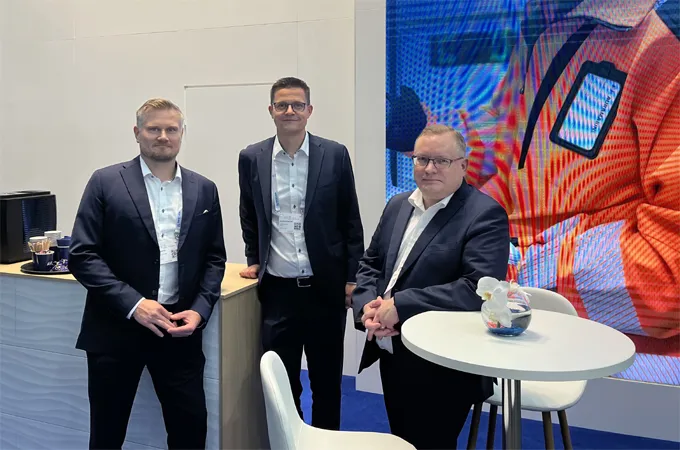
Auramarine, a specialist in fuel supply systems, says flexibility rather than fuel choice will increasingly determine how successfully shipping operators navigate the energy transition.
The company points to fuel price volatility, uneven
availability of alternative fuels and varying environmental regulations as
factors making adaptable fuel infrastructure increasingly important.
“The industry has spent years asking which fuel will win,”
says John Bergman, CEO, Auramarine. “That may be the wrong question. No
operator today can predict with confidence what will be available, compliant or
commercially viable in five years. The operators who adapt best will be the
ones who built in the flexibility to their fuel strategy to respond as
conditions change.”
Auramarine’s fuel split technology, first delivered in 2019
and now installed on around 20 vessels, is designed to provide this
flexibility.
The retrofit system
adds an onboard fuel booster module, allowing vessels to operate different
fuels through the same engine without the lengthy changeover procedures
typically associated with dual-fuel systems.
The system enables operators to switch to fuels such as
marine gas oil (MGO) or biofuel to meet emission control area (ECA)
requirements, accommodate maintenance schedules or respond to changing fuel
prices, without taking vessels out of service.
The system can also be delivered in sections through
existing doors and hatches, allowing installation on vessels already in
operation.
Bergman said cruise and ferry operators face particularly
strong demand for adaptable solutions as they frequently operate across
different regulatory zones and environmentally sensitive waters.
"Cruise and ferry operators feel this earliest and most
acutely," he says. "These vessels constantly move between regulatory
zones and environmentally sensitive waters, so the ability to switch fuel
supply without disrupting a schedule is an operational necessity. What's
notable is how many operators in this space still don't know infrastructure
like this exists, despite how directly it addresses what they're already
dealing with.”
Auramarine says flexibility must be tailored to each
operator’s fuel strategy rather than adding unnecessary complexity. Automated
fuel changeover systems can simplify multi-fuel operations for crews, while
structured maintenance programmes support safe inspection, testing and
servicing throughout a vessel’s lifecycle.
"The best results come from scoping flexibility to an
owner's actual fuel strategy, not adding complexity for its own sake,"
Bergman adds. Auramarine’s lifecycle services provide ongoing servicing, spare
parts and technical support to maintain system performance as fuel requirements
evolve.
“Over the next few years, operators who succeed will be the
ones who stopped waiting for certainty and started building optionality
instead,” Bergman adds. “In a transition this uncertain, adaptability matters
more than any single fuel bet. That's the conversation we want the industry to
have.” -OGN/TradeArabia News Service