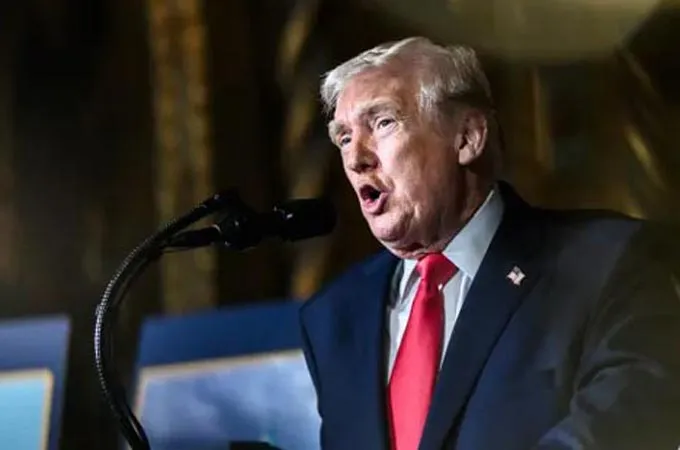
US President Donald Trump has threatened to impose sweeping economic punishment on any country that provides a “lifeline” to Iran, escalating pressure on Tehran as the confrontation over the strategically vital Strait of Hormuz enters a critical phase and diplomatic efforts to end the nearly six-month-old war appear increasingly uncertain.
Trump said the United States would launch what he called the “most crushing economic operation ever taken against any country”, warning that countries whose financial institutions, businesses, airports or government agencies continue to support Iran would face “tremendous economic consequences”.
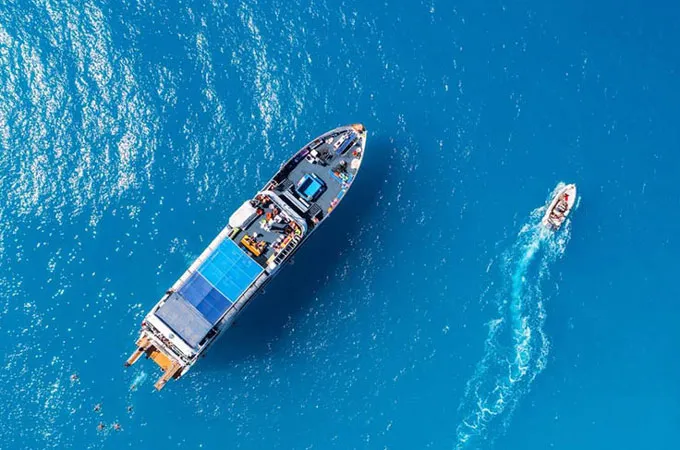
The threat comes as commercial shipping through the Strait of Hormuz remains severely disrupted, with conflicting claims from Washington and Tehran over who controls the waterway. Tanker traffic has fallen sharply, while shipping companies continue to navigate the area cautiously amid the risk of attacks and military confrontation. The strait normally carries roughly a quarter of global seaborne oil, making the standoff a major threat to energy markets.
Trump's latest warning was unusually broad. He specifically cited oil smuggling, financial swap lines, cash transfers, exchange houses, ship registries and front companies, saying all such activities “need to stop now”. He did not identify any country or spell out the precise measures Washington would impose.
The warning could potentially put pressure on countries that have maintained commercial or diplomatic channels with Tehran, including US partners in the Gulf and China, Iran's most important oil customer.
Kpler data cited by Reuters shows China bought more than 80% of Iran's seaborne oil exports in 2025. Any attempt to impose additional economic penalties on Chinese entities, however, could trigger retaliation at a time when Beijing is an important supplier of goods to the United States, including critical rare-earth minerals.
The timing is particularly significant for the Gulf. The United Arab Emirates announced this week that it was suspending all trade activities, commercial exchanges and financial transactions with Iran until further notice, effectively cutting one of Tehran's most important regional commercial channels. The decision followed a UAE military announcement that two missiles launched from Iran had been detected, with the missiles falling into the sea. Iran rejected the accusation as baseless.
The UAE has historically been a major re-export and commercial hub for Iranian businesses, making the suspension potentially damaging to Tehran's access to foreign currency, goods and international financial networks. The move also demonstrates how the conflict is increasingly affecting economic and diplomatic relationships across the Gulf, rather than remaining confined to the US-Iran confrontation.
Hormuz becomes the centre of the conflict
The Strait of Hormuz has emerged as the central strategic battleground. Washington says it has taken steps to keep the waterway open and has sought to facilitate oil tanker movements, while Tehran maintains that the strait remains effectively closed until the United States meets conditions linked to an interim agreement, including lifting port and oil restrictions.
Reuters reported that Trump said on August 18 that there were no talks taking place with Iran and none were scheduled. That statement appeared to contradict a more conciliatory message from his son-in-law and special envoy Jared Kushner, who had said a day earlier that discussions with Iran were still underway and were “probably more robust” than ever.
The conflicting messages have added to uncertainty over whether a diplomatic channel remains open. Iran has also signalled that it is prepared to continue resisting US pressure. Mohammad Mokhber, an adviser to Supreme Leader Ayatollah Ali Khamenei, said Iran remained open to dialogue but did not equate negotiations with surrender, according to Iran's semi-official Fars news agency.
The dispute over Hormuz has meanwhile become increasingly difficult to separate from the wider economic confrontation. Shipping activity has slowed dramatically as operators assess the risks of entering the strait, while some vessels are choosing routes through Omani waters to reduce exposure to the most contested areas.
The United States has also been working to maintain oil flows through the waterway. Axios reported that the US military has been conducting a covert operation to facilitate tanker movements, with around 15 to 20 tankers reportedly transiting the strait each night through the southern channel under military oversight. Oil flows remain substantially below pre-war levels, however.
Oil markets remain on edge
The continuing uncertainty has kept energy markets highly sensitive to developments in the Gulf. Brent crude rose above $91 a barrel this week as the expiration of the US-Iran interim arrangement and Trump's increasingly aggressive rhetoric raised fears that disruption to Hormuz could become prolonged.
For Asian economies in particular, a sustained disruption would have consequences far beyond Iran and the Gulf. The strait is the principal maritime outlet for crude and LNG shipments from several major Gulf producers, meaning any prolonged restriction could raise freight, insurance and energy costs globally.
The economic pressure on Iran is already severe. Trump claimed in his latest statement that Iran's navy and air force had been destroyed, military factories reduced to rubble and its currency rendered “worthless”. Those assertions are part of Trump's political characterisation of the conflict and could not independently be verified in their entirety.
Iran, meanwhile, has shown no indication that it is prepared to accept the terms demanded by Washington. Its officials continue to portray the conflict as a struggle against US and Israeli pressure and have rejected the suggestion that sanctions or military force can compel Tehran to surrender.
Diplomatic space narrows
The latest escalation comes after a 60-day period intended to produce progress towards a broader agreement ended without a settlement. Trump has rejected calls for an extension and has repeatedly demanded that Iran make major concessions, while Tehran insists that negotiations cannot take place under military pressure and economic blockade.
The situation has also produced an increasingly complicated picture of US strategy. Trump has simultaneously claimed that the Strait of Hormuz is open and under US control, while Iran insists that Washington does not control the waterway. The competing claims have contributed to uncertainty among shipping companies and energy traders.
Against that backdrop, Trump's latest threat extends the confrontation beyond Iran itself. His warning that countries facilitating Iranian trade could face US economic retaliation effectively raises the possibility of a much broader sanctions campaign — one that could affect banks, ports, shipping companies, trading houses and governments across the international financial system.
For the Gulf, the immediate concern is whether the confrontation over Hormuz can be contained. The UAE's decision to suspend economic dealings with Iran, the continuing reduction in shipping traffic and the possibility of further US measures against countries maintaining links with Tehran all point to a conflict whose economic consequences are spreading well beyond the battlefield.