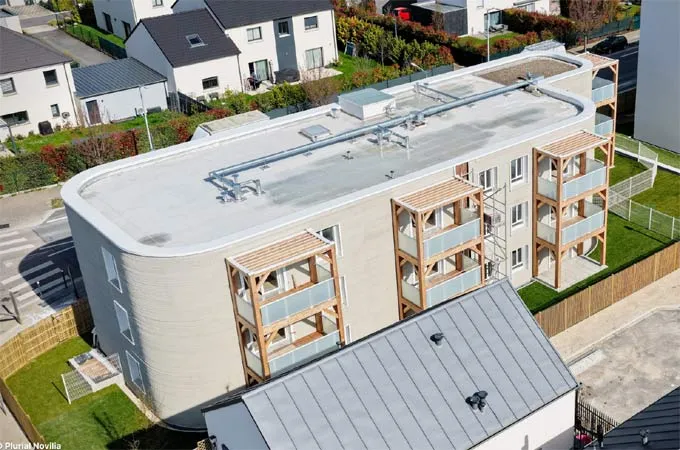
PERI 3D Construction, using a COBOD BOD2 3D Construction Printer, has completed ViliaSprint², Europe's largest 3D printed multi-family residential building, in Bezannes, France.
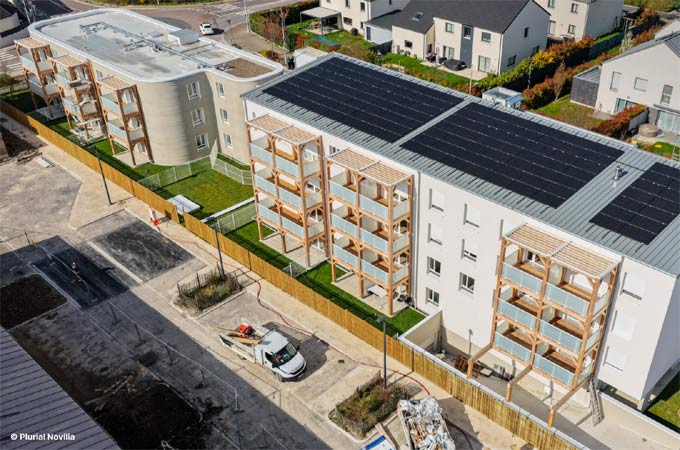
Developed by Plurial Novilia, a subsidiary of Action Logement, the building delivers 12 social housing apartments across three storeys and 800 sq m (8,600 sq. ft.) of living space .
Key highlights of the construction included:
*Overall project timeline reduced by three months versus conventional construction
* 34 effective printing days versus 50 originally planned, cutting shell construction time in half. With 2.5x the layer height at 5 cm, only 14 days would be needed
* Only 3 operators required versus 6 for traditional shell construction
* Waste reduced from 10 per cent to just 5 per cent; additional ~10 per cent concrete savings through optimised curved geometry enabled by 3D printing.
First on-site full-structure print in France
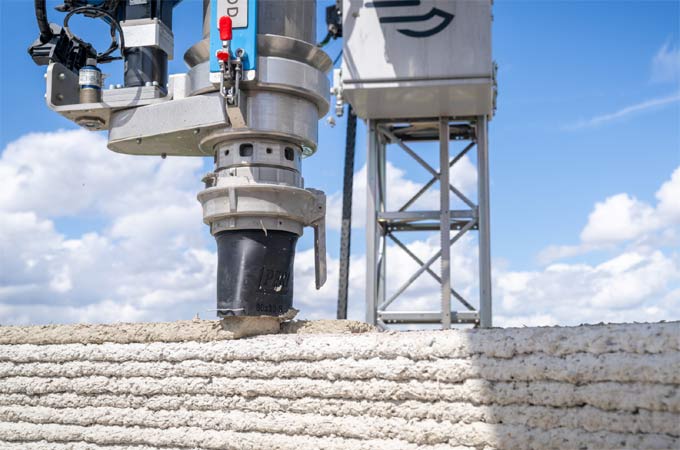
ViliaSprint² is the first building in France where both the load-bearing structure and all walls were printed directly on-site. The COBOD BOD2 gantry system, operated by PERI 3D Construction, extruded concrete layer by layer to form the complete shell. Holcim supplied the printable concrete based on its TectorPrint technology, reinforced with synthetic macro fibres and formulated within the CO₂-reduced ECOPact range.
The printing phase began in March 2025 and was completed well ahead of schedule. A key factor was an optimised sequencing of prefabricated floor slab installation that halved the number of times the print gantry needed to be repositioned.
"This result confirms the enormous potential of this construction method, which reduces build times and improves working conditions on site," said Jérôme Florentin, Director of Project Development at Plurial Novilia.
A controlled benchmark
Plurial Novilia constructed a near-identical building on the same site using conventional methods, creating a direct performance comparison, both during construction and in operation. Results confirmed the shell time reduction and highlighted additional workforce benefits: the 3D printed building required only 3 site operators versus 6 for the conventional structure. Workers control the printing robot via tablet, eliminating heavy lifting and reducing musculoskeletal risk, a meaningful advantage in a sector already facing skilled labour shortages.
"We are proud to have supported this project as technology partner and print executor. The result shows vividly what is already possible in 3D building printing today, faster construction, fewer workers, and fully load-bearing structures. This is an important milestone and motivation to push this technology further," said Dr Fabian Meyer-Brötz, Managing Director of PERI 3D Construction.
Architectural freedom
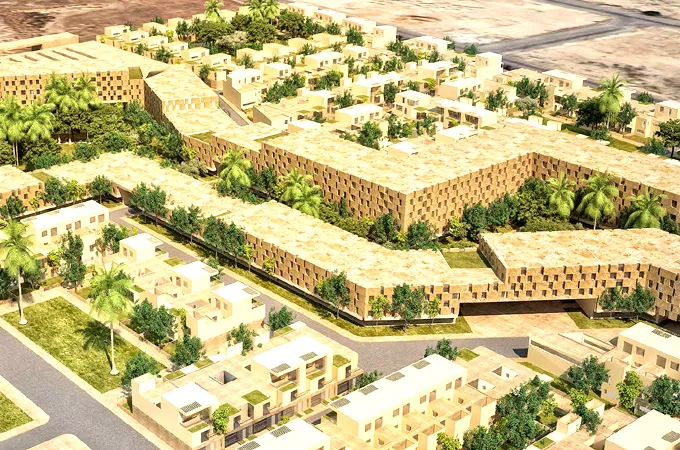
The curved façade and rounded floorplan are only economical because of 3D printing, complex geometries that would add significant cost with conventional formwork come at no premium. On-site concrete production further reduces transport emissions. The optimized form also saved approximately 10% of concrete volume. The building integrates perlite insulation, timber balcony structures, 500 sq m (5,400 sq ft) of photovoltaic panels, and a hybrid gas/heat pump system by Atlantic Systèmes, achieving around 60% energy self-sufficiency in compliance with France's RE2020 2025 targets.
What comes next
Building on ViliaSprint², Plurial Novilia and its partners are planning a follow-on project of approximately 40 apartments deploying two 3D printers simultaneously. The target is to reduce print time by a factor of four and, through greater scale and process maturity, bring costs in line with conventional construction.
"ViliaSprint² is a significant step in testing new construction methods and demonstrates the potential of 3D printing for faster and more sustainable housing," said Johnny Huat, Managing Director of Plurial Novilia.
"It is great to see PERI 3D Construction and our customers in general continuously taking on larger and larger projects with our technology producing remarkable results. ViliaSprint² is a great example of how 3D construction printing can cut construction time, material consumption and waste and limit the amount of labor used, also for quite large buildings. Had the print been done with 5 cm (2 in.) layer height, which was technically possible, the printing and execution time could be cut even further down from 34 days to just 14 days for the printing of all of the 800 sq m," said Henrik Lund-Nielsen, Founder and General Manager of COBOD International. -TradeArabia News Service