The global lithium-ion battery market exceeded $150 billion in 2025, an increase of over 20 per cent from 2024, but its economic and strategic significance extends far beyond market size.
Batteries are becoming
a cornerstone of the automotive sector, a critical source of flexibility for
power systems, and an increasingly important source of back-up power for
digital infrastructure, including data centres and artificial intelligence, reported International
Energy Agency (IEA).
Beyond energy,
batteries remain indispensable for a wide range of industrial and strategic
applications, from portable electronics and unmanned defence systems to
emerging technologies such as humanoid robots.
As applications
diversify and costs continue to fall, batteries are evolving into a
foundational component of modern economies.
This shift carries
far-reaching implications for economic competitiveness, supply security and
industrial policy, as battery supply chains remain highly concentrated and
technologically complex.
These dynamics are
already evident in battery deployment trends, as declining costs and expanding
applications continue to drive rapid growth of demand for batteries across
sectors.
Global lithium-ion
battery deployment in 2025 was six times as high as in 2020.
Electric vehicles
remain the dominant driver of demand, with global sales reaching a new record
and accounting for one-in-four cars sold globally.
Electric vehicles
account for more than 70 per cent of total lithium-ion battery deployment.
This is followed by
battery energy storage at over 15 per cent, reflecting the growing role of batteries in
providing flexibility in power systems.
The situation
represents a profound shift from a decade ago.
In 2015, nearly half
of global battery demand came from portable electronics; by 2025, this share
had fallen to below 5 per cent.
Falling prices have
been instrumental to this expansion.
In 2025, average
battery prices declined by 8 per cent, supported by advances in manufacturing,
improvements in battery chemistries and intensifying global market competition.
Battery energy storage systems (BESS) saw the
sharpest price declines, with average global prices in 2025 falling to
one-third of levels seen in 2020.
At the same time,
regional price disparities have widened.
In 2025, battery pack
prices in China were 30 per cent lower than in the US, and 35 per cent lower than in Europe.
Record low lithium
iron phosphate (LFP) battery prices also contributed significantly to overall
cost reductions in 2025.
LFP battery prices
fell by more than 15 per cent, compared with less than 5 per cent for lithium
nickel cobalt manganese oxide (NMC) batteries – the second most deployed
battery chemistry globally.
This made LFP
batteries on average more than 40 per cent cheaper than NMC alternatives.
As a result, LFP
accounted for over half of EV batteries and over 90 per
cent of battery energy storage
systems globally.
While LFP batteries
benefit from structurally lower material costs, there are growing concerns about
the sustainability of today’s price levels.
Many LFP cathode
producers are operating at a loss, increasing the possibility of market
consolidation.
Deployment remains
heavily concentrated in China, but uptake is also expanding rapidly in emerging
and developing economies.
LFP batteries now
power well over half of all electric car sales in emerging and developing
economies – double the share in 2023 – driven by imports of
Chinese-manufactured vehicles and LFP batteries.
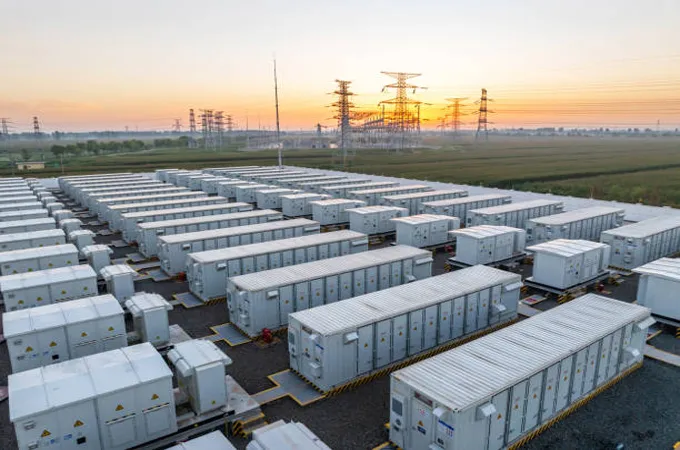
Battery energy storage
has grown at an exceptional pace, with global installations increasing more
than 20-fold in storage capacity over the past five years.
This growth has been
driven by falling battery prices, abundant supply and relatively short project
lead times.
As variable renewable
generation expands in many markets, battery storage is becoming an important
source of flexibility and resilience for power systems, while also representing
a growing commercial opportunity for battery manufacturers.
However, more than 90 per cent of battery
storage applications rely on LFP batteries that are almost exclusively supplied
from China, which accounts for almost all global manufacturing capacity and the
associated technical expertise.
Korean producers
are investing to scale up LFP battery production that can offer an
alternative, but they face intense competition from established, lower-cost
Chinese producers in an oversupplied market.
As batteries become
more central to energy systems and the wider economy, strategic risks across
their supply chains are becoming more pronounced.
Chinese, Korean and
Japanese companies are the main drivers of global lithium-ion battery
cell production, accounting for nearly all of global output. China continues to
top the list, manufacturing well over 80 per cent of all batteries in 2025.
The EU and the US meanwhile account for the majority of the
remaining output, with each contributing a similar share.
Battery factories in
Europe and the US rely heavily on imports for the majority of their battery components,
which come mostly from China.
The lack of investment
in midstream supply chains in these markets poses a growing risk to global
supply security, a topic that will be examined in depth in the upcoming
IEA publication Energy Technology Perspectives 2026.
Production capacity
and technical expertise for essential components, such as active materials and
their precursors, remain heavily concentrated in China.
Korea and Japan are
the only other countries with notable midstream battery industries, offering
opportunities to diversify some component sources.
Nearly all batteries
used for power grids rely on China for at least one step of their supply chain,
while over 70 per cent of all electric vehicles produced outside China rely on batteries or
components from China.
This structural
imbalance is unlikely to change in the near term. Addressing it would require a
substantial increase in investment and stronger international co-operation
across the battery value chain.
China’s export
controls on key battery components that it has introduced since 2023
underscore these vulnerabilities, as they focus precisely on the most
vulnerable links in the battery supply chain.
Efforts to diversify
the battery supply chain will need to be underpinned by sound economic
fundamentals to succeed.
Europe and the US have attracted
significant investment in battery cell manufacturing, supported by large
automotive industries that offer predictable sources of demand.
Similar conditions
apply further elsewhere in supply chains: scaling up midstream production
capacity requires stable, large-scale demand to justify investment, with
a competitive and reliable battery manufacturing base acting as a
critical anchor.
However, cost
competitiveness remains a key challenge. Even with public support measures
excluded, production costs in Europe and the US are still as much as 50 per cent higher than
in China, complicating efforts to establish a competitive midstream industry.
Achieving manufacturing
efficiencies comparable to those in China – where average production
yields well exceed 90 per cent – will take time and sustained investment.
When a new producer
begins operations, the share of output that is unfit for sale is often much
higher than that needed to achieve profitability.
For regions without a strong battery
industrial base, progress will depend on patient investment, long-term
commitment, and partnerships with experienced manufacturers and resource-rich
countries.
Technology innovations
will also play an important role. For example, sodium-ion batteries – a sector
in which investments from leading manufacturers is growing rapidly –
could create opportunities for more geographically diverse supply chains.
Current project pipelines, however, point in the opposite direction – nearly all installed and announced sodium-ion battery manufacturing capacity is located in China. -OGN/TradeArabia News Service