The construction costs globally are set to increase by 2.4% this year, but growing uncertainty is the real challenge to project delivery, according to Currie & Brown, a world-leading provider of cost management, project management and advisory services.
In the Middle East market, the costs will rise by 4% in Saudi Arabia mainly driven by reliance on imported and specialist materials and 3% in the UAE. Across key sectors, demand remains strong, but delivery conditions are becoming more complex, stated Currie & Brown in its findings captured in ‘Construction in 2026: Where Certainty Comes from Agility’ report.
Middle East Regional Analysis
The project management expert pointed out that in Saudi Arabia, construction activity will continue to rise in 2026 under Vision 2030, even as some projects are rephased. There is strong demand for Tier 1 and Tier 2 contractors, but the biggest problem is the shortages of skilled labour.
Data centres and digital infrastructure face the highest increases, at 6–8%, followed by high-end hospitality at 5–7%. Mid-market residential and infrastructure are seeing lower, but still rising, costs.
In the UAE, construction activity is expected to grow at a steadier pace in 2026, with cost escalation forecast at around 3%. Labour shortages and higher material prices continue to add delivery risk.
However, the market benefits from more stable procurement routes and long-term delivery models, particularly in sectors such as education and utilities.
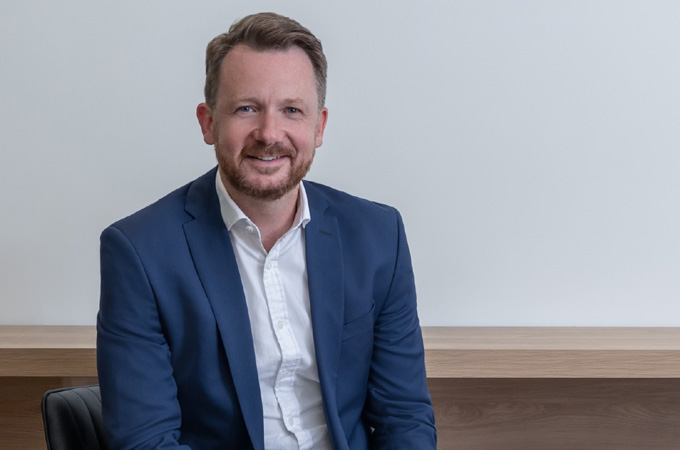
Craig Finlayson, Senior Director, Middle East, said: "In the Middle East, momentum will come from clear decisions and agile delivery. With capacity tight, the advantage is in early planning, realistic phasing, and flexible procurement. That way, when opportunities arise, progress will be fast while costs stay under control."
In most countries, construction costs are forecast to rise between 2% and 6%, supported by steady demand across infrastructure, healthcare, technology and industrial sectors.
Labour shortages, material pressures weigh
A small number of markets sit outside this range. In China, costs are expected to remain flat. This has weighted down the global average. In Japan, escalation could reach 10% to 12%, due to labour shortages and material pressures. These outliers highlight how local market conditions can impact costs.
But moderate cost growth does not mean a simple delivery environment. Labour shortages, shifting trade tariffs, supply chain disruption, energy price volatility, climate events, conflict and policy change are all affecting construction markets. These risks are increasingly connected. A shift in one area can quickly create problems in another, stated Currie & Brown in its report.
Commenting on the report, Group CEO Alan Manuel said: "In 2026, we’re predicting moderate cost escalation across most markets. But the real challenge comes from how quickly this picture can change."
“This volatile environment means that resilience is more important than ever. And that resilience comes from planning for change early. That means using data to test options, using technology to spot pressure sooner, and being clear about what must be fixed and what needs to stay flexible.”
Certainty comes from agility
In 2026, the most successful organisations will be those that act earlier, understand where pressure is likely to build, and keep flexibility where it matters most.
With cost increases remaining moderate across most markets but uncertainty rising, the challenge is less about predicting the market and more about staying in control as conditions change. In that environment, certainty comes from agility.
The report sets out practical steps organisations can take to stay in control and reduce cost risk, even in uncertain conditions. These include:
*Set a realistic starting point early. Use current market data to test cost, programme and risk assumptions against real conditions and comparable projects.
*Plan for a small number of outcomes. Look at a few credible scenarios, then decide what to lock in early and where to stay flexible.
*Check labour and market capacity by location and phase. If skills or resources are tight, adjust scope, sequencing or procurement before plans are locked in.
*Make key decisions sooner. Confirm phasing, requirements and long-lead items earlier to reduce exposure later.
*Use technology to spot pressure earlier. Focus on tools that improve visibility, shorten decision cycles, and support faster, clearer choices.
A global player in the project and cost management sector Currie & Brown helps clients deliver with certainty across every sector and stage of the project lifecycle. From early strategy to final delivery, its role is to ensure that buildings and infrastructure are well planned, future-ready, and built to perform.
With more than 70 offices worldwide, including London, Dubai, Riyadh, Hong Kong, Mumbai, New York and Shanghai, we combine global expertise with local insight. Currie & Brown is a part of the Sidara collaborative.-TradeArabia News Service