The global economy is expected to grow at a reasonable but not particularly exciting pace again this year, supported by easier monetary policy, fiscal stimulus in key economies and the continued artificial intelligence (AI) boom, but important downside risks remain in a volatile and unpredictable global environment, according to ACCA’s latest Global Economic Outlook.
The third edition of ACCA's (the Association of Chartered Certified Accountants) annual outlook finds that global growth proved more resilient than expected in 2025, despite the major trade disruptions and massive policy uncertainty. That resilience is likely to carry into 2026, with global GDP likely to expand by around 3%, broadly in line with last year, though risks remain more firmly skewed to the downside.
For Middle East businesses, the report’s findings underline the importance of long-term planning, financial resilience and agile decision-making, as regional economies remain closely connected to global trade flows, capital markets and investment trends.
SOLID BUT NOT EXCITING
Former IMF chief economist Ken Rogoff, interviewed for the report, describes the global economy as ‘solid but not exciting’, while cautioning that the scale of uncertainty is not fully reflected in financial markets. He warns of the risk of a significant stock market correction over the next three years, even as markets could rise further in the interim.
He noted: “Despite the surprisingly positive economic picture given where it seemed we were six months ago, I think there are a lot of downsides to the US administration's policies, with negative consequences for the US economy likely to emerge in 2027 and 2028. Populist policies work until they don't.”
Jonathan Ashworth, chief economist at ACCA and author of the report, said: “On a central case scenario, the global economy should continue with a steady expansion in 2026, aided by looser monetary policy, fiscal easing, and the ongoing AI boom. The US should be the fastest growing G7 economy, with the administration likely to double down on efforts to boost growth ahead of the mid-terms. But it is a fragile global backdrop, amid heightened geopolitical uncertainty, risks of an escalation in trade tensions, and concerns about threats to the Federal Reserve’s independence.”
LESS PREDICTABLE FOR MIDDLE EAST
Commenting on the implications for the region, Kush Ahuja, Head of Eurasia and Middle East at ACCA, said: “For the Middle East, this outlook reinforces how exposed the region remains to global economic, geopolitical and financial market developments. While many regional economies continue to advance ambitious diversification and transformation agendas, the external environment is becoming more complex and less predictable.
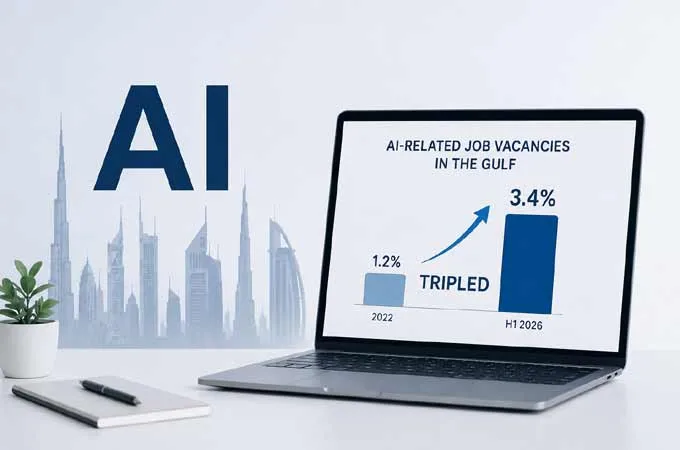
"This places an even greater responsibility on finance leaders to strengthen risk management, scenario planning and strategic decision-making. As organisations across the Gulf invest in AI, digital transformation and long-term growth initiatives, the ability to interpret global economic signals and translate them into resilient business strategies will be critical.”
The report identifies three themes that could be critical in shaping the global economic outlook this year:
* Developments with AI: Signs that investment in AI is beginning to boost productivity at firms, could allay fears about an AI bubble like the dot-com bubble. Alternatively, if doubts about its productivity-enhancing effects were to build, the risk of a market correction could increase.
* Developments in advanced economy bond markets: A large rise in government bond yields would weigh on economies and raise debt-servicing costs. Catalysts include investor concerns about debt sustainability and threats to the Federal Reserve’s independence, political instability, and monetary tightening in Japan.
* Developments with global trade: The ongoing ripple effects from the large rise in US tariffs need to be monitored closely, and risks remain of a reescalation in trade tensions.
Business leaders also provided insights on their countries and/or regions, with key issues in 2026 including AI, geopolitics, trade, the green transition and cybersecurity.
Ashworth added: “In a volatile, unpredictable and rapidly changing world, understanding the interplay of economic, geopolitical, political, and technological factors will be critical for businesses and policymakers.” - TradeArabia News Service