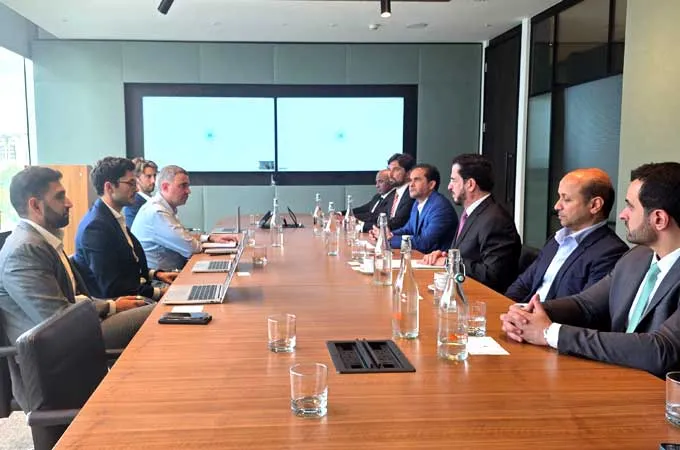
UAE Ministry of Energy and Infrastructure (MoEI) has announced plans to form a new joint venture with BEEAH, the region’s leading sustainability and innovation pioneer, and LOHUM, India’s largest diversified producer of sustainable critical minerals and advanced materials.
Announced at the World
Future Energy Summit on the sidelines of Abu Dhabi Sustainability Week, the
partnership will facilitate the development of the UAE’s first, large-scale
facility for electric vehicle (EV) battery recycling and second-life repurposing, reported WAM.
The joint venture
builds on an earlier collaboration agreement between BEEAH and LOHUM to bring
advanced lithium-ion battery recycling to the UAE.
To be located within
BEEAH’s integrated Waste Management Complex in Al Saja’a, Sharjah, the facility
will have the technology to recycle and repurpose EV batteries, as well as
other types of Lithium-ion batteries, enabling the UAE’s broader circular economy
strategy.
In 2026, it aims to
process 1,500 tonnes of Lithium-ion batteries and, by the third year of
operations, double its processing capacity.
Through integrations
with its software platform, the joint venture will also offer producers
end-to-end traceability and visibility, from the collection and tagging of
end-of-life Lithium-ion batteries to recycling and repurposing.
This will empower
producers to remain compliant with regulations, benefit from buyback programs,
and actively participate in the circular economy.
Sharif Al Olama,
Under-Secretary for Energy and Petroleum Affairs at the Ministry of Energy and
Infrastructure, said: “This partnership is aligned with the national agenda to manage electric
vehicle batteries through localised innovations. This will be achieved through
the establishment of a specialised facility that operates at the highest
technical and environmental standards, strengthening circularity and the UAE’s
readiness to keep pace with the rapid growth of electric mobility.”
He added that the
project represents a key pillar in the national roadmap, which positions the
UAE as a global hub for electric vehicles and targets 50 percent of vehicles to
be electric by 2050.
He noted that the
initiative supports the reduction of emissions in the transport sector, while
contributing to the development of local industrial capabilities and creating
sustainable economic opportunities.
He also said the
project addresses end-of-life battery challenges through an integrated,
national framework that enhances long-term sustainability and competitiveness,
strengthens supply chain resilience for critical battery materials, and
reinforces the UAE’s position as a regional hub for clean energy technologies.
Khaled Al Huraimel,
Group CEO and Vice Chairman, BEEAH, said: “For BEEAH, this project is a natural extension
of our broader circularity strategy, demonstrating how sustainability unlocks
value across future-critical industries. By joining forces with MoEI and LOHUM,
we are proactively addressing end-of-life EV battery lifecycle management and
reducing reliance on landfills, as demand for electric mobility surges. The
facility’s strategic location within our flagship waste management complex
further reinforces BEEAH’s commitment to managing emerging waste streams and achieving
Sharjah’s zero-waste target.”
Sachin Maheshwari,
Chief Corporate Development Officer, said: “We look
forward to expanding our collaboration with BEEAH and welcome MoEI as a partner
in this national initiative. As a leading global producer of sustainable
critical minerals and advanced materials, LOHUM’s integrated battery recycling
and repurposing solutions are designed to maximise the remaining useful life of
lithium-ion batteries before extracting critical materials with zero-waste
efficiency. This approach not only cuts carbon footprint but also ensures that
raw materials are reintroduced into the supply chain. Together, we aim to build
a world-class facility that supports the UAE’s sustainability vision and
accelerates the global shift toward clean energy.”
The plant will
introduce a full-circle recycling approach, beginning with the repurposing of
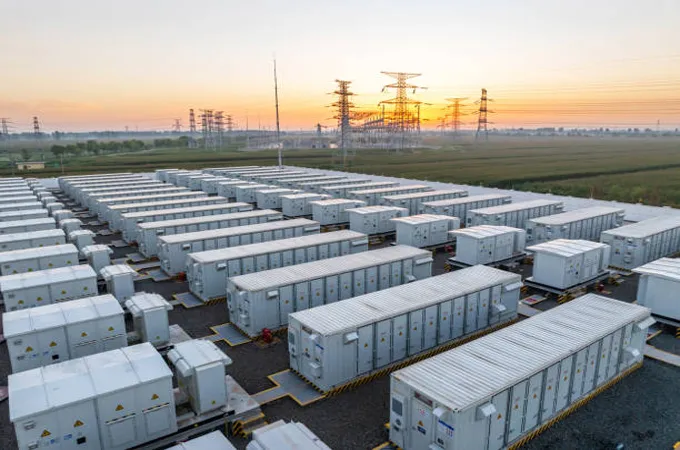
used EV batteries for second-life applications such as energy storage systems,
followed by the safe dismantling of components for extraction.
Using LOHUM’s patented
NEETM technology, the facility will then recover valuable materials including
lithium, cobalt, nickel, and graphite for reintegration into the circular
economy instead of being landfilled or re-sourced from international supply
chains.
Research indicates that prioritising reuse
before recycling significantly lowers the carbon and resource footprint
associated with virgin battery production and disposal.