Investors are likely to face a more demanding but opportunity-rich market in 2026 as they look to the year ahead to build and safeguard wealth, affirms the CEO of one of the world’s largest independent financial advisory organisations.
Nigel Green of deVere Group says the year ahead rewards discipline, selectivity, and execution rather than broad momentum.
Markets have adjusted to a world of higher rates, geopolitical friction, and rapid technological change.
This adjustment, he comments, has created clearer pricing signals and sharper differentiation between companies that deliver and those that rely on expectation.
“Opportunity isn’t disappearing, it’s becoming more precise.”
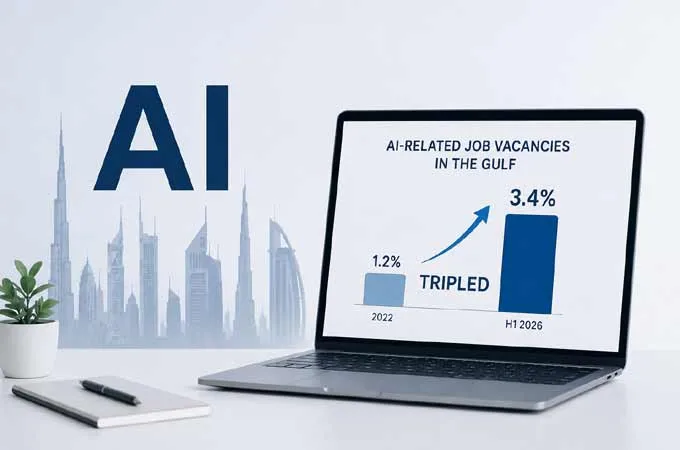
Green identifies three global forces that will shape investor outcomes in 2026: the transition of AI from promise to performance, the dominance of a narrow group of market leaders, and volatility driven by policy decisions.
He argues that each creates openings for investors prepared to engage actively rather than retreat.
AI moves from ambition to accountability
Artificial intelligence remains one of the most powerful drivers of corporate investment globally. Spending over the past two years has been substantial, flowing into infrastructure, computing power, research, and deployment at exceptional speed.
The emphasis now is on results.
"Markets are no longer paying for potential alone,” says Nigel Green. “They’re paying for delivery and performance.”
Revenue growth across AI remains uneven and costs remain elevated. Some companies are already converting investment into cash flow and margin improvement, while others are still struggling with scale, pricing, and timing.
2026 to sharpen divide
“Execution separates leaders from laggards,” he notes. “This creates clearer opportunity for investors who focus on fundamentals rather than hype.”
He stresses that this phase strengthens, rather than weakens, the long-term case for AI by placing value on efficiency, discipline, and realistic expectations.
Market concentration sharpens selection
Global equity performance continues to rely heavily on a relatively small group of dominant companies. While this concentration increases sensitivity to earnings and guidance, it also removes ambiguity about where leadership sits.
“When leadership is narrow, analysis matters more,” says Green. “Strength is visible, and weakness is exposed quickly.”
This dynamic accelerates price discovery. Companies that deliver are rewarded decisively, while those that disappoint are repriced without delay. The gap between market leaders and the rest continues to widen.
For investors, this environment favours selective positioning over broad exposure.
“Dispersion creates opportunity,” he adds. “It rewards those willing to back quality and move away from comfort.”
Policy volatility creates entry points
Policy decisions remain a powerful driver of market movement. Expectations around interest rates continue to influence risk appetite, while confidence around timing remains fluid as inflation trends diverge across regions and economic data sends mixed signals.
Rather than undermining opportunity, Green says this creates movement. “Volatility driven by policy creates entry points. Repricing is where opportunity emerges.”
Trade policy remains a key influence. Sudden tariff decisions earlier this year triggered sharp market reactions, underlining how sensitive sentiment remains to abrupt change. Supply chains continue to adjust, particularly for companies with international exposure.
Fiscal policy adds another layer. Tax incentives have supported earnings but raised expectations. Investors are increasingly focused on the quality and durability of growth rather than results supported by temporary measures.
Taken together, these forces point to a market that is active, selective, and responsive rather than fragile, he says.
“I believe in 2026 we’ll see that strong returns don’t require calm conditions,” the deVere Group CEO concludes. “They require judgment, discipline, and the confidence to act when pricing adjusts.” -TradeArabia News Service