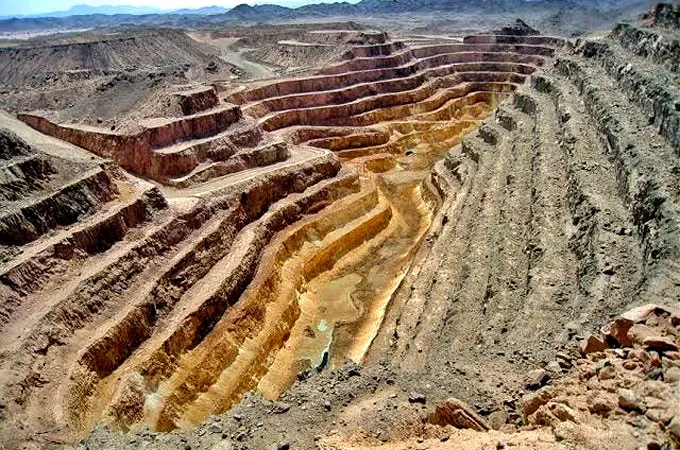
Sudan’s state-owned Mineral Resources Company has announced the arrival of 16 specialist firms to South Kordofan to process mining waste and bolster activity in a critical sector of the war-ravaged economy.
The move forms part of a broader strategy to revitalise the mining industry, which has become Sudan’s most important non-oil source of foreign exchange, reported Actum Sudan, a local business portal.
Official statistics indicate gold production rose above 64 tonnes in 2024, compared with lower levels earlier in the year, making it a key export earner for Sudan.
Warsha Nasser, the director of the Mineral Resources Company in South Kordofan, said the plan included opening new mining sites, strengthening regulatory oversight, and improving working conditions in the sector.
The initiative would involve a comprehensive inventory of production inputs and evaluation of environmental violations to ensure compliance with approved standards.
The industry’s resurgence comes amid ongoing efforts by the Central Bank of Sudan to curb illicit gold exports, said the report.
In 2025, authorities banned private gold sales and designated the central bank as the sole legal buyer and exporter, aiming to reduce smuggling to markets, it added.
Artisanal dominance and environmental risks
Sudan’s gold sector remains dominated by artisanal and small-scale mining (ASGM). According to recent production figures, artisanal miners accounted for an estimated 83% of declared output in 2024 - a reflection of the sector’s informal nature.
Techniques used by these miners are often inefficient and hazardous, relying on mercury and cyanide to extract gold from tailings, a practice associated with severe environmental and health impacts.
Processing companies typically focus on “karta” or mining waste left after initial extraction.
While tailings processing can increase recoverable gold, environmental advocates have raised alarms about toxic by-products seeping into soil and waterways, particularly where regulation is weak.
Activists in South Kordofan have reported expanded use of harmful chemicals such as thiourea and cyanide, linking them to birth defects and ecological damage, reported Actum Sudan.
Conflict, control and regional dynamics
The gold economy has also become entangled with Sudan’s broader civil war. Research by international think-tanks highlights how competition for control over mining areas and revenues has influenced conflict dynamics since fighting erupted in April 2023, with major armed actors and external intermediaries involved in gold trading and extraction.
Much of the gold produced in Sudan is smuggled out of official channels, reducing government revenues and complicating efforts to impose standards on production and processing. In recent years, large quantities of gold have been reported moving through neighboring states and into Gulf markets, underpinning economic ties that intersect with geopolitical interests.
Economic stakes and international context
Gold exports are central to Sudan’s fragile economy. Production increases in recent years have attracted attention from international bodies and investors alike, but experts warn that sustainable growth will depend on improved governance frameworks and environmental safeguards - areas highlighted in analyses by the World Bank and other development institutions for resource-rich economies, reported Actum Sudan.
South Kordofan’s rich mineral endowment has long attracted both large companies and artisanal miners. According to Al Jazeera’s reporting, more than 40,000 mining sites across Sudan illustrate the scale of the industry, with firms and informal operations present in more than a dozen states.
The arrival of specialist waste-processing firms in South Kordofan marks a significant step in the government’s attempt to harness these resources more systematically, said the Sudanese business news outlet.
However, the success of these efforts will hinge not only on commercial efficiency but also on governance reforms, environmental protection, and the resolution of broader political and security challenges that continue to shape Sudan’s economic landscape, it added.