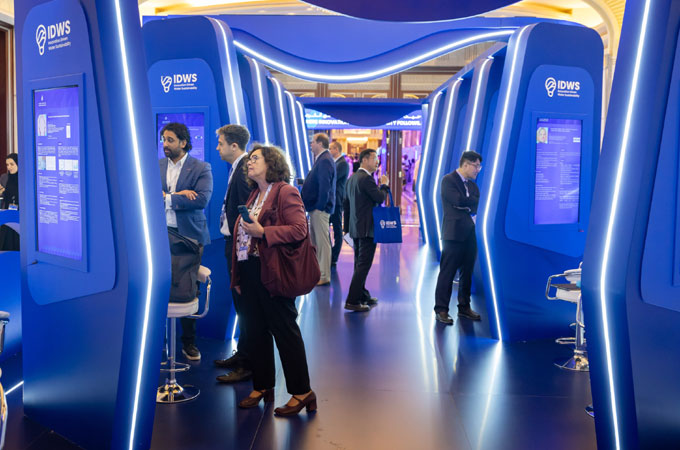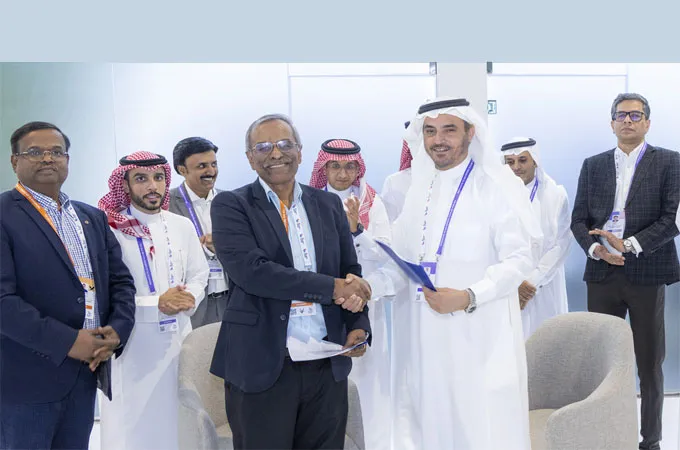
Saudi Arabia’s role as a driver of innovation for a safer, secure future for global water was amplified on day two of the 4th Innovation-Driven Water Sustainability Conference (IDWS) 2025 held in Jeddah, as the event’s focus shifted from announcements to practical delivery and real-world case studies.
Industry experts gathered to highlight how organisations are seeking cross-sector collaboration, adopting new technologies and adapting data to enhance operations, resource efficiency and transparency across the water cycle.
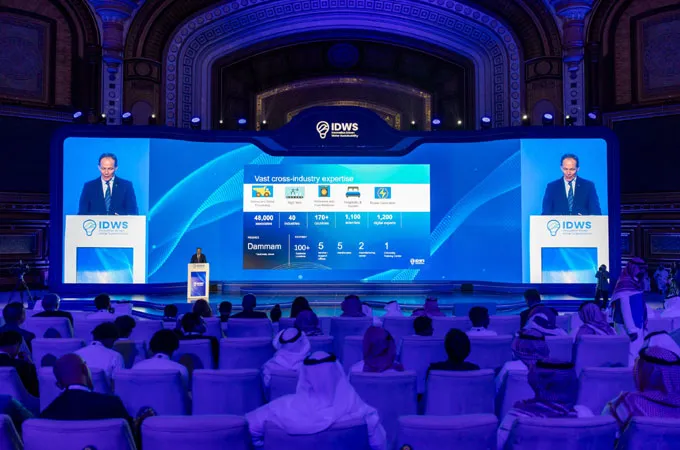
In the opening keynote session, Bryan Harvey, Vice President ME at Jacobs, delivered a deep dive into the future of water in a session titled ‘From Scarcity to Sustainability: The Vision for a Water-Secure Future’.
Harvey gave a strategic overview of global water security challenges and evolving strategies, including mega-projects, desalination advances, and the emergence of regional hubs driving water technology excellence across different continents.
Citing the River Thames Project in the UK as an example, he explained how it represents an innovative leap in urban water management, collecting excessive water from London’s drains and wastewater pipes to prevent pollution.
Global powerhouse in water infrastructure investment
Elsewhere, Khaled Almedbel, VP of Business Development at ACWA Power and Mohammed Alyousif, Executive Director - Business Development & Growth, Saudi Water Partnership Company, discussed how Saudi Arabia’s private sector is emerging as a global powerhouse in water infrastructure investment and, with Vision 2030 as a catalyst, Saudi companies are driving innovation, efficiency, and sustainability in water projects worldwide.
When prompted with a question around how the water and power landscape in the Kingdom has changed in the past 10 years, Almedbel said: "We think and believe that every country should have a proper infrastructure, like Saudi Arabia, for example, through electricity, grid connection, and water pipelines." "What we are seeing is that other countries might have grid connectivity, but no water pipelines, so when we go out to the international markets, seeing these differences, we have to identify what we are facing and how we can adapt to help deliver the needs," he added.
Blueprints for smart water systems
Meanwhile, a panel of industry leaders discussed smart city initiatives in a session titled ‘Blueprints for Smart Water Systems,’ during which they explored the transformative impact of SCADA systems, AI-based leak detection, and digital twin applications across water networks.
"We need to create a water-secure world. Water isn't just essential for life - it's the bedrock of economic growth, social progress, and climate mitigation," said Victoria Edwards, President & Founder of FIDO Tech.
The panel, also including Arthur Valkieser, CEO, Hydraloop; Dr. Sarper Sarp, Senior Expert, Saudi Water Authority; Asim Bhalerao CEO, Fluid Analytics; Christopher Gasson Executive Director, GWI, and Rashed AlAsmari, Executive Director, SWCC - examined how data analytics and AI are revolutionising water management through real-time monitoring, predictive maintenance, and resource optimisation.
Sam De Boo, Executive Vice President & President - Global Markets at Ecolab, meanwhile, had a stark warning for delegates around water consumption, and what scaling looks like to meet the demand, mostly being driven by artificial intelligence.
De Boo stressed upon the urgent need to address AI's growing water footprint alongside Saudi Arabia's pioneering role in sustainable water management.
"Water security isn’t a passing trend - it has been a national priority for decades," he stated. "The Kingdom's proactive approach and visionary leadership in water efficiency positions Saudi Arabia at the forefront of global water innovations," he added.
In another insightful session on the Main Stage, Mohamad Ali, SVP & Head of Consulting, at IBM, outlined how his firm is helping companies boost efficiencies and reduce costs through tried and trusted technology adoption.
Ali explained how his firm has reduced costs by $3.5 billion by applying AI and ‘employing’ 3,000 digital workers.
IBM Consulting had taken that approach to help companies improve business functionality, highlighting a case study in which they used AI to help a company check its pipelines, reducing blockages by 60%.
He went on to announce how IBM Consulting is working with SWA on a new platform titled the ‘H₂O Platform,’ which is analysing water assets across the board, from production through consumption to recycling, in order to boost efficiencies.
Innovative replica of natural system
A series of technical briefings on day two examined the circular use of by-products and robust monitoring systems – from MgO cement production from desalination brine to data-driven methods that enable efficient operations.
Katherine Nightingale, Global Director of International Affairs at WaterAid, later looked into the climate trends and vulnerabilities of some of the world’s most populated cities, including Nairobi, which suffers precarious droughts and flooding.
Eng. Mohammed Al Sheikh. Deputy for Strategic Partnerships and Local Content at Saudi Water Authority, said: "Day two of IDWS 2025 amplified the kingdom’s progress in fostering and applying world-class solutions to solve current, and future, water challenges - from cross-sector partnerships to circular water initiatives; from residuals management and enhanced monitoring to transparent ESG reporting."
"Once again, the Kingdom is providing a platform for real-world action and the milestones discussed and marked this week underscore Saudi Arabia’s steadfast commitment to impactful implementation and to building a resilient water future for all," he added.-TradeArabia News Service