Aerospace supply chain bottlenecks continue to constrain airlines: IATA
Geneva
SHARE
The International
Air Transport Association (IATA) updated its analysis of aerospace supply chain
bottlenecks noting that aircraft availability remains one of the most
significant constraints on industry growth in its just released global
outlook.
While deliveries of
new aircraft began to pick up in late 2025 and production is expected to
accelerate in 2026, demand is forecast to outstrip the availability of aircraft
and engines. The normalization of the structural mismatch between airline
requirements and production capacity is unlikely before 2031-2034 due to
irreversible losses on deliveries over the past five years and a record-high
order backlog.
Notable points on
the current situation include:
Delivery shortfalls now total at least
5,300 aircraft.
The order backlog has surpassed 17,000
aircraft, a number equal to almost 60% of the active fleet. Historically,
this ratio was steady at around 30-40%. This backlog is equivalent to
nearly 12 years of the current production capacity.
The average fleet age has risen to 15.1
years (12.8 years for aircraft in the passenger fleet, 19.6 years for
cargo aircraft, and 14.5 years for the wide-body fleet).
Aircraft in storage (for all reasons)
exceed 5,000 aircraft, one of the highest levels in history despite the
severe shortage of new aircraft.
“Airlines are
feeling the impact of the aerospace supply chain challenges across their
business. Higher leasing costs, reduced scheduling flexibility, delayed
sustainability gains, and increased reliance on suboptimal aircraft types are
the most obvious challenges. Airlines are missing opportunities to strengthen
their top-line, improve their environmental performance, and serve customers.
Meanwhile, travelers are seeing higher costs from the resulting tighter
demand/supply conditions. No effort should be spared to accelerate solutions
before the impact becomes even more acute,” said Willie Walsh, IATA’s Director
General.
As production
bottlenecks continue, new challenges and impacts are being revealed:
Delivery delays are compounded by
several factors, including:
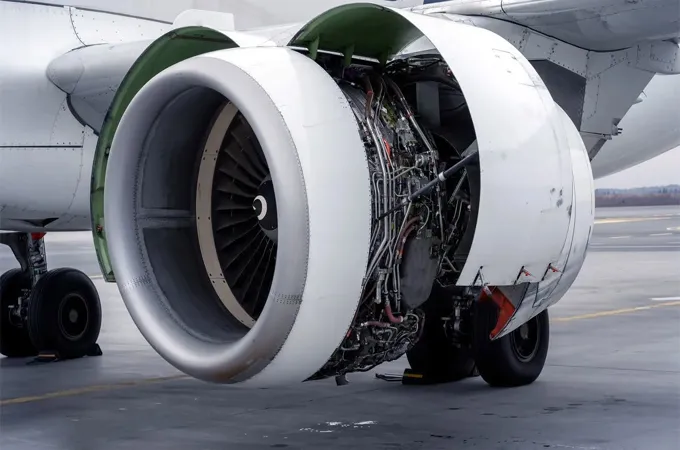
Airframe production is outpacing engine
production (which is constrained due to issues with existing engines).
This is resulting in newly completed airframes being parked until engines
are available.
Longer timelines for new aircraft
certification (from 12-24 months to four or even five years) are delaying
entry into production/service, particularly impacting long-haul fleet
renewal.
Tariffs on metals and electronics
resulting from US-China trade tensions have worsened some supply
bottlenecks and raised some maintenance costs.
A shortage of skilled labor, especially
in engine and component manufacturing, is constraining production ramp-up
plans.
The fragility of the aerospace supply
chain network (often reliant on a limited number of suppliers for
critical parts) can become an acute constraint amid economic uncertainty,
changing tariff regimes, and tight labor markets. As a result, even small
disruptions can be difficult to resolve and balloon to significant
production delays.
Fuel efficiency improvements are slowing as
the fleet ages. Historically, fuel efficiency improved by 2.0% per year,
but this slowed to 0.3% in 2025 and is projected at 1.0% for 2026.
The situation for the air cargo fleet
risks evolving:
Converted aircraft from passenger
operations are in short supply as airlines keep them in use for passenger
operations longer.
New-build wide bodies face production
delays.
Older cargo aircraft which have been kept
flying longer to compensate for slower fleet renewal will eventually
reach hard limits on their useful life.
A recent study by
IATA and Oliver Wymann estimated that the cost to the airline industry of
supply chain bottlenecks will be more than $11 billion in 2025, driven by four
main factors:
Excess fuel costs (~$4.2 billion): Airlines
are operating older, less fuel-efficient aircraft because new aircraft
deliveries are delayed, leading to higher fuel costs.
Additional maintenance costs ($3.1
billion): The global fleet is aging, and older aircraft require more
frequent and expensive maintenance.
Increased engine leasing costs ($2.6
billion): Airlines need to lease more engines since engines spend
longer on the ground during maintenance. Aircraft lease rates have also
risen by 20–30% since 2019.
Surplus inventory holding costs ($1.4
billion): Airlines are stocking more spare parts to mitigate
unpredictable supply chain disruptions, increasing inventory costs.
To help expedite
solutions, the study pointed to several considerations:
Open up aftermarket best practices by
supporting Maintenance, Repair and Operations (MRO) to be less dependent
on OEM-driven commercial licensing models, as well as facilitating access
to alternative sourcing for materials and services.
Enhance supply chain visibility by
creating clearer visibility across all supplier levels to spot risks
early, reduce bottlenecks and inefficiencies, and use better data and
tools to make the whole chain more resilient and reliable.
Use data more extensively in
leveraging predictive maintenance insights, pooling spare parts, and
creating shared maintenance data platforms to optimize inventory and
reduce downtime.
Expand repair and parts capacity to
accelerate repair approvals, support alternative parts and Used
Serviceable Material (USM) solutions, and adopt advanced manufacturing to
ease bottlenecks. -TradeArabia News Service