Food price shock reverberates through MENA economies
DUBAI
SHARE
Surging commodity prices on the back of the Russia-Ukraine conflict are pushing up food price
inflation in Middle East and North African (MENA) economies and could pose risks to existing
sociopolitical dynamics, says a S&P Global research report.
Five MENA countries -- Egypt, Jordan, Lebanon, Morocco, and Tunisia -- will be among the hardest hit by economic spillovers from the conflict because their economies depend significantly on imports of food or energy (or both), and they source a large part of their cereal supply from Russia and Ukraine, the report pointes out.
Historically, surges in international food prices have been associated with higher risks of sociopolitical instability, especially in lower-income economies. The current disruption of key food imports from Ukraine and Russia is threatening supplies and affordability to MENA countries that are net importers of staple food commodities, such as wheat.
Given social pressures, we believe governments will mount fiscal programmes aiming to cushion the impact and prevent social discontent, either through subsidies or other forms of support.
Conflict to pressure commodity markets
The conflict has triggered steep increases in commodity prices because both countries are major
exporters of many key commodities. Energy markets are hard hit, given Russia's pivotal role in the global energy supply, with Brent oil price up by 50% this year.
Food markets are also among the most affected, as Russia and Ukraine together account for almost 60% of global exports of sunflower oil, over 25% of wheat, and almost 15% of corn. Russia and Belarus are also important producers of fertilizers.
Consequently, prices for cereals have surged following the start of the conflict. We are also seeing other countries imposing controls on food exports to protect domestic consumers, such as the Indian government's recent decision to restrict exports of wheat. Such developments are adding to food price pressures, the report said.
"Future developments remain uncertain, but we believe that commodity prices are likely to stay elevated for some time. We now believe the conflict is likely to last longer than we previously expected, and irrespective of the duration of military hostilities, sanctions and related political risks are likely to remain in place for some time. As far as food markets are concerned, this year's events will also likely negatively affect next year's harvest, reflecting risks to the sowing season in Ukraine and soaring prices of fertilizers," the report said.
Several MENA economies among hardest hit
The report examined the spillover effects of the Russia-Ukraine conflict on 35 emerging markets (EM)
globally. It found five economies in the MENA region -- Egypt, Jordan, Lebanon, Morocco, and
Tunisia (MENA-5) -- are among the heaviest affected. The first reason for this is that these
economies depend significantly on imports of food or energy, or both. Lebanon and Jordan are the
most exposed, spending more than 10% of GDP on energy and food imports. Tunisia's food and, above all, energy imports are also significant. Morocco's energy import bill is one of the largest as a share of GDP across our sample. Morocco's position as a large potash exporter goes some way to alleviating this. Yet, despite being a net food exporter, its economy is still vulnerable to ongoing developments in food markets given its high reliance on imports of cereals.
Egypt has recently become a gas exporter, but is potentially highly vulnerable to rising food prices. Given that the report's data relies on 2019 GDP (latest available data pre-pandemic), it generally expects larger energy and food deficits this year on the back of significantly higher energy and food prices in 2021. That said, the situation differs between countries -- for example, Jordan's switch to long-term gas contracts will provide some protection from rising prices.
Compounding import dependencies, the MENA-5 economies are also vulnerable to food-supply
disruptions because Russia and Ukraine account for the largest part of region's cereal imports. Egypt, the world's largest importer of wheat, receives around 85% of its wheat imports from Russia and Ukraine.
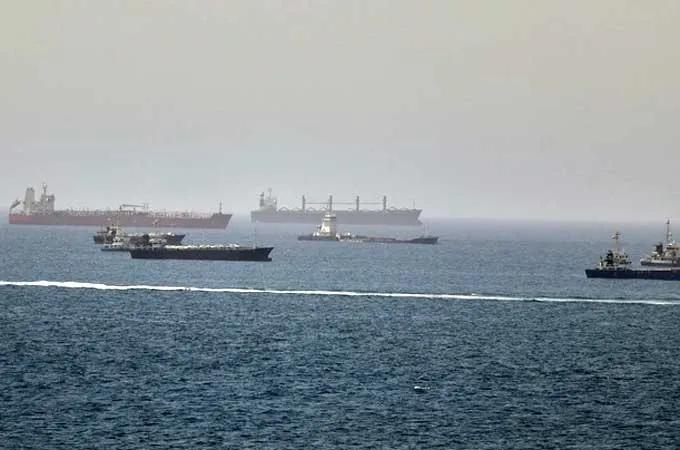
Alongside wheat and corn, the MENA-5 economies import significant amounts of cooking oil: 73% of Egypt's sunflower oil supply, for example, comes from Russia and Ukraine, according to the Middle East Institute. Making situation worse, most food exports from Russia and Ukraine go through the Black Sea and the Sea of Azov, where risks of trade disruption are very high because of ongoing hostilities. In 2020, for example, 70% of all Ukraine's trade went by sea, according to Ukraine's ministry of economy.
MENA economies have prepared strategic wheat reserves to protect themselves from the possible food-supply disruptions. Jordan has the largest reserves of the MENA-5 economies, covering around 16 months' consumption. Egypt's reserves are more limited and, together with domestic production, will last through November 2022. Morocco received most of its 2022 annual wheat orders from Ukraine before the conflict escalated. Nevertheless, the region's food markets are likely to come under pressure, especially if conflict drags on. - TradeArabia News Service