ADIPEC 2026 opened in Abu Dhabi on November 2, bringing together global leaders from the energy, government, finance and technology sectors, including OpenAI CEO Sam Altman, to discuss energy security, infrastructure investment, artificial intelligence (AI) and international cooperation amid rising global demand and geopolitical uncertainty.
Held under the
patronage of H.H. Sheikh Mohamed bin Zayed Al Nahyan, President of the UAE, in
his capacity as Ruler of Abu Dhabi, and hosted by ADNOC, the four-day event is
the largest in its history, with an expected 239,000 participants from more
than 170 countries.
Opening-day
discussions focused on the need to strengthen supply chains, develop
intelligent energy systems, mobilise investment and build partnerships capable
of supporting reliable, accessible and affordable energy supplies.
In his keynote address
at the opening ceremony, Dr Sultan Al Jaber, UAE Minister of Industry and
Advanced Technology and ADNOC Managing Director and Group CEO, called on the
global energy industry to rethink how it builds, protects and delivers secure
energy, following a year of unprecedented disruption that exposed
vulnerabilities in international supply chains.
Emphasising that not
every risk can be prevented, Dr Al Jaber said: “The choices we make today will
determine the energy landscape a decade from now. Let’s apply the lessons we
have learned. Let’s build capacity and everything that supports it. Let’s forge
partnerships that hold when it matters. And if you want a partner you can count
on you are in the right room, in the right city, in the right country. Because
when it counts the most, you can count on the UAE.”
Highlighting the scale
of recent market disruption, Dr Al Jaber said nearly one billion barrels of
crude had been drained from inventories since the disruption in the Strait of
Hormuz. He outlined five priorities for strengthening the industry's ability to
withstand future shocks: accessible supply, reliable routes to market,
operational intelligence, investor confidence and investment in people.
“First, accessible
supply. We need expanded strategic storage, larger stockpiles of products and
flexible refining capacity closer to consumer markets. Second, routes to
market. Supply only counts when it arrives. Infrastructure must be built before
it is needed and enabled by advanced logistics. Third, operational
intelligence. Moving from automated operations to intelligent energy systems
that anticipate risk, optimise performance and drive down the cost of every
barrel. Fourth, capital follows confidence. Policy must create it, finance must
accelerate it and insurance must keep trade moving. Fifth, which is in my view
the most important, is people. Because behind every barrel that arrives is a
person who made sure it did. Systems don’t carry responsibility, people do. “
Reflecting on the
UAE's response to recent market disruptions, Dr Al Jaber said the country's
resilience was the result of long-term planning and investment rather than
measures introduced during a crisis.
“We did not write our
resilience playbook during this disruption. We wrote it years before. And at
ADNOC, it did not make us immune, it made us prepared. Our leadership’s
foresight in modernising ADNOC made the difference, from integrated trading, to
investing in people, to world-class logistics, to XRG’s global portfolio in
gas, chemicals and energy solutions.
“The evident result is
our end-to-end AI-enabled operating model, built for a world of rising demand
and delivering what customers need, when they need it, where they need it. Our
ambition is to make ADNOC the most customer-centric energy company on earth.”
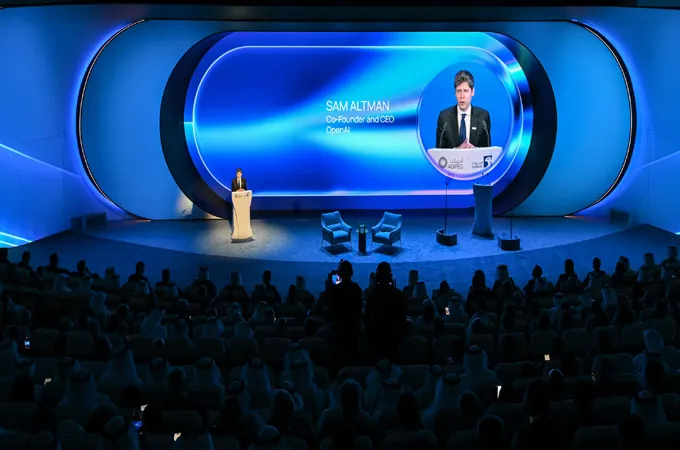
The opening ceremony
also featured an address and interview with Sam Altman, CEO of OpenAI, who
highlighted the growing relationship between artificial intelligence and
energy, describing the technology as both an opportunity to transform the
energy industry and a driver of increased electricity demand.
“I am tremendously
excited for AI to help and enable the energy industry, and I even more excited
to see what the world can do with the inspiration, ideas, output, and leverage
that people can get out of AI, with abundant energy to make all these wonderful
things happen.
Altman said AI could
improve energy efficiency, reliability and innovation, while supporting
scientific discovery, materials development and the design of more advanced
energy systems. However, he noted that the rapid expansion of AI applications
and infrastructure would require significantly greater energy supplies.
He also praised the
UAE's approach to adopting artificial intelligence across government and
industry, highlighting its leadership in integrating the technology into the
wider economy.
“I think the UAE has
consistently been the most forward-looking country in the world for AI
adoption. Going back to the launch of ChatGPT, this is a country that has
decided to go all in on AI -- through its government and across its economy.
It’s an incredible embrace, and it has come from the leadership. There has been
an acknowledgement that societies need to bet on these technologies,” he said.
The discussions
continued during the opening ministerial panel, titled ‘Energy security is
national security: building resilient supply in an uncertain world’, featuring
H.E. Suhail Mohamed Al Mazrouei, UAE Minister of Energy and Infrastructure, and
Rt. Honourable Dr Ekperikpe Ekpo, Nigeria's Minister of State for Petroleum
Resources (Gas).
The ministers
discussed their respective countries' strategies for securing reliable energy
supplies to support economic development and meet future demand.
Al Mazrouei
highlighted the importance of building additional capacity and strengthening
protection against potential disruptions, while emphasising the role of
technology in improving preparedness.
“We need to build
additional layers of protection to ensure we have enough resilience and spare
capacity. All of this will require technology, and we will need AI to design
better and become more resilient.”
At the opening CEO
panel, ‘Energy security in a fragmented world: designing systems that can
absorb disruption’, industry leaders examined how companies can protect
supplies, strengthen operational resilience and expand production capacity.
The discussion brought
together Meg O'Neill, CEO of bp; Richard Jackson, President and CEO of Oxy; and
Markus Krebber, CEO of RWE AG.
Addressing the
industry's experience of recent disruptions, Jackson highlighted the importance
of long-term operational and financial sustainability.
"For us, having
gone through these shocks, our strategy has been durability. We talk a lot
about resilience, but within our team, we think about durability over time...We
have focused on sustainable cash flow and production, and we have taken advantage
of the opportunity to invest in more durable production."
Beyond the conference
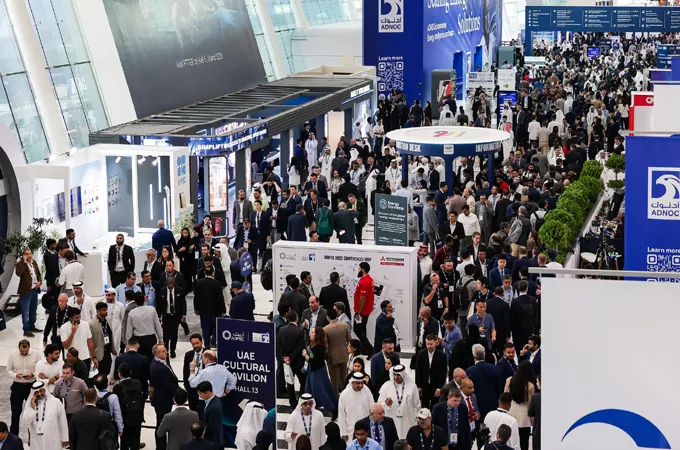
programme, the ADIPEC exhibition opened with 2,260 exhibitors across 16 halls,
showcasing technologies and solutions spanning the global energy value chain.
The exhibition
includes 30 country pavilions, with participation from Asia reaching its
highest level in the event's history. China, India, Malaysia, Singapore and
South Korea are among the countries represented.
Four specialised zones
focusing on AI, Digitalisation, Low Carbon and Chemicals, and Maritime and
Logistics are also showcasing developments across the sector.
The event provides a platform for companies, investors and industry leaders to explore commercial partnerships, exchange expertise and advance technologies aimed at strengthening energy security and supporting the industry's long-term transformation. -OGN/TradeArabia News Service