A practical blueprint for governments and innovators on what comes next and how nations are re-architecting governance for the digital age has been launched.
By distilling real-world lessons from leaders already building digital public services, resilient identity systems, and new sovereign infrastructure, the Multipolitan’s Digital State Project report sets out how nations can modernise policy, technology, and service delivery today.
The Digital State Project, a first-of-its-kind report, draws on insights from eight global leaders at the frontier of e-governance, the report examines how technology, from digital IDs to AI-driven public services, is redefining sovereignty, citizenship, and the very idea of the state itself.
At a time when governments are racing to secure digital-first systems, the Digital State Project offers a panoramic view of how governments are building the infrastructure of tomorrow: resilient, interoperable, and increasingly borderless.
Featuring exclusive interviews and analysis from James Ellsmoor (Island Innovation), William Wang (RNS.ID / Palau Digital Residency), Briar Prestidge (Prestidge Group and OLTAIR), Hrish Lotlikar (SuperWorld), Oleksandr Bornyakov (Ukraine’s digital transformation leadership), Luukas Ilves (Advisor to the Government of Ukraine and former CIO of Estonia), Anna Hazlett (space and orbital infrastructure specialist), and Nirbhay Handa (CEO, Multipolitan), the report maps how governance is evolving at the intersection of climate, identity, intelligence, space, and spatial computing.
The future of governance is already here
Together, the perspectives from industry leaders illuminate a shared reality: governance is no longer confined to borders or bureaucracies. The Digital State Project charts this new terrain, where AI meets policy, code meets citizenship, and resilience meets innovation.
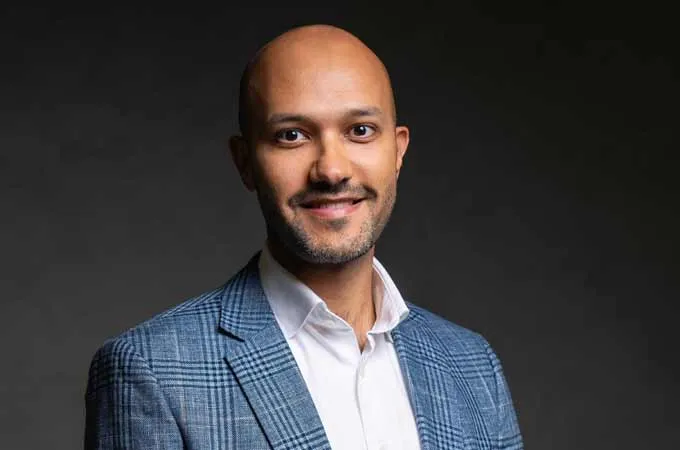
Nirbhay Handa, CEO, Multipolitan, stated: “This is not science fiction - the choices countries make now about digital identity, tax, talent and infrastructure will define who attracts the next generation of citizens, companies and capital.”
The project is both an analytical study and a manifesto for what comes next – a world where digital sovereignty becomes as real and consequential as its physical counterpart.
Nations As A Service
Nirbhay Handa highlights how digital identity, Web3 infrastructure and global mobility are giving rise to “Nations as a Service” — systems where belonging is selected rather than inherited, and sovereignty begins to detach from geography.
“The passport of the future might not sit in a drawer; it could live in your digital wallet,” stated Handa.
Redefining sovereignty in a digital world
In Innovation Born of Necessity, James Ellsmoor examines how small island nations move toward digital nationhood as climate-threatened states fight to preserve continuity, identity and sovereignty when physical land may disappear.
“Tuvalu’s response suggests that culture and sovereignty can continue even without land. This marks the redefinition of continuity and governance in the Anthropocene,” said Ellsmoor, Founder & CEO, Island Innovation.
Digital identity without borders
William Wang explores how Palau’s Digital Residency Program extends sovereign identity beyond geography, enabling individuals to authenticate and participate in compliant ecosystems regardless of location.
“Sovereignty can now be extended into the digital domain and is about legitimacy and inclusion, not location,” noted Wang, CEO, RNS.ID / Palau Digital Residency.
Where the virtual meets the human
In The Future Is Virtual And Deeply Human, Briar Prestidge explores how immersive environments are becoming the next frontier for identity, empathy, and nation branding. From digital twins to virtual embassies, nations will compete and collaborate inside 3D virtual worlds.
“Digital governance is about building trust, safety, and creativity in the spaces where citizens increasingly live, work, and express themselves,” stated Briar Prestidge, CEO Prestidge Group & OLTAIR and Advisor to INTERPOL.
Cities as living interfaces
Hrish Lotlikar highlights how augmented reality, Web3, and decentralised ownership are transforming cities into living interfaces – where creativity, commerce, and culture converge on top of the physical world.
“We see the world itself becoming a programmable layer of information and interaction – where every physical location has digital value and meaning,” commented Lotlikar, Co-Founder & CEO, SuperWorld.
From Diia to AI-powered governance
Oleksandr Bornyakov outlines how Ukraine built Diia, a model for transparent digital government — and how AI will transform services from reactive to proactive.
“Technology should not replace people; it should make the state more open, efficient, and human,” stated Bornyakov, Deputy Minister of Digital Transformation, Ukraine.
From digital states to agentic states
Building on that foundation, Luukas Ilves describes the next leap: the Agentic State, whereby intelligent systems automate processes, anticipate needs, and deliver personalised public services.
“Success means every citizen interacts with government through conversation, not forms to make public administration adaptive and human centric,” commented Ilves, Former CIO of Estonia and Advisor to Ukraine.
Space: The new sovereign layer
Anna Hazlett connects digital sovereignty to the final frontier – space. Space is now bankable. Recurring data contracts, falling launch costs, and modular satellites are turning one-off missions into predictable, scalable businesses.”
“Orbital infrastructure is no longer peripheral, but a core layer of the modern digital state,” observes Hazlett, Orbital Infrastructure Specialist. -TradeArabia News Service