
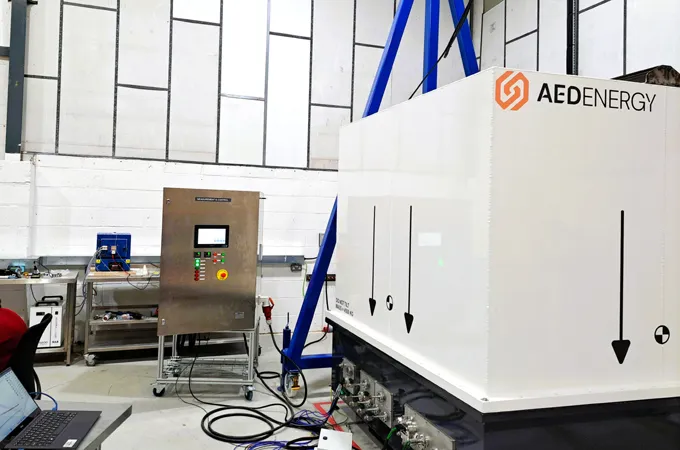
Aed Energy, the UK developer of thermal energy storage, has completed operation of its high temperature thermal storage demonstrator at its London facility, completing initial cycling and full controls integration.
Built on Aed Energy’s
ultra low cost salt based storage materials, with core material costs below 5
dollars per kWh, the demonstrator validates the performance, controllability,
and durability required for full certification of the company’s upcoming 10 MWh
scale platform.
With its UK test programme complete, the demonstrator has
now been shipped to Pan Atlantic University (PAU) in Nigeria for field
deployment under an Innovate UK supported collaboration with PAU and the ZE Gen
initiative.
The system will support renewable electricity and low carbon
heat on campus and will be one of the first TPV integrated thermal storage
demonstrators operated in a real world African energy environment. Full 800 deg
C cycling and field mode operation will be commissioned on site.
Rayan Kassis, CEO of Aed Energy, said: “This demonstrator
moves our technology out of controlled conditions and into real operating
environments. It is a deliberate step in a roadmap that takes us from early
pilot hardware to the MWh scale platforms needed for industrial heat and long
duration power. From my experience in large scale energy projects, I know
progress comes from putting hardware into the field and learning fast. This
deployment gives us exactly the operational data and integration experience required
for the next stage.”
Dr Oliver Weber, Chief Technology Officer, added: “The
London testing confirmed the foundations of the technology, including thermal
behaviour, material stability, and full controls integration. The Nigeria field
trial now allows us to observe the system at its target operating temperature,
under real demand conditions, and with TPV integration. The insights from this
phase directly inform the engineering of our multi MWh configurations.” -TradeArabia News Service


