
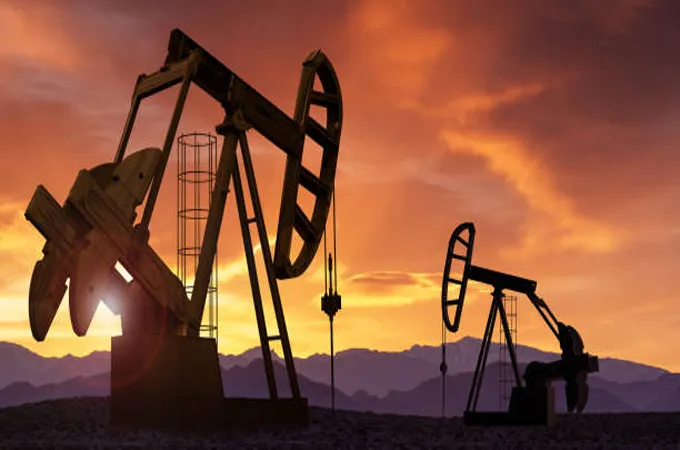
Suriname is emerging as a rising star in the global energy scene and has the potential to make a significant impact with its vast oil and gas reserves.
A string of major offshore oil discoveries
has positioned the Caribbean nation as one of the most promising new frontiers
in the hemisphere, with recoverable resources estimated at 2.4 billion barrels
of oil equivalent (boe) and natural gas resources around 12.5 trillion cubic
feet.
At least 10 wells are expected to be
drilled offshore between 2025 and 2027 in Suriname’s portion of the
Guyana-Suriname Basin, underscoring the rapid pace of exploration and
development.
With first production on the horizon,
Suriname’s transformation from exploration success story to regional energy
powerhouse is well underway.
Offshore Breakthroughs
Suriname’s recent oil discoveries are concentrated offshore, in deep Atlantic
waters bordering Guyana’s prolific Stabroek Block.
In
just a few years, the country has rapidly established itself as a promising
exploration frontier.
The centerpiece of this momentum is Block
58, operated by TotalEnergies alongside APA Corporation.
Following a string of discoveries between
January 2020 and February 2022 – including Maka Central, Sapakara South and
Krabdagu – the partners announced the GranMorgu development, a project expected
to deliver first oil in 2028.
GranMorgu marks a turning point for Suriname.
With
estimated recoverable reserves of around 750 million barrels and a planned
production capacity of 220,000 barrels per day, it represents the largest
industrial investment in the country’s history, backed by more than $10 billion
in capital.
Beyond its scale, GranMorgu also reflects a
new era of responsible production: zero routine flaring, reinjection of
associated gas and an all-electric FPSO designed to minimise emission, which
could serve as a model for lower-carbon development in a traditionally
high-emission industry.
Momentum Beyond Block 58
Just to the north, Block 52, operated by Petronas, has yielded a series of
discoveries – including Sloanea, Roystonea and Fusaea – confirming that
Suriname’s offshore plays extend far beyond a single block.
These wells have encountered oil-bearing
reservoirs with strong flow potential, and evaluations are underway to
determine commercial viability and tie-back opportunities to existing
infrastructure.
The
area is estimated to hold more than 500 million boe.
Meanwhile, in Block 53, momentum is accelerating. TotalEnergies recently
acquired a 25% stake alongside APA and Petronas, signaling its long-term
commitment to the basin.
The Baja-1 discovery in this block sits
adjacent to GranMorgu, offering the potential to extend the project’s
production plateau and create efficiencies across neighboring fields.
The alignment of these three blocks – 58,
52 and 53 – positions Suriname to develop a cohesive, scalable oil province
with the potential to transform the country’s economic landscape.
If GranMorgu comes online as planned in 2028, Suriname could soon produce more
than 200,000 barrels per day, positioning it among the largest oil producers in
the Caribbean.
Coupled with continued exploration success
and growing regional cooperation, Suriname’s energy story is only beginning,
and CEW 2026 will serve as the platform where that story takes shape on a
regional stage. -OGN/TradeArabia News Service


